


Cash flow problems can cripple even profitable eCommerce businesses. Why? Because platforms like Amazon, Shopify, and TikTok Shop delay payouts, leaving sellers waiting weeks to access their revenue. Meanwhile, bills like inventory, advertising, and operating expenses don’t wait.
Here’s the key issue: sales may look great on paper, but delayed payouts create funding gaps that make it tough to restock products, pay suppliers, or scale your business. For example:
- Amazon: Bi-weekly payouts with a 7-day hold after delivery.
- Shopify: Daily or weekly payouts, but with 2–5 business day holds.
- TikTok Shop: Weekly payouts, plus 8–15 days of delivery and hold time.
These delays can lead to lost sales, wasted ad spend, and missed growth opportunities. To navigate this, sellers need to track payout schedules, plan ahead, and consider funding solutions like Onramp Funds, which provides fast, flexible financing tied to your sales performance.
Understanding and managing payout timing isn’t just important - it’s critical for keeping your business running smoothly.
Profitable but Broke: Why 80% of eCommerce Brands Fail
sbb-itb-d7b5115
How Payout Timing Works on Major eCommerce Platforms

Each major eCommerce platform has its own payout schedule, and delays in accessing funds can create cash flow challenges for sellers.
Shopify: Daily or Weekly Payouts with 2–5 Day Holds

Shopify allows sellers to choose between daily, weekly, or monthly payouts. However, no matter the frequency, there's always a settlement period between when a customer pays and when funds become available [3].
In the U.S., this settlement period is typically 3 business days. For example, sales made on a Monday would be credited by Thursday at the earliest, even with daily payouts. Settlement times vary by country: 2 business days in Australia, 5 business days in Japan, and 7 business days in Mexico [3].
"Payouts from Shopify Payments can arrive in your Shopify Balance account within 1 business day from the transaction processing date. In some cases, payouts for new merchants can take up to 5 business days." - Shopify Help Center [3]
It’s important to note that weekends and holidays don’t count toward this settlement period. For instance, sales processed on a Friday won’t start the payout clock until Monday, further delaying access to funds [3].
Amazon: Bi-Weekly Payouts with 7-Day Post-Delivery Holds
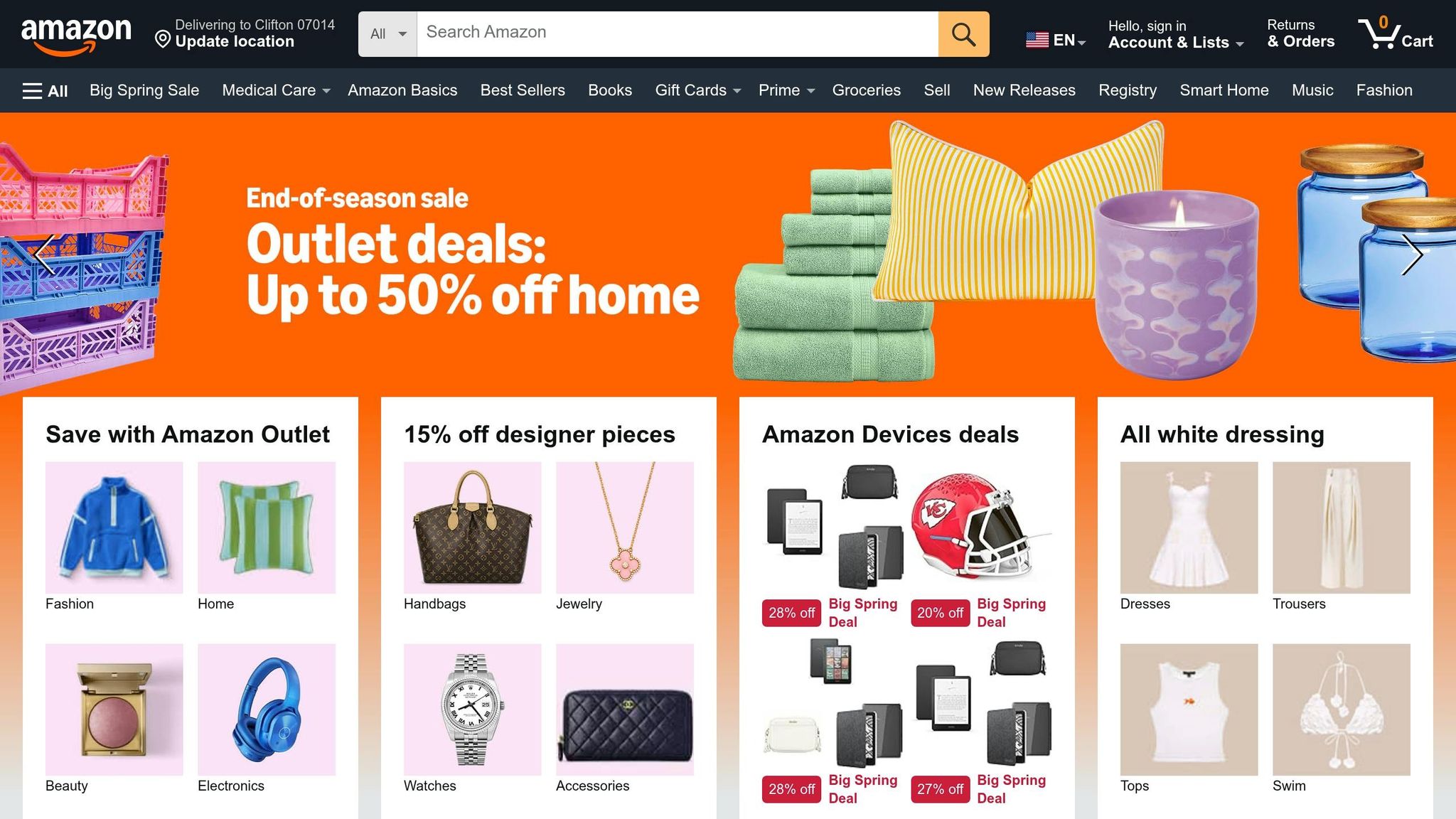
Amazon follows a bi-weekly payout schedule, meaning sellers receive payments every 14 days [1]. However, there’s an additional delay: Amazon holds funds for 7 days after the delivery date. This hold allows customers time to inspect their purchases and request refunds [4].
"With deliveries, funds remain on hold for seven days to accommodate potential refunds." - Amazon [4]
Here’s how the timeline works: if a customer places an order on March 1st and receives it on March 5th, the 7-day hold doesn’t begin until March 5th. Combined with the bi-weekly payout cycle, sellers may wait several weeks to access revenue from a single sale [1].
TikTok Shop: Weekly Payouts with Variable Timing

TikTok Shop operates on a weekly payout cycle, but the timing can vary significantly depending on the seller’s status. For new sellers, there’s a 31-day introductory hold to account for potential fraud or returns. Once sellers establish a track record, the standard hold drops to 8 days after delivery [5].
Sellers with a Shop Performance Score of 4.0 or higher can qualify for Express settlement, which reduces the hold to just 1 day [5]. This variability can create additional financial uncertainty for businesses relying on consistent cash flow.
| Platform | Payout Frequency | Typical Hold Period | Hold Trigger |
|---|---|---|---|
| Shopify | Daily, Weekly, Monthly | 2–5 business days | Payment Capture |
| Amazon | Bi-weekly (14 days) | 7 days post-delivery | Order Delivery |
| TikTok Shop | Weekly | 8 days (Standard) | Order Delivery |
These payout delays highlight how staggered access to funds can complicate cash flow management for sellers across platforms.
How Payout Delays Create Funding Gaps
When revenue gets stuck in platform accounts for days - or even weeks - it creates real challenges for sellers. The money is technically there, earned from completed sales, but it’s inaccessible while expenses pile up. This mismatch in timing leads to what experts call a funding gap: the period between when cash is needed and when it’s actually available. These gaps can throw off inventory planning, disrupt operating budgets, and stall growth strategies.
Inventory Restocking Problems
One of the most immediate headaches caused by payout delays is the inability to restock inventory when it’s urgently needed. If a product sells out but funds are still locked up, sellers face a tough choice: wait for the payout and miss potential sales, or scramble for alternative funding to fill the gap.
Stockouts are a massive problem, costing retailers over $1.2 trillion annually in lost sales [7]. In fact, 20% of all online cart abandonments happen because items are out of stock [7]. For many sellers, nearly half of all potential purchases are lost when products aren’t available [7].
"For retailers, an empty digital shelf doesn't just mean a missed sale; it represents a fundamental break in the trust that these businesses have worked so hard to build with their customers."
The ripple effects don’t stop there. Sellers often continue spending on digital ads that drive traffic to out-of-stock products, wasting marketing dollars and reducing ROI. Trust also takes a hit - 62% of consumers say trust is a major factor in choosing a brand [7], and repeated stockouts can erode that trust. On top of that, hiding or removing out-of-stock pages can lead to 404 errors, which can hurt the website’s search rankings [7].
Difficulty Covering Operating Expenses
While sellers wait for payouts, their operating expenses - like payroll, advertising, and supplier payments - don’t pause. This forces businesses to rely on reserves to cover fixed costs.
The numbers paint a clear picture of the strain. 61% of businesses globally struggle with cash flow management [8], and 69% of small business owners admit to losing sleep over their cash flow issues [1]. For eCommerce sellers, the gap between fulfilling orders and receiving payouts creates immediate financial pressure. Marketing budgets often take the first hit, as sellers cut back on campaigns to conserve cash. Meanwhile, rising customer support costs add even more strain [7]. These cash shortages also make it harder to reinvest strategically, which can stall future growth.
Limited Ability to Scale
Over time, payout delays don’t just create short-term problems - they also limit a business’s ability to grow. When funds arrive late, investments in new opportunities are delayed - not because of a lack of demand, but because the cash isn’t available [9]. Big moves like launching new products, expanding into new markets, or increasing marketing spend require upfront capital, which delayed payouts make harder to access.
The stats are sobering: Only 24% of small and medium-sized businesses feel confident about their cash flow [10], and 56% of businesses seeking funding do so just to cover daily operating costs [10] rather than to fuel growth. This leaves even successful sellers stuck at their current scale, unable to seize opportunities that demand quick action.
As businesses grow, these cash flow gaps only widen. Expenses like marketing, inventory, and staffing happen upfront, while payouts often follow extended platform timelines [11]. Finance teams end up spending more time reconciling transactions instead of focusing on growth. In fast-moving markets where rapid restocking and instant payment confirmations are expected, slow payment processes can make it hard to keep up [9].
| Impact Category | Specific Consequence | Business Result |
|---|---|---|
| Financial | Lost Sales & Cross-sells | Immediate revenue reduction [7] |
| Marketing | Wasted Ad Spend | Lowered ROI on campaigns [7] |
| Operations | Increased Support Volume | Higher labor costs [7] |
| Brand | Loss of Customer Trust | Decreased long-term customer LTV [7] |
| Technical | SEO Penalties | Lower organic traffic and visibility [7] |
Examples of Payout Delays Affecting eCommerce Sellers
These stories highlight how payout delays can disrupt cash flow and throw operations off balance for eCommerce sellers.
Amazon Seller Dealing with Refund Holds
Amazon's Delivery Date + 7 days (DD+7) policy is a prime example of how payout delays can create financial strain. Under this system, funds are only released a week after the customer confirms delivery [12]. Even with Amazon's Refund at First Scan process - where customers are reimbursed immediately - sellers often face delays in accessing their own funds. This creates a funding gap that can make it difficult to pay suppliers or restock inventory.
To make matters worse, if a package is delayed or lost by the carrier, sellers may face additional delays as funds are held pending a manual review [12]. These refund holds extend the cash conversion cycle, making it harder for sellers to maintain smooth day-to-day operations.
Such delays are not unique to Amazon, as Shopify sellers have also faced similar challenges with payout schedules.
Shopify Merchant Unable to Pay Suppliers on Time
In May 2025, a Shopify merchant, sambatree, found themselves in a tough spot when a routine banking update unexpectedly reset their daily payout schedule [13]. This left them unable to pay suppliers on time, causing a ripple effect of delays and frustration:
"Suppliers were told that they would get their payment on one day only to have Shopify not come through with the payment schedule. Orders were delayed. It has been a mess." [13]
Another Shopify merchant, Nicolas (modaliteprive), faced a 10-day delay on a $23,500 payout for an order captured on January 17, 2025 [13]. Although the customer's bank released the funds by January 19, Shopify extended the payout beyond the promised January 22 date. This delay eroded customer trust and even led to a canceled order.
In a more severe case, InfiniteLuxur, a business processing over 2,500 orders with a chargeback rate of just 0.4% (well below the industry average of 1%), had its Shopify Payments disabled in January 2026. All their funds were placed on a 120-day hold [14]. The merchant described the impact:
"The 120-day hold is extremely hard on cash flow because we have already shipped/fulfilled many orders. Holding funds for that long makes it difficult to keep fulfilling orders and operating normally." [14]
While Shopify’s payout inconsistencies can disrupt supplier payments, TikTok Shop sellers face unique challenges with their batch payout system.
TikTok Shop Seller Managing Batch Payout Delays
TikTok Shop's payout system adds another layer of complexity. The payout clock starts only after an order is confirmed as delivered [doc]. This means sellers must wait an additional 3–7 days of transit time on top of the standard hold period, leading to total wait times of 8–15 days from the purchase date.
For sellers experiencing rapid, viral growth, this delay can create what some call a "viral growth trap." A sudden surge in orders doesn’t translate into immediate access to revenue, making it tough to restock inventory, expand fulfillment operations, or adjust advertising budgets to seize the moment. On top of that, TikTok Shop’s batch payout system - where funds are released in weekly cycles instead of continuously - further restricts cash flow, making it harder for sellers to adapt and grow their businesses in real time.
How to Track and Manage Payout Gaps
Managing payout gaps effectively starts with gaining a clear understanding of your payout schedules. With 61% of businesses globally grappling with cash flow challenges [1], keeping a close eye on these schedules allows for better planning and reduces the risk of financial surprises. The key is identifying these gaps early to minimize their impact.
Track Payout Schedules Across Platforms
Using forecasting tools like Float, which sync directly with your accounting software, can simplify this process. These tools automatically pull financial data to create visual cash flow forecasts. This makes it easier to see when funds are expected to arrive and when bills are due, helping you identify potential shortfalls well in advance. For instance, a 12-month forecast can help you spot seasonal cash flow patterns. If you notice that an Amazon payout might be delayed during the holiday season while supplier invoices remain on fixed terms, you can take steps like negotiating longer payment terms or arranging short-term funding. Keeping a cash reserve that covers three to six months of expenses can also serve as a safety net for unexpected delays [1]. Once you have a clear view of incoming funds, automating payment processes can further strengthen your cash flow management.
Automate Payment Scheduling and Reminders
Automation tools can help you schedule supplier payments based on real-time cash availability, which minimizes the risk of overdrafts. These tools also flag settlement delays through reconciliation features. Additionally, automated reminders from your accounting software ensure timely payments to suppliers and draw attention to any delays in settlements. Since poor cash flow management is linked to 82% of small business failures [1], these measures are crucial for keeping your operations running smoothly.
Using Onramp Funds to Bridge Payout Gaps

When payout delays threaten your ability to restock inventory or cover essential expenses, acting quickly is crucial. Onramp Funds provides a tailored financing solution designed to help eCommerce businesses navigate these cash flow challenges. By addressing the bottlenecks caused by delayed payouts, they ensure you can seize sales opportunities without hesitation.
How Onramp Funds Works
Onramp Funds offers a 24-hour funding process, getting cash into your account fast. Their equity-free model means you maintain full ownership of your business while accessing the capital you need. Instead of rigid monthly payments, repayment is tied to a percentage of your sales. This means payments adjust based on your business performance, making it easier to manage during periods of payout delays.
The platform integrates seamlessly with major eCommerce platforms like Amazon, Shopify, BigCommerce, WooCommerce, Squarespace, Walmart Marketplace, and TikTok Shop. This connection enables transparent sales tracking and automatic repayment processing, all aligned with your actual sales performance.
Onramp Funds also provides a range of financing options, allowing you to choose what works best for your business needs.
Onramp Funds Financing Options
Note: To qualify, you must have at least $10,000 in monthly sales and be integrated with a supported eCommerce platform.
| Financing Type | Fee Range | Repayment Structure | Best For |
|---|---|---|---|
| Custom Funding Offers | Variable | Tailored to business needs | Sellers with unique cash flow patterns or seasonal businesses |
| Fixed Fee Structure | 2-8% fee | Predictable payments with transparent costs | Businesses seeking stability and clear cost projections |
| Revenue-Based Financing | Based on sales | Flexible remittance adjusting with performance | Sellers with fluctuating sales needing payment flexibility |
There are no hidden fees, and you can use the funding calculator on the Onramp Funds website to estimate costs before applying.
Benefits for eCommerce Sellers
One of the biggest advantages is quick access to capital without giving up equity or taking on rigid debt. This allows you to restock inventory as soon as you spot an opportunity, rather than waiting for payout delays to resolve. The repayment flexibility ensures that you’re not burdened with fixed payments during slower sales periods.
Onramp Funds also offers personalized support from their Austin-based team, who understand the unique challenges of eCommerce. Whether it’s managing inventory across multiple platforms or handling unpredictable payout schedules, they provide knowledgeable assistance. With fast funding, flexible terms, and expert support, Onramp Funds helps you focus on growing your business instead of worrying about cash flow.
Conclusion
Timing your payouts is a critical factor in maintaining healthy cash flow for your eCommerce business. Consider this: 82% of small business failures are linked to poor cash flow management, and 61% of businesses globally face challenges in handling it effectively [1]. Understanding when platforms like Shopify, Amazon, and TikTok Shop release your funds can help you avoid these common pitfalls.
Delayed payouts can disrupt your ability to restock inventory, pay suppliers, or scale marketing efforts. Alarmingly, 32% of eCommerce businesses have failed simply because they ran out of money [1].
To tackle these issues, proactive planning is key. Keep a close eye on payout schedules to ensure your cash flow aligns with your operational needs. Negotiate supplier terms to 30–60 days, giving you more time to manage incoming funds [2][6]. Additionally, building a cash reserve that covers three to six months of expenses can act as a safety net against payout delays [1].
If payout delays threaten your growth, services like Onramp Funds offer a practical solution. They provide fast, equity-free capital with repayment terms adjusted to your sales. This flexibility lets you focus on growing your business without having to choose between restocking your top products or covering essential expenses. By combining smart cash flow management with flexible financing, you can turn payout delays into manageable challenges.
FAQs
How do I calculate my payout funding gap?
To figure out your payout funding gap, you need to compare the timing of when your eCommerce platform (like Shopify or Amazon) sends you payouts with the due dates for your key expenses, such as inventory costs or payroll.
- Step 1: Check the payout date from your eCommerce platform.
- Step 2: Find out when your expenses are due.
- Step 3: Subtract the payout date from the expense due date to calculate the number of days in the gap.
This simple calculation helps you understand how much time you have - or don’t have - between receiving funds and needing to cover your expenses.
What’s the fastest way to avoid stockouts during payout holds?
To keep stock levels stable during payout holds, it’s crucial to fine-tune inventory management and funding strategies to maintain a consistent cash flow. Here’s how you can do it:
- Cut down lead times: Streamline your supply chain to get products faster and avoid delays.
- Improve inventory planning: Use data to better predict when and how much stock you’ll need, reducing the risk of overstocking or running out.
- Explore financing options: Consider funding methods like revenue-based financing to cover inventory costs without large upfront payments.
Additionally, focus on high-margin products to maximize profits, work on improving sell-through rates, and use demand forecasting tools to restock at the right time. These steps will help you avoid disruptions and keep your operations running smoothly.
How can Onramp Funds help when payouts are delayed?
Onramp Funds provides a lifeline for sellers facing cash flow challenges due to delayed payouts. By offering short-term financing, they ensure sellers have quick access to the funds they need for critical expenses like purchasing inventory, covering operational costs, and fueling business growth - without being held back by payout delays.
Related Blog Posts
Onramp Funds
Funding built around your sales
Connect your store and see what you qualify for. Repay as a percentage of sales, with no personal credit check.
Funding in as little as 24 hours.
