

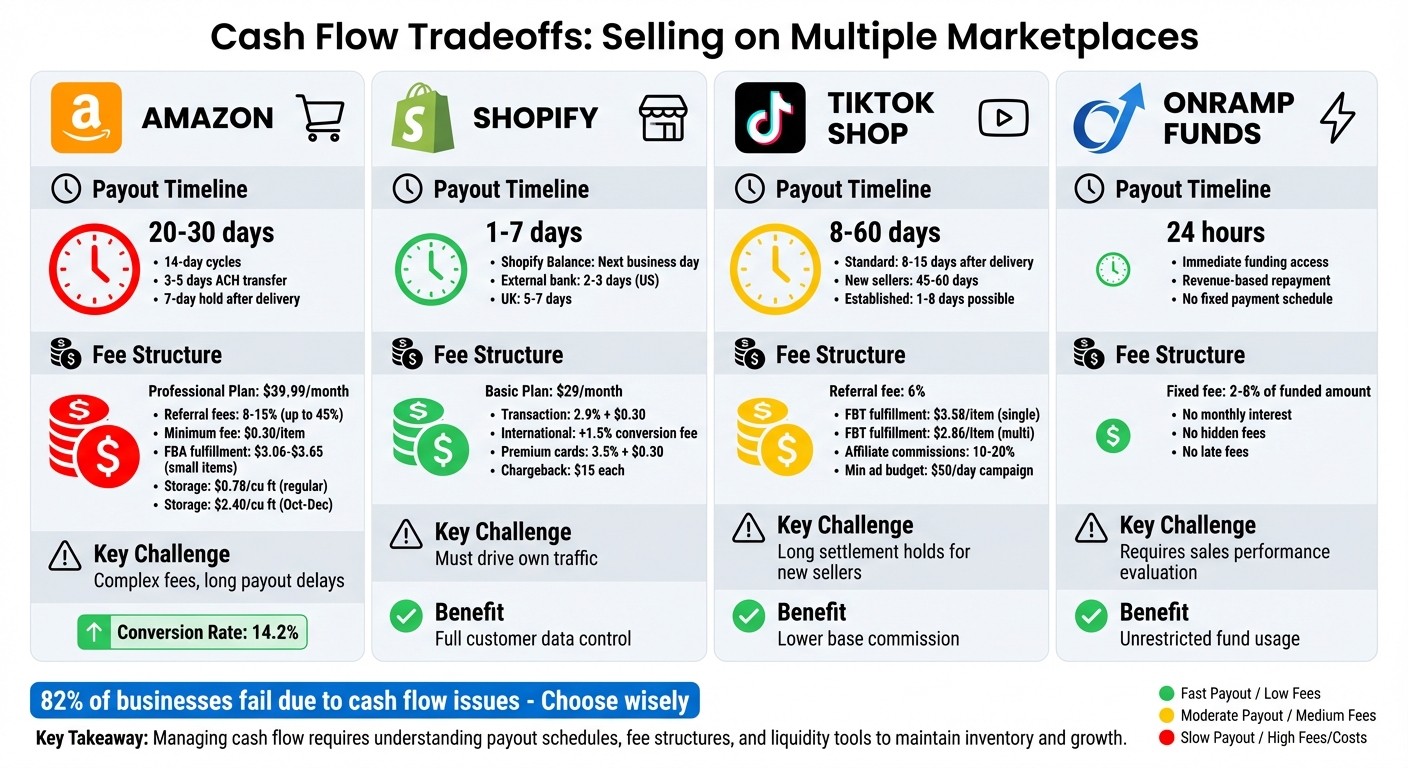
Selling on multiple marketplaces can grow your business - but it often creates cash flow challenges. Each platform has unique payout timelines, fees, and policies that can delay access to funds, making it harder to cover immediate expenses like inventory, advertising, and storage. Here's what you need to know:
- Amazon: Payouts take 20–30 days due to 14-day cycles and additional holds. Fees include referral fees (8–15%), fulfillment charges, and seasonal storage surcharges.
- Shopify: Faster payouts (as quick as next business day with Shopify Balance) but requires you to drive traffic. Fees range from 2.9% + $0.30 per transaction to higher rates for international sales.
- TikTok Shop: Lower referral fees (6%) but long payout delays (8–60 days). Additional costs include affiliate commissions, fulfillment fees, and advertising budgets.
- Onramp Funds: Offers immediate funding tied to sales performance, helping sellers navigate payout delays and maintain inventory.
Key takeaway: Managing cash flow across platforms requires understanding payout schedules, fee structures, and tools like Onramp Funds for liquidity. Without proper planning, growing sales can lead to tighter cash flow.
1. Amazon
Payout Timing
Amazon processes payouts every 14 days, but it doesn't stop there - ACH transfers can take an extra 3–5 business days to clear, sometimes stretching to 7 days[5]. Adding to the wait, Amazon holds funds for 7 days after delivery to cover potential returns, chargebacks, or A-to-z Guarantee claims[5]. As Ben Donovan, Co-founder of Brand Builder University, puts it:
"Sales made today may take nearly a month to clear."
This means sellers typically have to wait 20 to 30 days before they can access the money from a sale. For those juggling multiple platforms like Shopify or TikTok Shop, this delay can create cash flow headaches, especially when other marketplaces release funds faster.
One way to ease the wait is by using the "Request Transfer" button in Seller Central. This lets you withdraw cleared funds every 24 hours instead of sticking to the standard 14-day cycle[6]. It’s a handy way to free up cash for reinvesting in quicker-paying platforms. Another tip? Charge your advertising costs to a business credit card instead of letting Amazon deduct them from your account balance. This strategy helps keep cash flow intact while navigating Amazon’s payout delays[5].
Understanding these timing quirks is key, especially since they compound with Amazon’s detailed fee structure.
Fee Structures
Amazon’s fee system is anything but simple. The Professional Selling Plan costs $39.99 per month, and sellers are also charged referral fees ranging from 8% to 15% per sale (some categories can go as high as 45%)[7]. There’s a minimum referral fee of $0.30 per item, no matter the sale price[8]. If you’re using Fulfillment by Amazon (FBA), you’ll also pay fulfillment fees, which depend on the size and weight of your items. For instance, small standard-size items under 16 oz cost between $3.06 and $3.65 in fulfillment fees for non-apparel products. On top of that, monthly storage fees are $0.78 per cubic foot during most of the year but jump to $2.40 per cubic foot during the busy October–December holiday season[8].
As Single Grain notes:
"Your margin is only as strong as your understanding of Amazon seller fees. When referral, fulfillment, storage, and returns charges stack up, even high-revenue products can lose money overnight."
To stay profitable, sellers must thoroughly understand these fees and how they compare to costs on other platforms.
Inventory Implications
Inventory management is another critical piece of the puzzle when selling on Amazon. To offset payout delays, sellers need to maintain a 30–90-day stock in FBA warehouses[5]. However, holding too much inventory can backfire. Amazon imposes aged-inventory surcharges for items stored over 180 days, starting at $0.50 per cubic foot and climbing to $6.90 per cubic foot for items stored for more than a year[8].
The Inventory Performance Dashboard can help sellers decide whether to discount slow-moving stock or pay removal fees. Additionally, optimizing packaging - like switching from boxes to polybags - can reduce fulfillment costs by moving products into cheaper size tiers[9]. Smart inventory decisions can make a big difference in keeping cash flow steady while minimizing unnecessary fees.
sbb-itb-d7b5115
2. Shopify

Payout Timing
Shopify gives merchants flexibility in managing their cash flow with customizable payout schedules. Sellers can opt for daily, weekly, or monthly payouts based on what suits their business operations best. However, the timing of fund availability depends on the payout method. If you use Shopify Balance, funds are deposited by 10 a.m. ET the next business day - making it the fastest option. For external bank accounts, domestic payouts take 2–3 days, while sellers in the UK may wait 5–7 days.
For global Shopify Managed Markets, payouts occur on fixed dates - 1st, 8th, 15th, and 22nd - after order fulfillment. Orders processed on weekends or holidays are batched to the next business day, potentially delaying access to funds by 3–4 days. To avoid delays, it’s recommended to process and batch orders before the 5 p.m. EST cutoff.
David Seth, an Accountant Consultant at Webgility, highlights the challenges of payout timing:
"This confusion can disrupt cash flow, delay bill payments, and create accounting headaches that slow business growth."
A success story from 2025 showcases how Skinny Mixes used Webgility to automate Shopify payout reconciliation. By reducing manual data entry, they recovered 19% of abandoned carts, boosted revenue by $3 million, and saved 10–15 hours of bookkeeping work weekly.
Understanding Shopify's payout timelines is just one piece of the puzzle - grasping the fee structure is equally important.
Fee Structures
Shopify’s pricing model combines a fixed monthly subscription fee with variable credit card processing costs. For example, the Basic plan costs $29 per month and charges 2.9% + 30¢ per transaction. As your sales grow, processing fees can quickly outpace the subscription cost. However, using Shopify Payments eliminates additional transaction fees (which otherwise range from 0.5% to 2% for third-party processors). If you use external payment platforms like PayPal, you’ll pay both their fees and Shopify’s additional charge.
Higher-tier plans, such as Grow ($79/month) and Advanced ($299/month), reduce per-transaction fees once your revenue surpasses approximately $25,000 per month. For international transactions, there are additional costs: US-based stores pay a 1.5% currency conversion fee, while most other regions face a 2% fee. For Shopify Managed Markets, sellers incur a 6.5% processing fee and a 2.5% currency conversion fee. Premium cards like American Express carry even higher rates - 3.5% + 30¢, compared to the standard 2.9% + 30¢.
Chargebacks also come with a cost. In the US, each chargeback dispute costs $15. To put this into perspective, in 2024, US businesses collectively spent over $187 billion in fees to process nearly $11.9 trillion in card payments.
Cash Flow Optimization Tools
Shopify provides tools designed to help sellers improve cash flow management. With Shopify Balance, merchants can receive funds the next business day - often up to seven days faster than traditional bank accounts. Shopify also offers automation tools that integrate with accounting software like QuickBooks or Xero, saving up to 90% of the time spent reconciling payouts, which can cut 4–8 hours of manual work each month.
Armine Alajian, CPA and Founder of Alajian Group, emphasizes the importance of preparation:
"Have a system, have a budget, have a projection, and track it."
For sellers needing extra funds, Shopify Capital provides cash advances based on sales history, with repayments tied to a percentage of daily sales rather than fixed amounts. Building a cash reserve equal to six months of operating expenses can also help businesses navigate seasonal dips or unexpected challenges. Other ways to improve cash flow include negotiating longer payment terms with suppliers and opting for annual billing, which can save around 25% on subscription costs. Additionally, auditing and removing unused apps can lower monthly expenses, as many stores spend $50–$300 or more per month on 5–15 apps.
These Shopify-specific strategies highlight the platform’s unique approach to managing cash flow, setting it apart from other marketplaces.
Secrets of Mastering eCommerce Cash Flow Made EASY
3. TikTok Shop

TikTok Shop, like Amazon and Shopify, has its own financial quirks. Settlement delays and layered fee structures mean sellers need to plan their cash flow carefully to stay ahead.
Payout Timing
The way TikTok Shop handles payouts can create cash flow challenges. Payments are usually held for 8–15 days after an order is confirmed as delivered - not from the time of sale. For newer or higher-risk sellers, this hold can stretch to 45–60 days to account for potential returns, making it difficult to reinvest in inventory.
Muhammad Ali, Founder of Kixmon LLC, puts it like this:
"You might sell $10k in product but have $0 cash flow to restock."
Sellers with a solid shipping history can apply for faster payouts, typically receiving funds within 1 to 8 days after delivery. But if you’re using third-party fulfillment services, you might face a double cash flow crunch. The fulfillment provider charges for products and shipping upfront, while you wait out TikTok's settlement period to get paid. This means you'll need either a credit card or a strong shop balance to cover costs and avoid canceled orders.
Also, keep in mind that the "Gross Sales" figure on TikTok’s dashboard doesn’t reflect cash you can immediately access. Using profit tracking tools can help you predict when funds will actually settle, so you don’t overcommit to inventory purchases.
These settlement delays are only part of the picture - TikTok's fee structure adds another layer of complexity.
Fee Structures
TikTok Shop’s fees might seem straightforward at first glance, but they can add up quickly. The standard referral fee is 6% for most US categories, which is lower than Amazon’s typical 15%. However, when you factor in payment processing fees, affiliate commissions (often 10–20%), and fulfillment costs, the expenses start stacking up. For instance, Fulfilled-by-TikTok (FBT) orders cost about $3.58 per item for single-unit orders and $2.86 per item for multi-unit orders. On top of that, transferring funds to your bank account incurs a withdrawal fee of around $0.05 per payout.
Returns can also eat into your profits. TikTok charges a Refund Administration Fee of 20% on the original referral fee, even when commissions are refunded. This means every return comes with a sunk cost. Advertising on TikTok isn’t cheap either - the platform’s Ads Manager requires a minimum daily budget of $50 per campaign or $20 per ad group, which needs to be factored into your financial planning.
As Muhammad Ali explains:
"TikTok Shop went from 'easy money' to 'every percentage point matters' in just a couple of years."
With TikTok planning to phase out shipping subsidies by late 2025, sellers may need to raise prices by $3–$5 to maintain margins while still offering "Free Shipping" badges. Keeping a close eye on your "Landed Cost" is crucial to ensure your pricing stays competitive as these changes roll out.
Cash Flow Optimization Tools
Managing inventory and creator partnerships effectively can help you navigate TikTok Shop’s challenges and improve your cash flow.
If you’re using FBT, storage is free for the first 30 days per inbound shipment. After that, fees are based on cubic footage. This gives you a window to optimize inventory turnover before additional costs kick in. Regularly auditing your stock every 30 days can help you identify slow-moving items and discount them before they start racking up storage fees.
TikTok’s discovery-driven platform also requires ongoing investment in video production and creator partnerships, unlike platforms like Amazon that rely on organic search intent. Keep an eye on your sample-to-post conversion rate - if it drops below 40%, it might be time to rethink how you’re selecting creators to avoid wasting resources.
For sellers operating across multiple platforms, using unified tracking tools can prevent over-ordering or mispricing. These tools give you a clear picture of platform-specific fees, returns, and advertising costs, helping you manage your margins effectively. While TikTok’s lower referral fees are appealing, they don’t automatically lead to higher profits once you account for customer acquisition costs and longer payout cycles.
4. Onramp Funds
While platforms like Amazon, Shopify, and TikTok Shop operate with their own payout schedules and fees, Onramp Funds offers a different solution. It provides growth funding to help sellers overcome the delays caused by marketplace payout cycles. Instead of waiting for traditional payouts, sellers can access immediate capital to keep inventory stocked and marketing campaigns running. This approach directly addresses the payment and inventory challenges discussed earlier.
Payout Timing
Onramp takes a comprehensive look at your sales data across various storefronts, including Amazon, Shopify, and Walmart. By using automated integrations with your eCommerce accounts, it evaluates your overall business performance to determine funding eligibility [11].
The repayment system is tied to your revenue. Instead of fixed monthly payments, Onramp deducts a percentage of your sales automatically. This means you only repay when you’re making money, offering flexibility during slower sales periods. No late fees or rigid schedules to worry about [11].
Fee Structures
Onramp uses a simple and transparent pricing model, charging a fixed fee of 2–8% of the funded amount. There are no hidden fees or monthly interest charges, making it easier to understand the cost of the funding. Since payments are deducted automatically as sales come in, you won’t need to juggle separate repayment schedules.
Another key advantage is that the funds are unrestricted. Unlike some marketplace financing options that limit how you can use the money, Onramp allows you to invest in areas like off-platform marketing. This could include Google Ads, influencer campaigns, or content creation - helping you bring in traffic from a variety of sources [11].
Cash Flow Optimization Tools
Onramp Funds also provides tools to help streamline inventory and supplier decisions. One major benefit is the ability to prevent stockouts, which can harm your keyword rankings and customer reviews. With 82% of businesses failing due to cash flow issues, having quick access to capital ensures you can maintain a 30–90 day inventory supply in FBA warehouses without waiting for marketplace payouts [11]. This is especially important during peak seasons when supplier lead times are longer, and bulk orders need to be secured early.
Onramp’s automated systems also give you real-time insights into your available capital, based on your current sales performance. This visibility helps you decide how much to allocate for inventory, advertising, or supplier negotiations. With this liquidity, sellers can even negotiate extended payment terms with suppliers, further easing cash flow pressures [11].
Advantages and Disadvantages
Every marketplace offers its own set of tradeoffs, shaping how businesses manage cash flow and operations. Take Amazon, for instance. It attracts high-intent shoppers with an impressive median conversion rate of 14.2% [12]. However, it also comes with complex fee structures and longer payout cycles, which can strain cash flow.
Shopify, on the other hand, gives you full control over customer data and typically processes payouts faster - often within two days [2]. The catch? You’re responsible for driving traffic to your store and handling fulfillment logistics, which can add to your workload.
TikTok Shop stands out with its 6% baseline commission and no monthly subscription fees. But new sellers should be prepared for settlement holds lasting 45–60 days, which can create cash flow gaps [10]. This delay between making sales and receiving the funds - commonly called delayed cash availability - can leave your bank account dry, even when sales appear strong on your dashboard.
These cash flow mismatches become especially problematic during peak seasons when businesses need to restock inventory quickly and secure bulk orders at better prices. Without timely access to funds, it can be challenging to keep up with demand and negotiate favorable supplier terms.
To address these timing issues, Onramp Funds offers growth funding tied to overall sales performance across multiple platforms. With a revenue-based repayment model and a fixed fee ranging from 2%–8%, businesses repay only as they earn. Funds are accessible within 24 hours [11], giving sellers the flexibility to invest in areas like marketing, supplier deals, or other growth strategies.
Fee structures also vary widely across platforms. Amazon's total costs, including advertising and fulfillment, can climb to 22–38% [12]. Shopify’s fees are generally lower, between 2.9% and 7.5%, but sellers must bear the cost of customer acquisition. TikTok Shop’s 6% commission may seem appealing, but delayed settlements and the need for content production can tie up working capital and add extra expenses.
Conclusion
Managing cash flow across marketplaces requires careful financial planning. To keep your business running smoothly, choose marketplaces that match your cash flow needs by considering their payout schedules and fees. Balancing factors like payout delays, inventory costs, and platform fees is crucial for maintaining liquidity and driving growth.
One way to align inventory levels with your liquidity needs is by focusing on channels with lower fees and quicker payouts. For instance, running a direct website with just 5% fees can offer better margins compared to Amazon's 15% referral fees[2]. Automating reorder points based on sales trends can help you avoid stockouts while preventing excess cash from being tied up in slow-moving products[2].
Keep a close eye on your cash conversion cycle - the time between paying suppliers and receiving customer payments. This metric is key to improving liquidity and reducing dependence on outside financing[2]. Negotiating flexible terms like Net-30 or Net-60 with suppliers can give you more breathing room, allowing you to sell inventory before bills are due[2]. Additionally, using clearing accounts in your accounting software can help you track the lag between sales and when the money actually hits your bank account[3].
Since over 50% of marketplace sellers report delayed payouts as a major cash flow challenge[1], conducting monthly reviews is essential. Free up capital tied in slow-moving inventory by bundling products or running promotions, and redirect those funds toward better-performing items[2]. Don’t forget to calculate your effective take rate by factoring in all costs, such as processing fees (2–3.5%), platform commissions, and fulfillment charges[4].
Scaling your business doesn’t have to come at the expense of liquidity. By combining platform-specific strategies with solid cash management practices, you can grow sustainably across multiple marketplaces while keeping your cash flow healthy.
FAQs
How do I forecast cash flow when each marketplace pays out on different timelines?
To predict cash flow when dealing with different marketplace payout schedules, start by building a detailed projection that accounts for each platform's payment timeline. For instance, Shopify usually processes payouts within 2–3 days, while Amazon's payouts can take up to 14 days.
Coordinate your expenses - like inventory purchases and marketing campaigns - with these expected cash inflows. If there are gaps, consider using flexible financing options to maintain steady cash flow. This approach helps ensure you have the liquidity needed for daily operations and timely restocking.
What’s the best way to decide how much inventory to allocate to Amazon, Shopify, and TikTok Shop?
Balancing inventory across platforms like Amazon, Shopify, and TikTok Shop means factoring in things like payment timelines, sales speed, and inventory expenses. Here's a quick breakdown of payout schedules: Shopify usually pays within 2–3 days, Amazon can take up to 14 days, and TikTok Shop generally processes payments about 8 days after delivery is confirmed.
To manage this effectively, rely on demand forecasts and track sales trends. By adjusting stock levels accordingly, you can align your inventory with payout schedules. This approach helps you avoid cash flow issues and prevents tying up too much capital in stock that isn't moving.
When does it make sense to use Onramp Funds to cover payout delays?
Using Onramp Funds is a smart move when payout delays from platforms like Amazon (which can take up to 14 days) or TikTok Shop (around 8 days) create cash flow challenges. These delays can make it tough to restock inventory or cover essential expenses. By stepping in to bridge these gaps, Onramp Funds helps keep your operations running smoothly, ensuring you can focus on growing your business without being held back by late payments.
Related Blog Posts
Onramp Funds
Funding built around your sales
Connect your store and see what you qualify for. Repay as a percentage of sales, with no personal credit check.
Funding in as little as 24 hours.
