


Scaling an eCommerce business requires more than just increasing sales - it’s about building the infrastructure to support growth. Mature brands rely on fixed capital investments - long-term assets like warehouses, automation, and technology - to improve efficiency and stay competitive. With rising customer acquisition costs and tighter investor expectations, these investments help streamline operations and boost profitability.
Key takeaways:
- Fixed capital includes assets like warehouses, fulfillment systems, and software.
- Investments in infrastructure, automation, and marketing tools help brands reduce costs and improve scalability.
- Revenue-based financing offers flexible funding options, aligning repayments with sales performance.
Fixed Capital and How It Affects eCommerce Growth
What Fixed Capital Means
Fixed capital, often called Capital Expenditure (CapEx), refers to the money spent on acquiring or upgrading long-term assets that serve a business for over a year. In the eCommerce world, this could mean physical assets like warehouses, fulfillment systems, or computer networks, as well as intangible ones such as software licenses or patents. To qualify as fixed capital, an asset must have a useful life exceeding one year. For instance, a warehouse might last around 39 years, while a delivery vehicle could be depreciated over five years. These investments are not fully expensed upfront but are depreciated over time, offering tax benefits spread across several years [3]. This long-term view of asset value explains why established eCommerce businesses focus heavily on these investments.
Why Mature Brands Need Fixed Capital
For established eCommerce brands, fixed capital investments are key to scaling efficiently. As order volumes grow, robust infrastructure becomes critical to support operations and maintain momentum. Shopify Staff highlights this point:
"One of the most effective ways for companies to accelerate their growth and trajectory is by investing in or improving assets, resources, and IP to further strengthen their ability to operate efficiently at scale." [3]
These investments help mature brands gain a competitive edge, making it harder for smaller players to keep up.
What to Consider Before Investing
Before diving into fixed capital investments, it’s essential to evaluate your current revenue stability and cash flow. Given their high costs, these investments often require approval from the board or shareholders. A helpful formula to calculate CapEx is: Current PPE – Prior PPE + Current Depreciation. Additionally, understanding the IRS-defined useful life of each asset is crucial for determining annual depreciation and optimizing tax benefits [3].
sbb-itb-d7b5115
How To Scale a E-commerce Brand so Fast It Feels illegal
Where to Invest Fixed Capital for Best Results

Established eCommerce brands often channel their fixed capital into physical infrastructure, technology systems, and marketing tools. The allocation strategy varies based on the business model and specific challenges. For instance, B2C brands generally require more resources for marketing and inventory, while B2B brands prioritize technology to support longer sales cycles and recurring contracts. Identifying the areas where your business encounters the most constraints allows you to focus on investments that deliver measurable results. Below are some key areas where such investments can yield strong returns.
Warehouses and Fulfillment Centers
Investing in warehouse space or fulfillment centers can significantly improve your control over inventory and shipping costs. This also helps prevent revenue losses during peak demand periods caused by stock shortages. Equipment financing options, with terms ranging from 12 to 63 months, make these upgrades more accessible while preserving cash flow for daily operations [4]. For example, a fashion marketplace highlighted by Qubit Capital in 2026 used bank loans to fund inventory and warehousing improvements. Combined with strategic marketing, this led to a staggering 300% monthly revenue growth [2].
eCommerce Platforms and Automation Tools
When your site attracts traffic but struggles with low conversion rates, upgrading your platform technology becomes essential. Even a modest 1% boost in conversion rates can translate into substantial revenue growth [5]. Automation tools can also streamline workflows, reducing manual tasks and increasing productivity. These technology investments are key to scaling your operations efficiently and preparing for long-term growth.
Marketing and Advertising Technology
Investments in analytics tools and ad management platforms can help you attract and retain customers more cost-effectively, driving scalability. Long-term strategies like SEO and evergreen content marketing reduce dependence on paid ads by lowering customer acquisition costs. Mature brands are increasingly turning to AI-driven solutions, such as product recommendation engines and virtual assistants, to enhance customer retention [2]. Balancing your LTV/CAC ratio (Lifetime Value to Customer Acquisition Cost) is crucial here. A high ratio indicates profitability and suggests you can allocate more resources to infrastructure, while a low ratio signals the need to focus on improving operational efficiency or customer experience technology first.
By focusing on these areas, mature eCommerce brands can enhance operational efficiency and scale their businesses while maintaining profitability.
| Investment Category | Primary Benefit | Funding Source Suitability |
|---|---|---|
| Infrastructure | Reduced shipping costs, inventory control | Equipment financing, Bank loans [4] |
| Technology | Operational efficiency, higher conversion | Working capital loans, VC [4] |
| Marketing | Customer acquisition, brand awareness | Revenue-based financing, Angel investment [2][1] |
Using Revenue-Based Financing for Fixed Capital
Traditional bank loans can be tough on businesses, especially during slow sales periods. They come with fixed payments that don’t budge, no matter how your revenue fluctuates. Revenue-based financing, on the other hand, takes a different route. Repayments adjust automatically based on your actual sales, making it a practical option for funding fixed capital investments like warehouse equipment, automation tools, or marketing technology - all without squeezing your cash flow.
How Revenue-Based Financing Works
With revenue-based financing, repayment is tied to your revenue rather than relying on credit scores or collateral [6]. Instead of a rigid monthly payment, you pay back a percentage of your sales or remaining balance [6]. This means payments naturally decrease when sales dip and increase when business picks up. It’s a setup that helps you avoid the financial strain caused by traditional loans with fixed terms that don’t align with your actual performance [6].
The process is designed for speed. By connecting to your sales data on platforms like Shopify or Amazon, lenders can quickly review your performance and offer funding [6]. There’s no waiting around for lengthy approvals, so you can act fast on opportunities like upgrading your fulfillment systems or purchasing new warehouse equipment.
This flexible approach is central to what Onramp Funds offers.
What Onramp Funds Offers for Fixed Capital
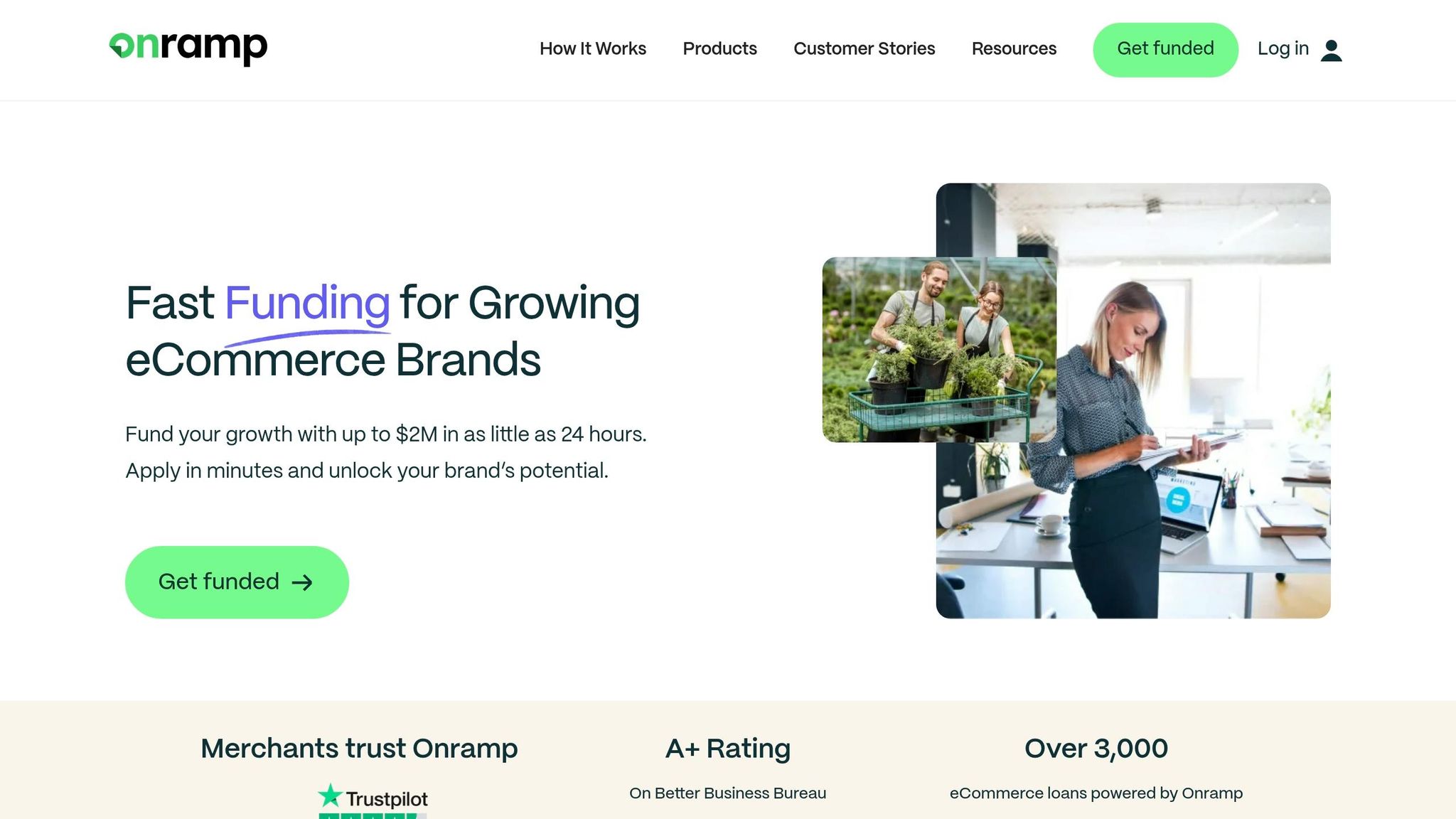
Onramp Funds specializes in equity-free financing tailored for eCommerce businesses looking to scale. By linking your store data, you can receive a cash offer in as little as 2 hours [6]. The platform works with major eCommerce platforms, including Amazon, Shopify, BigCommerce, WooCommerce, Squarespace, Walmart Marketplace, and TikTok Shop.
Here’s what Onramp Funds brings to the table:
- Fast funding: Access capital within 24 hours if you’re in a hurry.
- No equity requirements: Keep full ownership of your business.
- Transparent fees: Pay a flat fee of 2-8%, with no hidden costs [7].
Repayments are tied to your actual sales, so the cost of capital scales with your business performance [7]. This allows businesses to reinvest in inventory, marketing, or operational improvements without worrying about overextending themselves [7]. To qualify, businesses need to generate at least $10,000 in monthly sales.
Fixed Fee vs. Revenue-Based Financing
Choosing the right funding option for fixed capital is easier when you understand the differences between traditional financing and revenue-based alternatives. The table below highlights the key distinctions:
| Feature | Fixed Fee / Traditional Financing | Revenue-Based Financing (Onramp) |
|---|---|---|
| Repayment Terms | Fixed monthly schedule regardless of sales volume [7][8] | Payments fluctuate as a percentage of actual sales [7] |
| Cost Structure | Fixed interest rates; slower approval process [7] | Transparent fees (2-8%); no equity requirements [7] |
| Flexibility | Low; can strain cash flow during slow periods [7] | High; adjusts to revenue changes automatically [7] |
| Speed | Slow; approval may take weeks or months [7] | Quick, often within 24 hours [7] |
| Collateral | Often requires personal guarantees or strict credit checks [7] | No personal guarantees or equity required [6] |
Revenue-based financing is particularly useful for businesses with seasonal sales or fluctuating revenue [7][8]. If your average order value is at least twice your customer acquisition cost, you’re likely to maintain healthy margins during repayment [9]. This makes it a smart choice for funding projects like warehouse expansions, fulfillment automation, or marketing upgrades - investments that directly contribute to growth.
Measuring Returns and Avoiding Mistakes
Metrics to Track Performance
Once you've allocated fixed capital, keeping a close eye on performance metrics is essential to ensure your investments are paying off. One of the most critical metrics is the LTV:CAC ratio - this compares the revenue a customer generates over their lifetime to the cost of acquiring them [10]. A healthy benchmark is at least 3:1, with ratios between 3:1 and 5:1 reflecting strong performance. However, if your ratio exceeds 8:1, it might signal underinvestment in growth [10].
For a more precise evaluation, consider Gross Margin LTV, which factors in profit margins. For example, a $650 revenue LTV with 30% margins delivers less value than a $500 revenue LTV with 70% margins [10]. Another key metric is the CAC payback period, which measures how many months it takes for a customer to generate enough gross margin to cover their acquisition cost. Ideally, this should be under 12 months, as anything over 18 months often requires external funding to remain viable [10].
Metrics like inventory turnover and sell-through rates are also invaluable for understanding how efficiently your capital is being converted back into cash [14]. Compare units on hand to units committed to avoid overstocking and wasting warehouse space [14]. Keep an eye on aging inventory to spot deadstock that might be tying up resources unnecessarily [14]. When deciding whether to hold onto extra inventory, calculate if the carrying costs for another month outweigh the potential margin lost during a stockout [14].
Common Mistakes and How to Prevent Them
Tracking metrics is crucial, but failing to address key details can derail your investments. For instance, scaling with an LTV:CAC ratio below 2:1 can quickly deepen losses [10]. Similarly, operating with razor-thin margins leaves no room to absorb rising advertising costs caused by increased competition [10]. On the flip side, a ratio above 8:1 can indicate you're not investing enough to grow [10].
Another common pitfall is neglecting landed costs - expenses like freight, duties, and storage fees. A product that looks like a bestseller by volume might actually lose money once these costs are accounted for [14]. Poor data management is another issue, with organizations losing an average of $15 million annually due to bad data [13]. Failing to centralize product information across systems can lead to "data drift", where different stores display inconsistent details [13]. Additionally, slow site speeds can hurt conversions - every one-second delay can result in a 7% drop in conversions [13]. Given that over 70% of eCommerce traffic comes from mobile users, prioritizing mobile performance for any tech investment is non-negotiable [13].
Capital allocation should be treated as an ongoing process [11][12]. Regularly review your investments and reallocate funds if an asset underperforms [11][12]. Keep enough cash reserves to handle daily operations while still funding long-term projects. Locking too much capital into fixed assets without maintaining liquidity can lead to operational challenges [12]. By setting regular review checkpoints and recalibrating based on performance, you'll be better positioned to ensure both efficiency and growth over time.
Conclusion
Scaling efficiently means making smart investments in fixed capital that strengthen your business without overextending your cash flow. For mature eCommerce brands, these investments can create a lasting competitive advantage. The focus should always be on improving unit economics - reducing customer acquisition costs while increasing customer lifetime value - rather than simply chasing revenue growth.
To fund these critical investments without putting strain on your cash flow, revenue-based financing offers a flexible solution. Unlike traditional loans with rigid repayment schedules or equity funding that dilutes ownership, this model adjusts repayments based on your sales performance. This flexibility ensures you can reinvest in inventory and marketing while avoiding the stress of fixed monthly payments. It aligns perfectly with the natural rhythms of your business, scaling repayments during high-sales periods and easing the burden during slower months.
Onramp Funds aligns with this need for adaptable financing by offering fast, equity-free funding with transparent fees ranging from 2–8%. With funds available in as little as 24 hours and repayments tied to a percentage of sales, Onramp makes it easier to invest in fixed capital assets that drive growth and profitability - without sacrificing ownership.
However, accessing funds is only part of the equation. Managing these investments wisely is key to sustainable growth. Successful brands are those that balance growth with operational flexibility, track the right metrics, and avoid common pitfalls in capital allocation. Fixed capital investments should deliver long-term advantages, not just short-term gains in capacity.
Whether it’s expanding your fulfillment capabilities, upgrading your technology, or fine-tuning your marketing systems, the ultimate goal is clear: invest in assets that deliver measurable returns over time. With a thoughtful approach to capital allocation and the right financing partner, mature eCommerce brands can scale effectively while maintaining profitability and control.
FAQs
How do I know I’m ready to invest in fixed capital?
When your business enjoys steady cash flow, has a solid grasp of its financial requirements, and is positioned for growth, it’s time to consider investing in fixed capital. This could mean allocating funds toward infrastructure, advanced technology, or essential equipment. However, it’s crucial to ensure these investments won’t jeopardize your liquidity. To stay on track, make it a habit to forecast cash flow regularly, keep an eye on important financial metrics, and prioritize growth that can be maintained over the long haul.
Which fixed capital investment should I prioritize first?
Focusing on investments that strengthen your core operations and stabilize cash flow is key. Start by looking at inventory management, as it’s typically one of the biggest factors influencing cash flow. Implementing accurate demand forecasting and using automated systems can help free up cash while cutting down on unnecessary costs.
Beyond that, explore technology and infrastructure upgrades. Tools like automation software or supply chain management systems can streamline processes, improve efficiency, and create a scalable base to support future growth.
How can I measure if a CapEx investment is paying off?
To determine whether a CapEx investment is delivering results, calculate its ROI by comparing the revenue it generates against the total costs involved. These costs should include the purchase price, training expenses, and ongoing maintenance.
Additionally, monitor key metrics like revenue directly linked to the investment, customer lifetime value (CLV), and average order value (AOV). These indicators help assess both the long-term advantages and the overall operational impact of the investment.
Related Blog Posts
Onramp Funds
Funding built around your sales
Connect your store and see what you qualify for. Repay as a percentage of sales, with no personal credit check.
Funding in as little as 24 hours.
