

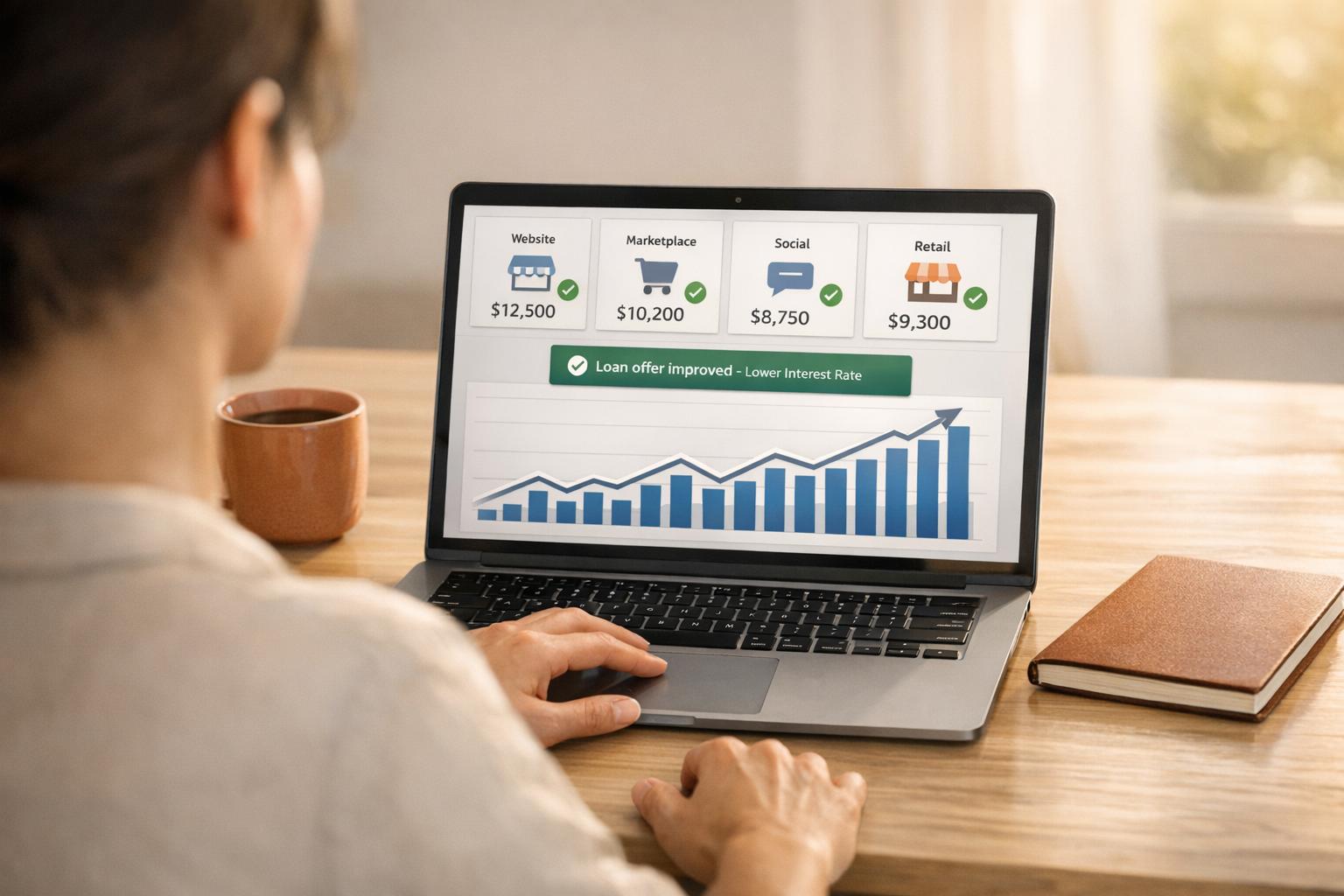
When it comes to securing funding, the platforms where you sell your products matter. Lenders evaluate your sales channels to assess risk and determine funding terms. Relying too heavily on one platform, like Amazon or Shopify, can raise red flags, while spreading revenue across multiple channels reduces risk and improves funding opportunities. Here’s why channel mix matters and how to optimize it:
- Diversification reduces risk: Businesses with more balanced revenue streams are seen as more stable. Over-reliance on a single platform (e.g., 80% of revenue from Amazon) can lead to higher perceived risk.
- Lenders analyze real-time data: They look at metrics like sales velocity, order defect rates, and revenue distribution to decide funding terms.
- Balanced revenue improves funding terms: A mix like 35% Amazon, 35% Shopify, and 30% TikTok Shop can lead to better funding options compared to a single-platform-heavy approach.
- Platform-specific risks exist: Amazon suspensions, TikTok algorithm changes, or high Shopify ad costs can disrupt revenue if you're overly dependent on one channel.
To improve your channel mix:
- Spread sales across at least three platforms.
- Avoid having more than 40% of revenue from one source.
- Use tools like Onramp Funds to link all platforms for a clearer financial picture and flexible funding options.
A strong, balanced channel mix not only reduces risk but also makes your business more attractive to lenders, unlocking better funding opportunities.
What Is Channel Mix and Why It Matters
Channel Mix Defined
Channel mix refers to how businesses distribute their revenue across multiple platforms. This could include direct-to-consumer (DTC) sites like Shopify, third-party marketplaces such as Amazon and Walmart Marketplace, and newer options like TikTok Shop [5][6]. Instead of relying on just one storefront, you spread your revenue streams across several channels, allowing you to connect with different customer groups.
Here’s why this matters: 73% of shoppers use multiple channels during their buying journey [5]. On top of that, global eCommerce revenue is expected to hit $3.66 trillion by 2025, while U.S. social commerce sales alone may exceed $84 billion by the same year [6]. These numbers make it clear why sellers are moving beyond single-platform approaches.
Channel Diversity vs. Revenue Concentration
Channel diversity means selling on multiple platforms to reach varied audiences and reduce over-reliance on one source of income. On the flip side, revenue concentration happens when a large portion of your earnings comes from a single platform or product category.
Here’s a key risk: businesses are often considered high-risk if over 35% of their revenue comes from one channel [10]. This kind of dependency leaves you vulnerable. A policy change, algorithm update, or technical issue on that platform could disrupt your revenue overnight.
Diversifying your channels isn’t just about managing risk - it can also lead to better outcomes. For example, sellers using three or more channels see 494% more orders and report 23 times higher customer satisfaction [7]. This level of diversity is also something lenders look at when assessing your business's financial stability.
Risks Associated with Each Platform
Each platform comes with its own set of challenges. Here’s a quick breakdown:
| Platform | Primary Risk Factor | Key Concern |
|---|---|---|
| Amazon | Account suspension; strict compliance | Metrics like Order Defect Rate (ODR) or late shipments can instantly halt revenue [1][6]. |
| TikTok Shop | Algorithm changes; regulatory issues | Visibility depends on unpredictable algorithms and potential regulatory bans [9][10]. |
| Shopify | Traffic dependency; marketing costs | Requires self-driven traffic, making it vulnerable to rising Google/Meta ad costs [5][6][8]. |
| Walmart | Strict marketplace requirements | Complex compliance standards and integration hurdles [6]. |
For example, Shopify sellers often face "friendly fraud" through chargebacks or security breaches [8][9]. Meanwhile, TikTok Shop sellers rely heavily on fast-changing social trends. As Descartes explains:
Establishing a diverse base insulates your business and helps minimize potential losses due to marketplace volatility [6].
Grow your e commerce store to a multichannel business
How Lenders Assess Channel Mix
When lenders evaluate your business for funding, they dive deeper than just your overall sales numbers. They analyze your channel mix to determine how stable and dependable your revenue streams are. This means looking at where your sales come from and identifying any potential risks tied to specific platforms. These insights play a key role in shaping the funding options available to you.
By using API integrations, lenders can access real-time data from platforms like Amazon, Shopify, Walmart, and others. This allows them to track sales velocity, growth patterns, and performance metrics across your sales channels [1]. Metrics such as order defect rates and late shipment rates are also reviewed. Strong account health signals lower operational risk and suggests you're less likely to face sudden platform suspensions that could disrupt cash flow [1].
Another important factor is SKU and ASIN concentration. A diverse portfolio of top-performing SKUs is seen as more stable. Additionally, businesses with daily payouts provide clearer cash flow visibility compared to those relying on biweekly payments. This kind of diversification not only reduces risk but also supports a more predictable and steady cash flow [1].
Revenue Stability Across Channels
Lenders favor businesses that generate steady revenue from multiple sales channels rather than depending on just one. Operating across multiple platforms allows lenders to combine sales volumes from various sources, which can lead to larger funding packages while reducing the risks associated with policy changes on any single platform.
"The more transparent and frequent your cash flow, the lower your perceived risk." – Onramp Funds [1]
Selling on multiple platforms also provides a safety net. If one channel experiences a slowdown - whether due to seasonal changes, algorithm updates, or rising ad costs - strong performance on other platforms can help balance things out. Considering that 82% of small businesses fail due to cash flow issues [11], maintaining consistent revenue across channels is crucial for securing better funding terms.
The Problem with Over-Reliance on One Platform
Lenders are cautious when they see businesses heavily reliant on a single platform. This kind of dependency can leave your revenue - and your business - vulnerable to sudden disruptions. For instance, account suspensions or drops in key metrics tied to one platform can significantly impact your cash flow. Lenders view this as a risk and may adjust funding terms accordingly [1].
They also consider worst-case scenarios. If your business relies heavily on a specific fulfillment system, such as Amazon FBA, it may face challenges if costs rise or access becomes restricted [1][12]. In liquidation situations, over-reliance on one platform can limit recovery options. For example, if a lender can’t access your primary sales channel due to platform-specific lockouts or third-party IP liens, the value of your inventory could drop significantly [12].
Ultimately, lenders see heavy reliance on a single sales channel as a major risk. To secure favorable funding, they need confidence that your business can continue generating revenue even if your primary platform encounters disruptions.
sbb-itb-d7b5115
How to Improve Your Channel Mix for Funding

Distributing Sales Across Multiple Platforms
Diversifying your sales across at least three platforms can significantly boost your funding potential. Start by analyzing your product catalog and customer segments to match them with the right platforms. For instance, Amazon offers broad market reach, Shopify helps you build your own brand, and TikTok Shop captures social-driven impulse buyers [2].
A great example comes from a German roofing manufacturer that launched a direct-to-consumer brand to sidestep conflicts with existing distributors. They created a new website that directed customer inquiries to local contractors. The result? Their channel partners grew from 12 to 500 roofers in just one year - all while maintaining strong distributor relationships [2].
When moving to new platforms, it’s smart to test the waters with smaller catalog segments instead of your entire inventory. This approach helps you gauge performance without overwhelming your operations. Research shows that nearly 60% of eCommerce managers believe they could have increased revenue by over 10% if they weren’t limited to a single sales channel [2].
Strive for a balanced approach where no single platform accounts for more than 40% of your total revenue. With 38% of channel managers citing conflicts as a key concern, a well-thought-out expansion strategy can help you avoid these pitfalls [2]. Use analytics tools to monitor performance across platforms and adjust your strategy as needed.
Once you’ve achieved a balanced channel mix, securing funding becomes easier, especially with tailored financial solutions.
Using Onramp Funds for Multi-Channel Businesses

For businesses operating across multiple platforms, Onramp Funds offers a tailored solution. The platform integrates seamlessly with Amazon, Shopify, TikTok Shop, Walmart, WooCommerce, BigCommerce, Squarespace, and Shopline, providing lenders a full picture of your business performance instead of focusing on just one platform [13].
Onramp uses a revenue-based repayment model that adjusts according to your combined multi-channel earnings. This means that if one platform sees a dip - whether due to seasonal trends or algorithm changes - stronger performance on other platforms can help keep your repayment manageable.
"Onramp offered the perfect solution with revenue-based financing to secure the capital we needed to invest in inventory and pay it back at a reasonable time frame once we made sales." – Jeremy, Founder and Owner, Kindfolk Yoga [13]
By connecting your stores through API integration, Onramp aggregates sales data from all your platforms. This comprehensive view often allows for larger funding packages than those offered by platform-specific lenders [3]. Once approved, funding typically arrives in under 24 hours, ready to be used for inventory, marketing, or any growth initiative across your channel mix [13].
This streamlined integration not only simplifies revenue tracking but also positions your business for better funding opportunities.
Channel Mix Examples and Funding Impact
To illustrate the importance of channel diversification, let’s look at a few scenarios where revenue distribution affects funding outcomes. These examples show how different channel mixes can influence lender decisions.
| Channel Mix Scenario | Revenue Distribution | Funding Approval Rate | Avg. Funding Amount | Risk Level | Key Impact |
|---|---|---|---|---|---|
| Amazon-Heavy | 80% Amazon, 15% Shopify, 5% TikTok Shop | 60% | $50,000 | High | Over-reliance increases volatility risk [2] |
| Balanced Mix | 35% Amazon, 35% Shopify, 30% TikTok Shop | 90% | $150,000 | Low | Lenders favor diversified revenue streams [14] |
| Emerging Multi-Channel | 25% Amazon, 40% Shopify, 35% Social Commerce | 75% | $100,000 | Medium | Shows potential but lacks a proven track record [2] |
The balanced mix scenario clearly highlights the benefits of diversification. Businesses using omnichannel strategies often see in-store visits rise by 80% and online sales increase by up to 13.9%. Moreover, multi-channel customers typically spend 10.6% more than single-channel shoppers [14]. These figures demonstrate to lenders that your business is resilient against platform-specific challenges.
To qualify for Onramp funding, your connected platforms must generate at least $10,000 in average monthly sales [13]. The more diversified your revenue streams, the more attractive your business becomes to lenders. Balanced revenue is seen as a sign of operational stability and reduced risk [3].
Best Practices for Managing Your Channel Mix
Aligning Your Channel Mix with Onramp Funds Features
Onramp's platform integrations shine when you connect all your active sales channels. By linking platforms like Amazon, Shopify, and TikTok Shop through API integration, you provide lenders with a complete snapshot of your business's performance. This comprehensive view can lead to higher funding limits and approvals in under 24 hours [1][15].
The sales-based repayment model works particularly well when you operate across multiple channels. For instance, if Amazon introduces a policy change or algorithm adjustment that temporarily impacts your sales, repayments automatically adjust based on your overall revenue from all platforms. This flexibility means you're not locked into fixed monthly payments that might not align with your actual cash flow [15].
Onramp's 24-hour funding also allows you to experiment with new sales channels without overextending your resources. For example, if 60% of your revenue comes from Amazon, you can quickly secure capital to explore TikTok Shop or strengthen your Shopify presence, all while meeting the $10,000 minimum monthly sales requirement [1].
Balancing Revenue Across Channels
Once you've optimized your funding options, focus on maintaining balanced revenue streams across your channels. Regularly monitor your revenue concentration to ensure no single platform dominates your sales. Analytics tools can help you identify platform-specific risks, such as Amazon's ODR (Order Defect Rate), delays in shipments, or negative customer feedback. These insights not only signal operational reliability to lenders but also help you address potential issues before they escalate [1].
Diversifying your product offerings is another way to stabilize revenue. Match your inventory to each platform's strengths: keep steady-selling products on Amazon for reliable income, use Shopify to build brand loyalty with exclusive items, and test trending products on TikTok Shop to tap into viral demand. This strategy helps reduce the revenue swings often faced by sellers who depend heavily on a single platform, especially during algorithm changes or seasonal shifts [2][14].
Perform quarterly reviews of your channel performance to identify which platforms deliver the best ROI. Over 80% of eCommerce leaders now rely on real-time data analytics for optimization decisions [14]. If a channel underperforms or becomes oversaturated, consider reallocating your marketing budget and inventory. Onramp's flexible funding can support these adjustments without straining your working capital, enabling you to pivot strategically and maintain growth momentum.
Conclusion
Expanding your sales channels, as discussed earlier, plays a key role in shaping lender confidence and improving funding options. By spreading your sales across platforms like Amazon, Shopify, and TikTok Shop, you minimize the risks tied to any single platform and position your business for more favorable funding terms.
Onramp Funds takes this a step further by analyzing your entire multi-channel performance through API integration. This streamlined approach enables access to larger funding amounts in less than 24 hours, with repayments linked to your overall revenue streams [3][4]. By offering a complete view of your business performance, Onramp makes it possible to secure funding that aligns with your business's full potential.
To maximize these benefits, it’s important to strike a balance. Keep an eye on revenue distribution, diversify your product offerings, and use real-time analytics to stay ahead of potential platform challenges. When you combine a strong channel strategy with Onramp’s integrations, you showcase the true strength of your business - beyond just a single revenue stream.
A carefully managed channel mix not only makes your business more attractive to lenders but also sets the foundation for sustainable growth. In the end, a diverse and well-optimized channel strategy becomes one of your greatest tools for securing the capital needed to scale your business.
FAQs
Why is relying on just one sales platform risky for your eCommerce business?
Relying too much on a single sales platform can leave your business exposed to serious risks. If that platform decides to change its fee structure, update account policies, or - worst of all - suspend your account, your revenue could take a significant hit. This kind of market concentration risk is something lenders tend to view as a warning sign.
Another challenge is the variation in payout schedules across platforms. For instance, Amazon might hold your payments for up to 14 days, while Shopify usually processes payouts within 2–3 business days. If most of your income is tied to a platform with slower payouts, you could face cash-flow gaps. These delays can make it harder to restock inventory or cover essential operating expenses.
By spreading your sales across multiple channels - like marketplaces, social media platforms, and your own eCommerce site - you can create a steadier cash flow, minimize risks, and improve your chances of getting funding when you need it. Diversification isn’t just smart; it’s essential for long-term stability.
How can eCommerce businesses diversify their sales channels effectively?
Diversifying your sales channels means offering your products on multiple platforms, including your own eCommerce site (like Shopify), large marketplaces such as Amazon or Walmart, and social commerce platforms like TikTok Shop or Instagram Shopping. This approach spreads risk by reducing dependence on a single platform and creates multiple streams of revenue.
Start by analyzing where your current sales are concentrated, then branch out into channels that connect with new customer segments or align with emerging shopping trends. For instance, if most of your sales are through Amazon, you might launch a Shopify store to attract customers who prefer a personalized, branded shopping experience. Alternatively, platforms like TikTok Shop can help you engage younger audiences who are drawn to short-form video content. To keep everything running smoothly, a unified inventory management system is key - it ensures you can track stock across platforms, preventing issues like overstocking or running out of inventory.
It’s also smart to consider payment schedules when choosing sales channels. Different platforms release funds at different rates: Amazon payouts can take up to 14 days, while Shopify typically pays within 2–3 days. A mix of fast- and slower-paying channels can help maintain a steady cash flow. By diversifying your sales platforms, keeping an eye on cash flow, and tracking key metrics like sales velocity and customer acquisition costs, you can create a multichannel strategy that supports growth and opens up new funding opportunities.
How do lenders assess the impact of a business's sales channels on funding decisions?
Lenders take a close look at a business's sales channel mix to understand how revenue is spread across platforms like Amazon, TikTok Shop, and Shopify. They focus on factors such as sales consistency, growth patterns, and how well marketplace accounts are performing - things like order defect rates and fulfillment metrics come into play here.
Another key area they evaluate is unit economics. This includes metrics like customer acquisition costs, payback periods, and gross margins. These numbers help lenders gauge the risks tied to over-reliance on a single channel. Businesses with a diverse and balanced channel mix are often seen as less risky, which can make it easier for them to secure funding.
Related Blog Posts
Onramp Funds
Funding built around your sales
Connect your store and see what you qualify for. Repay as a percentage of sales, with no personal credit check.
Funding in as little as 24 hours.
