

Originally published January 31st, 2023
Last updated June 2nd, 2025
Whether you’re just starting out in the eCommerce world or already selling, there’s a bit of mystery to the freight industry.
Getting your products moved from your factory to their final destination, whether it’s a warehouse you own, your Third-Party logistics company’s warehouse, or directly into Amazon’s FBA warehouse, there’s a lot that needs to happen for your products to arrive at their final destination.
It’s so complicated, in fact, that no experienced eCommerce seller will ever try to get anything shipped from overseas by themselves.
What you need to ship products successfully is a freight forwarder.
Finding a freight forwarding company that works for you can be tricky as there are so many options.
This post will discuss ways to obtain freight forwarding for shipping your products overseas.
Option 1: Freightos
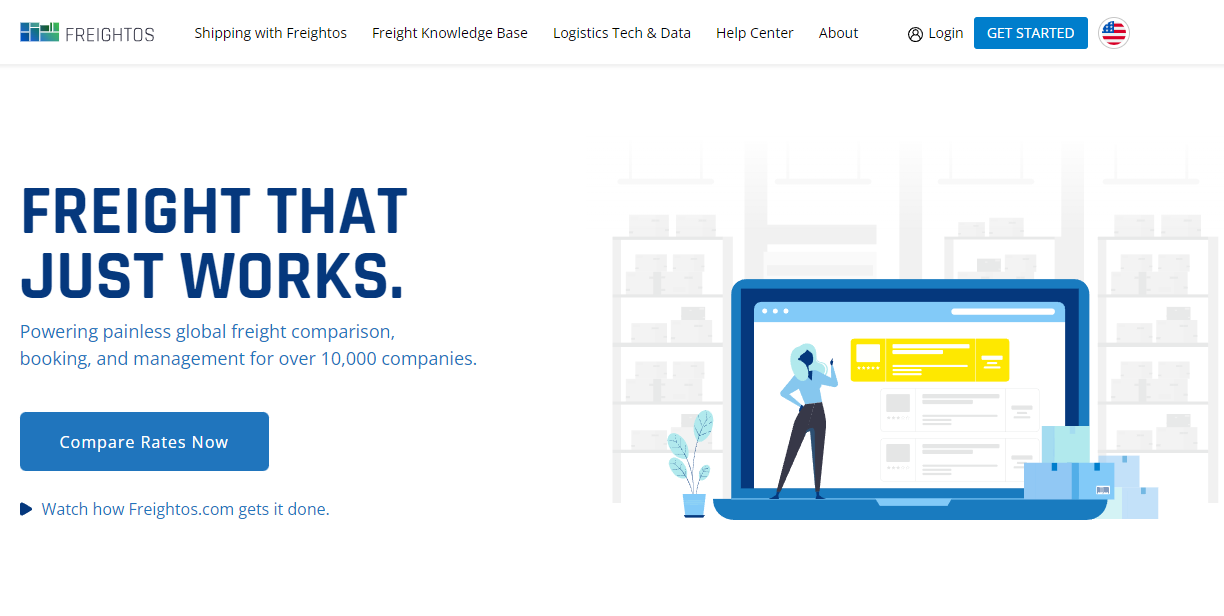
Freightos is a very unique freight forwarder in that they’re not really a freight forwarding company at all, but a marketplace of freight forwarders. For many Amazon businesses, Freightos is considered one of the best freight forwarders because of its transparency and price comparison tools.
For new sellers, Freightos is a great option because it takes a lot of the industry knowledge required of the seller out of the equation and handles all the messy aspects of freight forwarding for you.
To use the site, all you do is enter the parameters of your shipment—things like the volume and weight of your products, whether you want to book a full container load (FCL) or a less than container load (LCL), and whether you want the products shipped directly to your warehouse, your port, or your Amazon FBA fulfillment center.
Freightos supports both FCL (full container load) and LCL (less than container load) options, depending on your budget and volume.
It will then take those parameters, do some calculations, and offer an estimation of how much everything will cost from different freight forwarders.
If you decide to use Freightos, you can provide them with information from your manufacturer and they will make contact and get the shipment of your products arranged.
The great thing about Freightos is they do the heavy lifting for you, they handle all the scheduling of drivers, Power of Attorney, insurance, and submitting of timely documents so you don’t have to worry about anything.
This makes Freightos a great beginner-friendly option for those new to global logistics or unsure how to navigate customs regulations.
If you don’t end up using Freightos, that’s fine, but one good tip is you can use their system to estimate how much a shipment would cost, and compare it with any quote a different forwarder gives you.
If their rates are too high, you can ask them to come down or simply use Freightos.
Option 2: Use Your Manufacturer’s Forwarder
Most manufacturers overseas will have an in-house agent or freight forwarder they typically work with in case a customer wants to keep everything in-house.
While this can seem like a quick, easy, and appealing option, you have to make sure that you’re prepared to take on the various responsibilities and potential headaches associated with using an essentially random freight forwarding company.
Choosing a logistics company without experience in Amazon fulfillment centers can lead to customs delays or incomplete paperwork.
Some things to keep in mind when using an in-house forwarder:
Learn essential documentation
Documents need to be submitted to certain parties, such as your freight forwarder, customs broker, and Amazon FBA warehouse, for your products to flow smoothly through the international shipping process from the factory to their final destination.
Proper documentation like the Bill of Lading, Commercial Invoice, and Arrival Notice are non-negotiable parts of Amazon FBA freight forwarding.
Having specific documents not in the proper peoples’ hands at the right time can delay your international shipping, put holds on your container during customs clearance, and lead to costly fees that disrupt your Amazon FBA freight forwarding process.Let’s look at some vital documents that you will need to have:
ISF Document. Some forwarders will need you to create an ISF document yourself and submit it to your customs clearance agent.
Some freight forwarders don’t handle this step, as they don’t establish any communication with customs agents or your customs broker until the end—when sending your container’s arrival notice—so they leave it on you, the Amazon seller, to create and submit it for customs clearance.
Creating one is simple enough, some quick Google searching will find you a bunch of free templates, like this page from IncoDocs.
Original Bill of Lading. This document is the “original” bill of lading, not a copy, that your forwarder will hand over to the final Port for release of your container.
Commercial Invoice. This is the invoice your manufacturer will provide you with so you can pay for your products. This document is required to be delivered to customs so they can clear your shipment for release.
Arrival Notice. This is the document that indicates your international shipment is about to arrive at port. Your freight forwarder or logistics company should be able to pass this arrival notice to the appropriate parties—such as your customs broker or Amazon FBA warehouse—but it also sometimes serves as a commercial invoice you need to pay to complete the shipping process.
Understanding how these documents relate to Incoterms like FOB and EXW can prevent unnecessary shipping costs.
Option 3: Use an Independent Freight Forwarder
Of course, if you have your own personal agent or freight forwarding company that you trust, you can certainly use them for all of your product shipments.
Depending on the freight forwarding company you use, they can offer complete white glove logistics services —where you don’t need to handle a single form, arrival notice, or shipping document—and still get your products delivered to your Amazon FBA warehouse or final destination, though premium freight forwarders typically come with premium prices.
Independent freight forwarding services are often more flexible with door-to-door solutions for eCommerce businesses with complex supply chains.
Independent freight forwarding services are often more flexible with door-to-door solutions for eCommerce businesses with complex supply chains.
Some like to pay for peace of mind and using a reputable companies to avoid problems like a late ISF filing that can cost you $5,000 in fees, it might be worth it to pick up a reputable forwarder.
Where can you find an independent forwarder? Check all the usual places, Google searching, Upwork, or get a referral from someone you know in the eCommerce industry (every seller has their own personal set of professionals they work with and trust and are usually more than willing to share who they work with).
Conclusion
With these three options, you should easily be able to find the source for a reliable freight forwarding company that you can use to help solve one of the most frustrating parts of selling online: logistics.
From air freight to sea freight, choosing the right shipping method depends on your timeline, budget, and product type.
Learning a little about freight shipping and logistics can help you get your products where they need to be faster, as knowing some industry terms and understanding how things work can help get your container unfrozen or help remove a hold.
Freight forwarders are vital partners in maintaining a cost-effective supply chain and optimizing the Amazon FBA shipping experience.
FAQ
Q: What is a freight forwarder and why do I need one?
A freight forwarder is a company or agent that arranges the transportation of goods from your manufacturer to their final destination—such as your warehouse or an Amazon FBA fulfillment center. They handle logistics like sea freight, air freight, customs clearance, documentation, and insurance.
Q: What’s the difference between FCL and LCL shipping?
FCL (Full Container Load) means you’re shipping an entire container of goods, even if it’s not full. LCL (Less than Container Load) means your products share space in a container with shipments from other businesses. LCL is more affordable for small shipments but may involve slightly longer delivery times.
Q: Can I use my manufacturer’s freight forwarder?
Yes, many manufacturers work with in-house freight forwarders. However, you’ll need to ensure you're prepared to manage important tasks like submitting customs documents (e.g., ISF, commercial invoice, bill of lading) and handling communications with customs brokers and ports.
Q: How much does freight forwarding cost?
Costs vary based on shipment size, shipping method (air vs. sea), destination, and the forwarder you use. Using platforms like Freightos helps you get real-time estimates and compare pricing. Additional costs may include customs duties, insurance, and long-term warehousing.
Q: Should I use a freight forwarder for Amazon FBA?
Yes—especially for international shipping. Freight forwarders understand Amazon's strict requirements (like labeling, FNSKUs, and appointment scheduling), helping ensure your FBA inventory is delivered without issues or rejections.
Onramp Funds
Funding built around your sales
Connect your store and see what you qualify for. Repay as a percentage of sales, with no personal credit check.
Funding in as little as 24 hours.
