

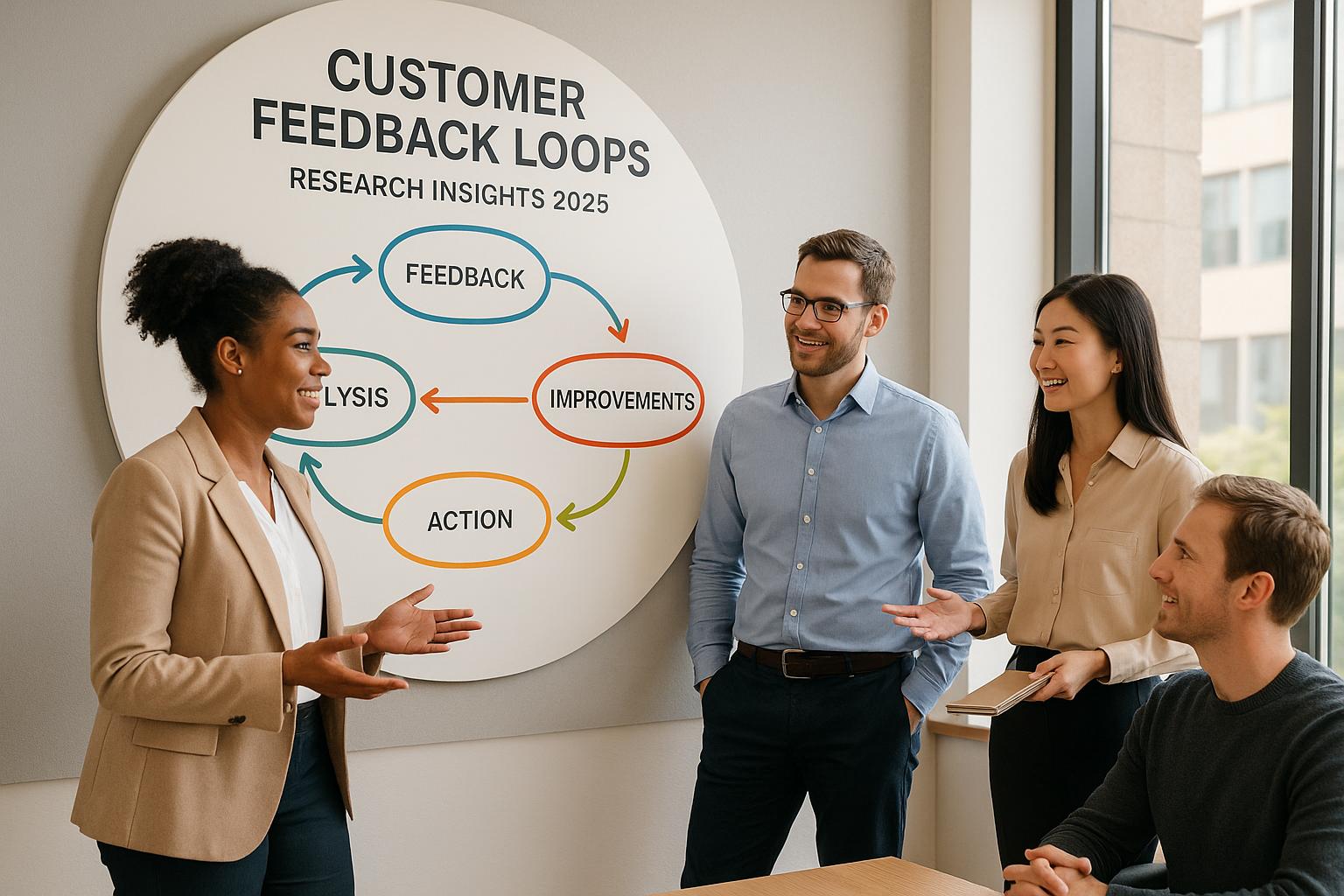
Customer feedback loops are driving success in eCommerce this year. Here's what you need to know:
- 85% of companies focusing on feedback report revenue growth, yet only 7% actively seek it.
- Retention matters: A 5% increase in customer retention can boost profits by over 25%.
- Feedback loops follow four steps: collection, analysis, action, and follow-up. However, only 48% of businesses follow up with dissatisfied customers.
- Multi-channel feedback systems, like surveys and online communities, are key to gathering insights.
- Technologies like AI-powered sentiment analysis and CRM integrations help manage feedback efficiently.
- Flexible funding options, such as revenue-based financing, make it easier for businesses to invest in feedback tools.
The bottom line? Businesses that listen to their customers, act on insights, and close the loop see stronger loyalty, higher retention, and increased revenue.
Closed Loop Customer Feedback
2025 Research Findings on Feedback Loops
Research from 2025 highlights a clear distinction between companies that simply gather feedback and those that turn it into measurable growth. For example, 85% of companies that prioritize customer feedback report an increase in revenue [5]. Yet, a significant gap remains in the ability to move from collecting feedback to effectively using it across the industry.
This gap is particularly striking when considering the potential impact: improving customer retention by just 5% can increase profits by more than 25% [1]. Despite the obvious benefits, many businesses struggle to fully leverage the insights they already have.
Forrester's 2025 CX Index underscores the financial benefits of a well-executed feedback system. The data shows that even a one-point improvement in customer experience quality can lead to substantial revenue growth in the retail sector [8]. These findings highlight the importance of identifying and implementing effective feedback strategies.
Proven Methods for Feedback Loop Implementation
The research points to a shift among top-performing eCommerce companies in 2025. Instead of relying on a single channel for feedback, they’ve adopted multi-channel feedback systems. By gathering insights through surveys, reviews, online communities, and social media platforms [1][3][7], these companies can integrate feedback from various sources and act on it more effectively.
Quick, high-quality responses to customer feedback not only boost engagement but also build loyalty. However, the process doesn’t stop there. Companies need to "close the loop" by communicating the changes made based on customer input. This transparency strengthens trust and lays the groundwork for lasting relationships [1][4].
A great example of this approach is Nike’s Nike+ community, which uses real-time customer feedback to shape product development and marketing strategies [3]. Leading brands also proactively collect feedback at critical points in the customer journey, addressing potential issues before they escalate [1].
Metrics for Measuring Feedback Loop Performance
To gauge the success of feedback loops, businesses need to track specific metrics tied directly to outcomes. Metrics like customer retention rates, churn reduction, and customer lifetime value (CLV) are critical indicators of how well feedback is driving growth [1][2][3].
Advanced analytics tools now enable companies to monitor additional metrics, offering deeper insights. These include the speed of response to feedback, the percentage of feedback acted upon, and the impact of changes on repeat purchase rates and average order value [3]. Together, these metrics provide a more comprehensive view of feedback loop performance.
While traditional metrics like Net Promoter Score (NPS) and customer satisfaction scores (CSAT) remain useful, research from 2025 highlights their limitations when used in isolation [1][2][3]. The most successful businesses pair these metrics with behavioral data to get a fuller picture of their feedback systems.
One particularly revealing statistic: 72% of consumers are more likely to stay loyal to brands that foster strong online communities [3]. This makes community engagement metrics especially valuable. Companies that track participation rates, discussion quality, and member-generated insights often uncover their most actionable feedback from these highly engaged groups. These precise metrics are paving the way for integrating advanced technologies into feedback systems.
New Technologies in Feedback Loops
Feedback loops have always been a cornerstone of understanding and improving customer experiences. Now, with advanced technologies stepping in, the way businesses manage customer feedback is undergoing a transformation. By automating tasks that once required manual effort, eCommerce companies can handle feedback on a larger scale while still delivering personalized, meaningful interactions.
AI and Automation in Feedback Management
Artificial intelligence is changing the game when it comes to customer feedback. Instead of waiting for issues to surface, AI-powered tools use predictive analytics to spot trends and anticipate potential dissatisfaction before it escalates [3]. These systems can perform real-time sentiment analysis across multiple platforms, categorize feedback automatically, and even trigger immediate actions based on predefined rules. When something needs attention, teams can be alerted instantly, ensuring swift resolutions.
Machine learning also plays a key role by tailoring responses to individual customers, making interactions feel more personal and impactful. By automating repetitive tasks, companies can shift their focus to strategic improvements. Meanwhile, advanced analytics uncover patterns across channels that might otherwise go unnoticed, giving businesses a clearer picture of what their customers need and expect.
CRM and eCommerce Platform Integration
Bringing customer relationship management (CRM) systems and eCommerce platforms together creates a seamless way to handle feedback. By consolidating input from various channels, this integration eliminates data silos, ensuring all departments have access to the same customer insights. This unified approach enables better collaboration across teams - marketing can refine campaigns, product teams can address feature requests or pain points, and support teams can track and improve resolution processes.
Automated follow-ups and tracking features ensure that feedback-driven initiatives are monitored effectively. Additionally, linking customer feedback to purchasing behavior helps businesses understand its impact on customer lifetime value and overall return on investment. This level of integration not only improves retention rates but also boosts long-term customer value.
When AI, automation, and CRM systems work together, they create a powerful feedback ecosystem. This combination allows businesses to operate at a scale and speed that was previously unimaginable. Companies leveraging these tools often see higher customer satisfaction, lower churn rates, and greater customer lifetime value. For growing eCommerce businesses, these advancements are especially critical, enabling them to manage expanding customer bases efficiently while maintaining a personal touch in every interaction.
sbb-itb-d7b5115
Funding Feedback Loop Improvements for Business Growth
Creating effective customer feedback loops often requires upfront investments that many eCommerce businesses struggle to afford. Advanced tools like AI-driven analytics platforms, integrated CRM systems, and automated feedback solutions come with a price tag that can stretch tight budgets. With 80% of executive leaders predicting that customer experience will be the key competitive factor by 2025[3], the urgency to invest in these technologies is undeniable. However, this funding gap can prevent businesses from adopting the tools they need to gather and act on customer feedback.
Feedback loops have a proven impact on boosting retention rates and customer lifetime value (CLV). But to make the most of these systems, businesses need access to the right funding. Unfortunately, traditional financing options - with their strict repayment terms and slow approval processes - often fall short in meeting the needs of fast-moving eCommerce companies.
Flexible Funding for Customer Experience Investments
eCommerce businesses face cash flow challenges that are anything but predictable. Seasonal sales fluctuations, promotional campaigns, and changing market dynamics can make fixed repayment schedules from traditional loans a burden, especially during slower periods. That’s where flexible funding becomes a game-changer for businesses looking to invest in customer feedback technologies.
Onramp Funds offers a solution with fast, equity-free financing designed specifically for eCommerce sellers on platforms like Amazon, Shopify, BigCommerce, WooCommerce, Squarespace, Walmart Marketplace, and TikTok Shop. Instead of relying solely on credit scores or collateral, Onramp evaluates businesses based on their actual sales performance and growth potential. Once approved, sellers can access funds within 24 hours, enabling them to act quickly on customer insights and adopt the tools needed to enhance feedback loops.
This flexible funding approach not only addresses immediate cash flow concerns but also allows businesses to align their investments with their operational needs. By offering repayment terms tied to sales performance, Onramp Funds supports long-term, sustainable growth.
Revenue-Based Financing for Feedback-Driven Growth
Revenue-based financing offers a more adaptable alternative to traditional loans. Instead of fixed monthly payments, repayments are tied to actual sales, making this model more aligned with the ebb and flow of eCommerce revenue. This flexibility is especially valuable for businesses investing in customer feedback systems, as improvements in customer experience often take time to fully materialize.
For eCommerce sellers, this funding model provides breathing room during slower periods while scaling repayments during peak sales times. Research shows that optimizing customer feedback loops can significantly boost revenue and retention, yet many businesses still struggle to implement these systems effectively. Onramp Funds helps bridge this gap by offering repayment terms that adjust automatically with sales deposits.
This adaptable repayment structure allows businesses to take a step-by-step approach to feedback loop optimization. Sellers can invest incrementally, measure the results, and fine-tune their strategies based on real customer data - all without the financial strain of rigid loan terms. By aligning funding with sales performance, businesses can focus on growth while maintaining the flexibility to respond to customer needs in real-time.
Key Takeaways on Customer Feedback Loops
Customer feedback loops have become a cornerstone for eCommerce success in 2025. Research highlights that businesses focusing on collecting and acting on feedback experience tangible gains, with 85% reporting increased revenue[5].
The best-performing eCommerce companies know that feedback loops go beyond gathering opinions. They implement structured, ongoing systems that turn customer insights into actionable improvements. Leading brands are using real-time customer engagement to inspire product innovations and build stronger loyalty.
Advancements in technology have also supercharged feedback loop management. AI-driven tools now deliver real-time alerts and predictive insights, helping businesses address potential issues before they grow into larger problems.
The tried-and-true four-step framework - collection, analysis, action, and follow-up - remains the backbone of effective feedback loops[2]. Yet, many companies miss a critical step: closing the loop. Only 48% of organizations follow up with dissatisfied customers, leaving room for improvement[6].
In today’s fast-changing market, agile feedback systems offer a clear competitive edge. Flexible financing options, like those from Onramp Funds, allow eCommerce businesses to invest in advanced feedback tools without straining cash flow. This revenue-based financing aligns repayments with actual sales, making it easier to fund feedback-driven upgrades while maintaining financial flexibility. By bridging these investment gaps, businesses can sustain the ongoing dialogue that strengthens customer loyalty.
The most successful companies treat feedback as a continuous conversation, not just a series of isolated surveys. Using multiple feedback channels, responding quickly to input, and clearly communicating changes based on customer insights help build the transparency and trust that lead to stronger relationships and increased customer lifetime value.
For eCommerce sellers aiming to refine their feedback loops, the roadmap is clear: adopt diverse feedback channels, leverage AI-powered analytics, and promote collaboration across teams to act on insights. Mastering these practices is essential for staying ahead in a market where understanding and responding to customer needs is a game-changer.
FAQs
How can businesses turn customer feedback into meaningful changes that boost revenue?
To transform customer feedback into impactful changes, start by diving into the data. Organize and analyze it to uncover trends and pinpoint areas that matter most to your customers. Then, prioritize improvements that not only address customer needs but also align with your business goals. It’s smart to focus on adjustments that can boost customer satisfaction while also driving revenue.
When setting goals, use the SMART framework - make sure they’re specific, measurable, achievable, relevant, and time-bound. This approach ensures your objectives are clear and actionable.
Sometimes, implementing these changes may call for extra resources, whether that’s investing in new technology, staff training, or upgrading operations. If funding is a hurdle, flexible financing options - like those offered by Onramp Funds - can provide the capital needed to expand effectively without disrupting your cash flow.
How does AI-powered sentiment analysis improve customer feedback loops, and how can businesses implement it effectively?
AI-powered sentiment analysis streamlines how businesses handle customer feedback by automatically assessing input from reviews, surveys, and social media. It helps identify customer emotions and spot recurring patterns, giving companies a faster way to gauge satisfaction, pinpoint issues, and address areas needing improvement.
To leverage this technology, businesses can adopt AI tools with built-in sentiment analysis capabilities. These tools easily integrate into existing systems via APIs, automating the collection and interpretation of data. This not only allows companies to respond to customer needs more efficiently but also helps refine products or services based on clear, actionable insights.
How can revenue-based financing help eCommerce businesses invest in customer feedback tools, and how is it different from traditional loans?
Revenue-based financing gives eCommerce businesses a more adaptable way to fund investments like customer feedback systems, without the constraints of traditional loans. Instead of fixed monthly payments, repayments are tied to a percentage of your sales. This means payments automatically adjust to match your cash flow, offering relief during slower sales periods.
Unlike conventional loans, which come with rigid repayment schedules and drawn-out approval processes, revenue-based financing provides quicker access to funds - sometimes in as little as 24 hours. Plus, it lets you keep full ownership of your business by steering clear of equity dilution. This makes it a great choice for scaling operations and investing in tools that boost customer retention and drive growth.
Related Blog Posts
Onramp Funds
Funding built around your sales
Connect your store and see what you qualify for. Repay as a percentage of sales, with no personal credit check.
Funding in as little as 24 hours.
