


Running an eCommerce business? Funding decisions can make or break your growth. But emotions like fear and FOMO (fear of missing out) often lead to hasty choices, over-borrowing, or locking into unfavorable terms. Here's the key: evaluate funding options based on your business needs, not emotional triggers.
Key Takeaways:
- FOMO is costly: 60% of people admit to impulsive decisions due to FOMO, and businesses often borrow during market highs, which can reduce performance by 4%.
- Emotional triggers to watch: Scarcity tactics, social media comparisons, and urgency can cloud judgment.
- Real consequences: Over-borrowing or rushing into loans can strain cash flow and hurt long-term stability.
- Better decisions: Review cash flow, use planning tools, and consider flexible funding, like revenue-based financing, to match your business cycles.
Avoid letting emotions dictate your funding strategy. Focus on clear, data-driven decisions to set your business up for steady growth.
Are You Driven by FOMO? | Investing Psychology & The Christmas Trap
sbb-itb-d7b5115
How Fear and FOMO Affect eCommerce Financing
eCommerce sellers often experience pressure as they watch competitors expand, creating a sense of urgency that can cloud their judgment when it comes to funding decisions.
What Causes Fear and FOMO in eCommerce?
A few key factors push eCommerce sellers toward emotionally charged funding choices. Scarcity and urgency are major culprits. When funding offers are marketed as "limited-time only" or when inventory opportunities appear fleeting, it creates a sense of false urgency. This taps into a deep-seated survival instinct - our natural drive to secure limited resources. In the world of eCommerce, this instinct translates into a fear of missing out on capital that could otherwise help competitors dominate the market [5][6].
Another factor is social validation. Drawing from Maslow's Hierarchy of Needs, the urge to feel included and recognized often drives sellers to make financial decisions just to keep pace with their peers [7]. For instance, 71% of people admit they are more likely to make a purchase based on social media recommendations [7]. When competitors flaunt their growth online, it triggers a reaction - an immediate need to act so you don't feel left behind or miss out on opportunities [7].
The Zeigarnik Effect also plays a role, pushing sellers to complete funding deals quickly without fully analyzing the details [5]. By understanding these psychological triggers, it's easier to see how they distort logical financial decision-making.
How Emotions Affect Your Decisions
Once these triggers are in play, fear and FOMO can significantly skew your ability to make sound decisions. Loss aversion, for example, causes you to focus more on avoiding missed opportunities than on evaluating potential risks. At the same time, dopamine spikes can lead to quick, emotion-fueled choices [1]. Recognizing these emotional traps is critical to making funding decisions that align with your cash flow and business goals.
This emotional urgency often disrupts the thorough, analytical approach needed to evaluate funding terms, interest rates, or repayment schedules [3]. Instead, sellers may rely on mental shortcuts, which can lead to herd behavior - following competitors into financing options that might not suit their actual needs [1]. As Geetika Chhatwal, author and expert, explains:
"Decisions are often driven by instinct. Scarcity, urgency, and fear exploit cognitive biases." – Geetika Chhatwal [5]
The challenge is that FOMO-driven decisions are rarely recognized in the moment [6]. You might rationalize your actions as strategic, but in reality, you're reacting to emotional pressure. This rationalization often occurs after the decision, making it difficult to catch and correct these behaviors as they happen.
What Happens When Emotions Drive Funding Choices
When emotions like fear or FOMO (fear of missing out) take the wheel, your eCommerce business can veer into dangerous territory. One of the biggest risks is over-leveraging - taking on more debt than your business can realistically handle. This often happens when the emotional pull of FOMO clouds your judgment, leading to hasty decisions that seem smart in the moment but turn into costly mistakes down the road [4]. Recognizing these emotional triggers is the first step toward making more calculated and rational funding decisions.
The fallout from emotion-driven choices can be tough to manage. Many business owners experience regret or dissatisfaction after rushing into funding agreements [3]. Limited-time offers or scarcity tactics can create a false sense of urgency, pushing you to commit to loans or terms without fully weighing the details - like interest rates or repayment schedules [3]. Worse, FOMO can turn impulsive decisions into long-term financial habits, making it even harder to break free from poor funding strategies [3]. Let’s dive into a couple of scenarios that highlight how these pitfalls can play out.
Case Study: Borrowing Too Much Out of Fear
Picture this: An online home goods retailer sees competitors ramping up their Q4 2025 marketing campaigns. Worried about losing market share, the owner decides to secure $150,000 in funding - three times the usual $50,000 needed for inventory. The loan terms? Fixed weekly payments of $4,200, no matter how sales fluctuate.
Fast forward to February 2026. The holiday buzz is over, and monthly sales have plummeted from $80,000 to $35,000. With fixed repayments eating into cash flow, the business struggles to cover both loan payments and other essential expenses like advertising and supplier bills. The fear of falling behind competitors led to over-borrowing, creating a debt load the business couldn’t sustain [4]. This scenario illustrates how critical it is to base funding decisions on actual business needs, not emotional reactions.
Case Study: Rushing Into Funding Because of FOMO
Here’s another example: A beauty products seller gets an email in March 2026 offering "exclusive funding - only 48 hours to apply." The deal? $75,000 with what appear to be straightforward terms. Feeling the pressure and seeing competitors expand on social media, the seller jumps on the opportunity without thoroughly reviewing the contract.
After approval, the reality sets in: the loan includes a 1.4x repayment factor, meaning the seller owes $105,000 in total. On top of that, daily ACH withdrawals take 12% of gross sales. During slower months, these deductions drain nearly all revenue, leaving no room for inventory restocking or marketing. This rushed decision - driven by FOMO - locked the seller into repayment terms that didn’t align with the business’s cash flow [4]. It’s a clear reminder of how essential it is to match funding terms to your operational realities.
How to Make Smarter Funding Decisions
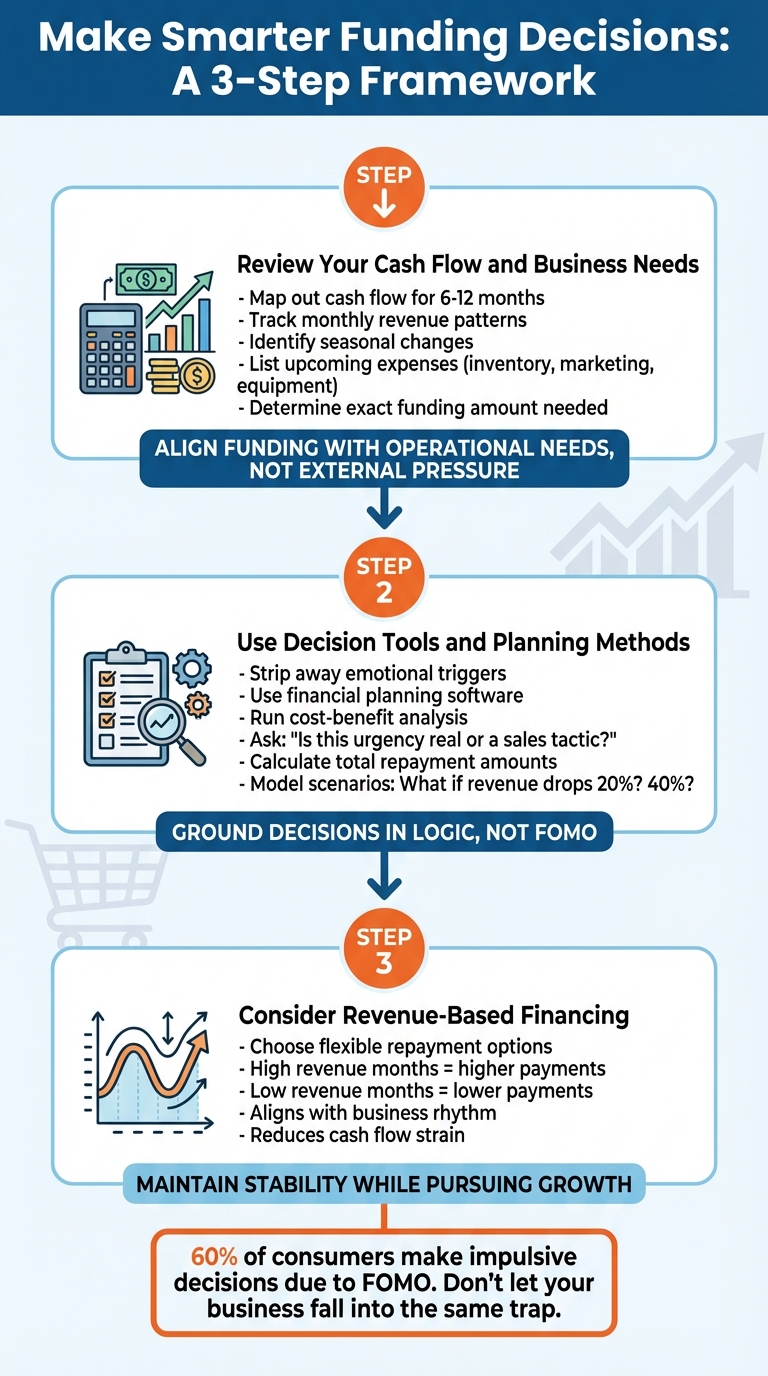
Making funding choices based on emotions can lead to costly mistakes, but there are practical steps you can take to make better decisions. By focusing on objective data and aligning your funding strategy with your business cycle, you can avoid impulsive reactions and build a plan that supports steady growth. Here's how to approach funding decisions with a clear and strategic mindset.
Review Your Cash Flow and Business Needs
The first step is to get a clear understanding of your cash flow and upcoming expenses. Map out your current and projected cash flow for the next 6 to 12 months. Pay attention to monthly revenue patterns, seasonal changes, and any significant costs on the horizon, like inventory restocking, marketing campaigns, or equipment upgrades. This overview helps you determine exactly how much funding is needed and when you'll need it.
By aligning funding decisions with your operational needs and seasonal revenue trends, you reduce the risk of overborrowing or underestimating your requirements. This approach keeps you focused on what your business truly needs, rather than being influenced by temporary offers or external pressures.
Use Decision Tools and Planning Methods
Relying on tools and frameworks can help you make more rational funding decisions. For example, financial planning software or cost-benefit analysis tools can strip away the emotional element. When faced with a funding offer that comes with a high-pressure deadline - like a "limited 48-hour deal" - take a step back. Ask yourself: Is this urgency based on my business's actual needs, or is it just a sales tactic? [2]
It's easy to justify an emotional choice after the fact, but you can avoid this trap by carefully evaluating the offer. Run the numbers: calculate the total repayment amount, assess how periodic withdrawals will impact your cash flow, and model different scenarios. For instance, what happens if your revenue drops by 20% or even 40%? Scenario planning tools can help you see the bigger picture and avoid agreements that only work under perfect conditions. These methods ensure your decisions are grounded in logic and aligned with your business's goals.
Consider Revenue-Based Financing Options
For businesses that experience fluctuating sales, revenue-based financing can be a more flexible option. Unlike fixed repayment schedules, this model adjusts repayments based on your sales performance. During high-revenue months, you pay more, and during slower months, you pay less. This adaptability can ease cash flow pressures when sales dip.
Onramp Funds specializes in this type of funding, offering solutions tailored for eCommerce businesses that naturally experience ups and downs in sales. Instead of being locked into rigid repayment terms that might strain your finances, revenue-based financing aligns with your business's rhythm. This flexibility allows you to maintain stability while pursuing growth, without the added stress of fixed repayment obligations.
How Onramp Funds Helps eCommerce Businesses
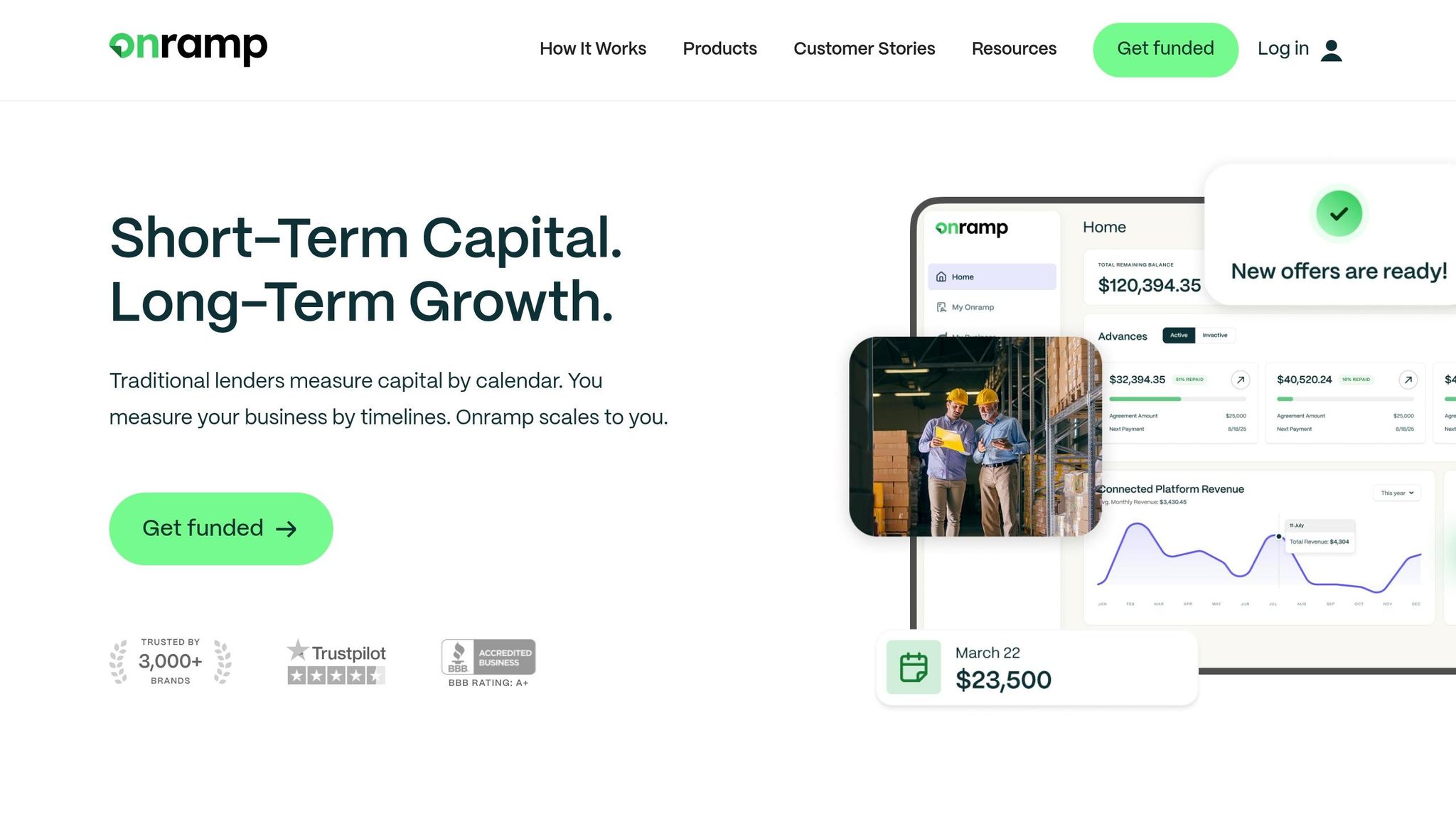
When you're under the pressure of running an eCommerce business, having a partner that removes emotional biases from funding decisions can make all the difference. Onramp Funds is built for eCommerce sellers who need flexible, data-driven funding options that encourage logical, well-informed choices.
Quick Access to Flexible Funding
Timing is everything in eCommerce. Whether it's restocking inventory before a big sales season or seizing an unexpected opportunity, Onramp Funds delivers funding in less than 24 hours once you're qualified. No more waiting for lengthy approvals. The platform integrates seamlessly with major eCommerce platforms like Amazon, Shopify, Walmart, and TikTok Shop, using real-time sales data to create performance-based funding offers.
You can choose from three funding structures to fit your unique needs:
- Variable: Payments adjust based on your sales, offering flexibility during slower periods.
- Fixed: Predictable payments ideal for scaling your business strategically.
- Rolling Cash Line: A revolving credit option that grows alongside your business.
This range of options ensures you're not stuck with a one-size-fits-all approach but instead get funding tailored to your specific situation.
Keep Your Equity with Clear Terms
Onramp Funds provides unsecured, equity-free financing with a single transparent fee - no hidden costs, no surprises. You keep 100% ownership of your business, and there's no need for a personal credit check. This approach ensures your funding decisions remain grounded in business strategy rather than short-term emotional reactions. Plus, their clear terms and expert guidance help you make the most of your financing.
Dedicated Support for Growing Businesses
Beyond flexible funding and clear terms, Onramp Funds offers hands-on support to help you make smarter financial decisions. Their Austin-based team provides personalized assistance, ensuring you're working with real people who understand the challenges of eCommerce. They also hold a "Great" rating on Trustpilot with 227 reviews [4], reflecting their commitment to excellent service.
John Doe, CEO of Curriculum, shared his experience:
"Having the flexibility to draw funds as we need them has significantly boosted our growth. Andrew and his team's communication and customer service are always excellent - I know I have a true partner with Onramp." [4]
The platform’s data-driven approach ensures your financing aligns with your sales history and current debt, helping you avoid over-borrowing during uncertain times. This combination of expert guidance and tailored financing helps you focus on genuine opportunities rather than acting out of fear or urgency.
Conclusion
Making thoughtful funding decisions lays the groundwork for lasting growth. Consider this: 60% of consumers admit to making impulsive purchases due to FOMO (fear of missing out) triggers [2]. That same sense of urgency can influence business decisions, often leading to choices that don’t align with long-term goals.
The best way forward? Start with data-driven evaluation. Carefully review your sales history, cash flow patterns, and current debt obligations before jumping into any funding agreement. Choose options that align with your business's rhythm - whether it’s revenue-based repayments that adjust with your sales or fixed terms for predictable expansion. Above all, avoid rushing into agreements. Opt for funding solutions with clear, upfront terms to steer clear of deals that seem too good to be true.
Onramp Funds exemplifies this approach by eliminating the emotional pressure often tied to financing. Their offers are based on real-time performance data, not credit scores or hunches. This ensures you’re not overextending your business with excessive debt [4], while keeping full control of your company’s direction. With funding available in under 24 hours and flexible options that scale with your business, you can seize real opportunities without falling into panic-driven decisions.
Ultimately, your funding choices should fuel strategic growth - not be a reaction to fleeting emotions. By taking a moment to assess, aligning decisions with your unique business metrics, and choosing transparent funding partners, you can turn capital into a powerful tool for growth instead of a source of stress.
FAQs
How do I know how much funding I really need?
To figure out how much funding your business needs, start by evaluating your main priorities - whether that's inventory, marketing, or upgrading technology. Make sure these align with your cash flow trends so you can plan effectively. Regularly check performance metrics like Return on Ad Spend (ROAS) and review past sales data to predict seasonal demands. This approach helps you secure the right amount of funding to cover expenses without going overboard. By doing this, you can avoid making decisions based on fear or FOMO and instead rely on clear, data-driven insights.
What are common signs a funding offer is using FOMO?
Watch out for strategies that push urgency or scarcity to nudge you into quick decisions. These might include:
- Limited-time offers: Deals that claim to expire soon.
- Countdown timers: Visual cues to stress time running out.
- Exclusivity claims: Phrases like "only a few left" or "members only."
These approaches are designed to trigger pressure and the fear of missing out. Take a step back and assess the offer logically before acting, so you don’t fall into the trap of impulsive choices.
How can I stress-test repayments if sales drop?
To test how well you can handle repayments under pressure, take a close look at your cash flow and simulate what happens if your sales drop by different percentages - say 10%, 25%, or even 50%. This helps you gauge whether you can still meet your financial obligations. Financial planning tools can be a big help here. Use them to map out potential outcomes, check your liquidity, and spot any gaps that might leave you vulnerable.
If it looks like you might struggle to meet your payments, consider adjusting your repayment terms or seeking additional funding. Taking these steps early can help you maintain financial stability and avoid making rash decisions if sales take a hit.
Related Blog Posts
Onramp Funds
Funding built around your sales
Connect your store and see what you qualify for. Repay as a percentage of sales, with no personal credit check.
Funding in as little as 24 hours.
