

YouTube ads can drive strong ROI for eCommerce businesses if you pick the right formats and align them with your sales goals. Here's what you need to know:
- Skippable In-Stream Ads: Cost-efficient for storytelling and brand awareness. Only pay for engaged views.
- Non-Skippable In-Stream Ads: Great for delivering concise, full messages. Best for time-sensitive promotions but more expensive.
- Discovery Ads: Ideal for targeting intent-driven audiences. Works well for mid-funnel traffic and product discovery.
- Shorts Ads: Perfect for mobile-first users and quick conversions. Affordable with massive reach, especially for younger audiences.
Key Insight: A full-funnel strategy combining these formats can boost ROI by 10% compared to using a single format. For example, pairing awareness-focused ads like Shorts with action-driven formats like Discovery Ads ensures you engage customers at every stage of their journey.
Pro Tip: Creative quality impacts nearly 50% of ROI. Invest in engaging content and include clear calls-to-action (CTAs) to drive results.
Quick Comparison Table
| Ad Format | Avg. Cost | Best Use Case | Key Advantage | Drawback |
|---|---|---|---|---|
| Skippable In-Stream Ads | $0.05 CPV avg. | Awareness, storytelling | Pay only for engaged views | Needs a strong 5-second hook |
| Non-Skippable Ads | $9 CPM avg. | Time-sensitive promotions | Full message delivery | Higher cost, can feel intrusive |
| Discovery Ads | CPC-based pricing | Mid-funnel product discovery | Attracts high-intent traffic | Relies on effective thumbnails |
| Shorts Ads | $0.10-$0.30 CPV | Quick conversions, mobile-first | Low cost, massive reach | Requires instant attention |
To maximize ROI, match ad formats to the right funnel stage and product type, and ensure your campaigns are financially supported to scale effectively.
How to Track REAL Marketing ROI (Not Just Attribution) | The Ad Lab Live! EP046
YouTube Ad Formats for eCommerce
YouTube offers four main ad formats tailored to different marketing goals, making it a key platform for eCommerce businesses. Knowing how each format works can help you get the most out of your ad spend. Let’s break down these formats and how they can benefit online retailers.
Skippable In-Stream Ads (TrueView)
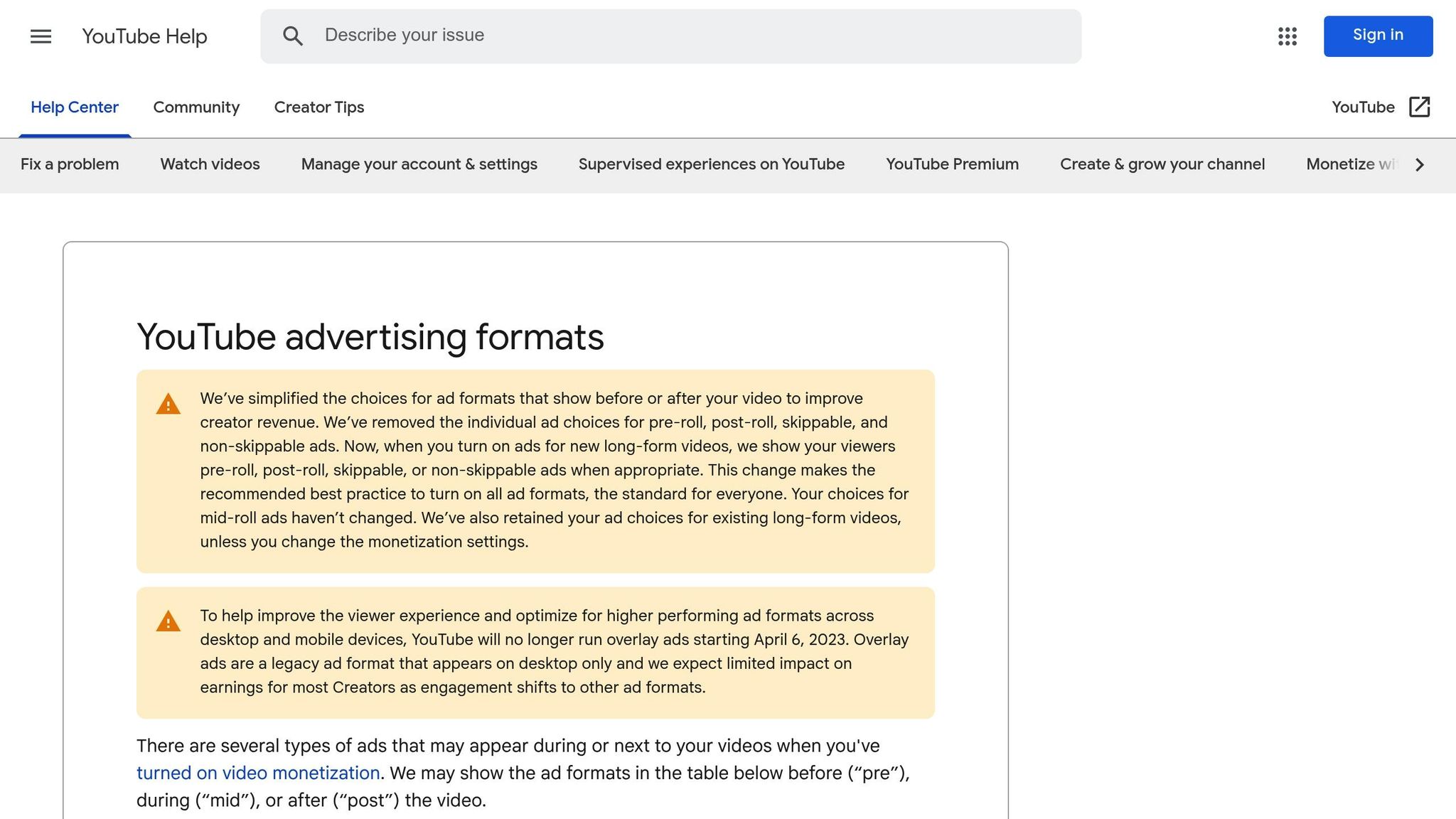
Skippable in-stream ads let viewers decide if they want to keep watching. These ads play before, during, or after videos and can be skipped after 5 seconds. You’re only charged when someone watches at least 30 seconds, the entire ad (if shorter), or interacts with it - using a Cost-Per-View (CPV) model.
These ads are ideal for storytelling, product demos, or educational content, especially if your video is under 3 minutes. The key is grabbing attention in the first few seconds and featuring your logo early to boost brand recall.
Skippable ads work well for building awareness and consideration. They’re great for highlighting product features, sharing customer testimonials, or solving specific problems. Since viewers choose to keep watching, you’re connecting with an audience that’s genuinely interested.
Take FIGS, for example. The medical apparel brand invested around 60% of its monthly ad budget (approximately $600,000) in YouTube ads through Performance Max campaigns. Their strategy brought in over 1 million website visitors each month, significantly increasing customer acquisition.
Non-Skippable In-Stream Ads
Non-skippable in-stream ads ensure your full message is seen. These 15–30 second ads can’t be skipped, and you’re charged on a Cost-Per-Mille (CPM) basis, meaning you pay per thousand impressions.
This format is perfect for delivering concise, impactful messages. With viewers required to watch the entire ad, every second must count. Non-skippable ads are excellent for building strong brand awareness and showcasing key product details.
However, there’s a drawback: these ads don’t allow for remarketing or contribute to TrueView views, which can limit your ability to retarget audiences.
Discovery Ads
Discovery ads (formerly In-Feed Video Ads) appear as clickable thumbnails across YouTube. You’ll find them in search results, on the homepage, and alongside related videos. They’re charged per click or when the ad autoplays for at least 10 seconds.
This format is particularly effective for eCommerce because it captures intent-driven traffic. When someone clicks your discovery ad, they’re signaling genuine interest in your content or products. These ads are perfect for driving traffic to product pages, promoting long-form videos like tutorials, or sharing brand stories.
Success with discovery ads depends on visually appealing thumbnails and engaging titles. Think of your thumbnail as a mini billboard that boosts branding and builds trust.
For example, Ritual Multivitamins spends about $3,000 a month on YouTube ads, driving roughly 3,640 website visitors monthly. While this example highlights in-stream formats, it underscores how targeted YouTube ads can drive meaningful results for eCommerce businesses.
Shorts Ads
YouTube Shorts ads are designed for mobile-first audiences, using vertical videos up to 60 seconds. These ads appear in the Shorts feed and are charged based on impressions, TrueView views, or engagement.
In 2024, YouTube Shorts amassed over 70 billion daily views. This massive reach, especially among Gen Z and millennials, makes Shorts ads a valuable tool for eCommerce brands targeting younger consumers.
Adding vertical video assets to your campaigns can increase conversions by 10–20% compared to horizontal-only videos. Shorts ads are ideal for quick product showcases, user-generated content, and authentic storytelling.
"With lower CPMs than Meta and more advanced audience targeting, YouTube ads offer a strong return on investment - especially for brands that can tell a compelling story." - Define Digital Academy
To succeed with Shorts ads, focus on immediate impact. Start with a bold statement or valuable insight, keep the production simple, and always include a clear call-to-action before the video ends. The swipeable nature of Shorts means you need to grab attention fast to keep viewers engaged.
Shorts ads work particularly well for impulse buys, flash sales, or visually appealing products. Their lower cost-per-view makes them a good option for brands with smaller budgets aiming to maximize reach.
ROI Comparison: YouTube Ad Formats for eCommerce
When assessing YouTube ad formats, it's vital to look beyond just the upfront costs. Each format plays a unique role in the customer journey, with distinct pricing structures and engagement dynamics that influence overall ROI.
ROI Factors by Ad Format
Understanding cost structures is critical to ROI. For instance, skippable in-stream ads operate on a cost-per-view (CPV) model, typically costing between $0.01 and $0.30, with an average of $0.05. You only pay when someone watches at least 30 seconds or interacts with the ad. This makes it a cost-efficient option for targeting engaged viewers.
Non-skippable ads, on the other hand, use a CPM (cost per thousand impressions) model, averaging $9 but ranging from $1 to $23. While these ads ensure your message is delivered in full, their higher cost per impression means your creative needs to be compelling to justify the spend.
Discovery ads charge based on clicks or when the ad autoplays for at least 10 seconds. This format often attracts higher-quality traffic because viewers actively choose to engage, which typically translates to better conversion rates.
YouTube Shorts ads are among the most budget-friendly options, with CPVs ranging from $0.10 to $0.30 and CPMs averaging $3. With 200 billion daily global views, Shorts offers massive reach at a relatively low cost.
Creative quality directly impacts engagement and costs. Nearly half of advertising ROI comes from effective creative. Investing in engaging video content is essential to maximize results.
Conversion potential varies by format and audience. YouTube's average conversion rate of 14% is 40% higher than Facebook's. However, success depends on selecting the right format for your campaign objectives. The table below highlights key metrics for each ad format.
Ad Format ROI Comparison Table
| Ad Format | Average Cost | Best ROI Scenarios | Conversion Potential | Key Advantages | Main Drawbacks |
|---|---|---|---|---|---|
| Skippable In-Stream | CPV: $0.05 average | Brand awareness, storytelling campaigns | High for engaged viewers | Pay only for engaged views, cost-efficient | Needs a strong 5-second hook |
| Non-Skippable In-Stream | CPM: $9 average | Time-sensitive promotions, brand recall | Guaranteed message delivery | Full 15-20 second exposure | Higher cost, may feel intrusive |
| Discovery Ads | CPC-based pricing | Product discovery, educational content | High intent-driven traffic | Voluntary engagement, appears in search | Relies on effective thumbnails |
| Shorts Ads | CPV: $0.10-$0.30, CPM: $3 | Mobile-first awareness, viral campaigns | Strong mobile conversion rates | Massive reach, cost-efficient | Requires instant hook within 2 seconds |
These figures highlight the importance of incorporating multiple formats to cover the entire customer journey.
Why Full-Funnel Strategies Work Best
Combining formats yields better results. A full-funnel YouTube strategy can boost ROI by 10% compared to campaigns focused solely on awareness. Each format excels at different stages of the funnel.
Take Sulwhasoo, for example. The luxury skincare brand used awareness and consideration formats to maximize reach initially, then layered in action-oriented formats. This approach led to a 91% reduction in cost per acquisition and a 13.8x increase in conversion rate.
Awareness formats play a bigger role in conversions than many eCommerce sellers realize. They account for 28% of conversion assists, helping nurture potential customers even if they don't drive immediate sales. Skippable in-stream ads and Shorts ads are particularly effective for building brand recognition, while discovery and non-skippable ads work well for driving direct actions.
Oreo provides another great example of leveraging format diversity. Using Google's Insights Finder tool, they segmented their audience into four groups - Entertainment Fans, Trendsetters, Gamers, and Foodies. By tailoring creative content for each segment across various ad formats, Oreo achieved a 100% year-over-year improvement in YouTube ROI.
The secret lies in aligning formats with funnel stages. Use Shorts ads and skippable in-stream ads for top-of-funnel awareness, discovery ads for consideration, and non-skippable ads for conversion-focused messaging. This strategy ensures you're engaging potential customers at every step while playing to the strengths of each format.
"Our research shows that there are four primary levers of video ROI: creative, ad format mix, reach and frequency, and audience." - Rodrigo Carone, Director of Video Measurement Solutions, Google
The data backs up this multi-format approach. Brands that partner with Google on full-funnel YouTube strategies report an average 108% growth in return on ad spend. By understanding and leveraging the specific strengths of each ad format, businesses can create a comprehensive strategy that outperforms campaigns relying on a single approach.
sbb-itb-d7b5115
Matching Ad Formats to Funnel Stages and Products
To get the most out of your YouTube ad spend, it’s critical to match the right ad formats to your funnel stages and product types. After all, the approach for promoting a $2,000 laptop isn’t going to be the same as selling a $20 phone case.
Choosing Ad Formats by Funnel Stage
Top-of-funnel awareness campaigns work best with formats that focus on building brand recognition rather than pushing for immediate action. Skippable in-stream ads are great here - they let you tell a story and only charge you for engaged views. YouTube Shorts ads are another strong option, grabbing attention with quick, mobile-friendly content.
When you move to the mid-funnel consideration stage, you need formats that reach users actively looking for information. Discovery ads (in-feed video ads) perform well here because they appear in places like search results, the homepage, or the "Watch Next" feed. Since viewers choose to engage with these ads, they often result in better-quality views and stronger brand recall - perfect for products that require more thought before buying.
At the bottom of the funnel, where conversions matter most, you need ads that deliver a clear message and drive immediate action. Non-skippable in-stream ads are a solid choice because they ensure your entire message is seen - ideal for time-sensitive offers or highlighting key product features. Shorts ads can also be effective here, especially if they include a compelling value proposition right from the start.
The most effective campaigns combine these formats: skippable in-stream ads and Shorts for awareness, discovery ads for consideration, and non-skippable ads to seal the deal. This layered approach ensures you’re engaging potential customers at every stage of their decision-making process.
Now, let’s explore how product type influences the best ad format choices.
Product Type Considerations
High-ticket products, which often require more time and trust to sell, benefit from ad formats that allow detailed storytelling. Skippable in-stream ads are ideal here because their flexible length (12 seconds to 3 minutes is recommended) lets you address customer concerns and showcase the product’s value. Plus, you only pay for engaged views, making this a cost-effective way to target interested audiences.
Discovery ads also work well for expensive items, as they attract users actively searching for related content. When someone clicks on your discovery ad, they’re already showing interest, which often leads to higher-quality traffic. For major product launches, masthead ads can deliver unmatched visibility by placing your brand front and center on YouTube’s homepage. However, these premium placements are best reserved for big announcements due to their higher costs.
For low-cost, impulse products, formats that grab attention quickly are key. YouTube Shorts ads are perfect for this, especially when paired with vertical video assets, which have been shown to boost conversions by 10–20%. Bumper ads - just 6 seconds long and non-skippable - are another great option. These quick hits are budget-friendly and effective for promoting flash sales or impulse buys.
By tailoring your ad formats to the type of product you’re selling, you can avoid common pitfalls and maximize your results.
Common Format Selection Mistakes
Even with the right strategy in mind, certain mistakes can derail your campaign.
One major error is using awareness-focused ads for conversion goals. For example, deploying expensive masthead ads to drive direct sales for low-cost items often leads to wasted budget. Masthead ads are fantastic for building prestige, but they’re not designed to push immediate purchases.
Another common misstep is failing to optimize for mobile. With most YouTube traffic coming from mobile devices, creating desktop-focused content can hurt your campaign’s performance. Formats like Shorts and vertical video cater specifically to mobile users, but all ad types should feature mobile-friendly designs.
Weak opening hooks are another campaign killer. The first few seconds of your ad are crucial, especially for skippable formats where viewers can click away immediately. If your value proposition or brand message is buried too deep in the video, you risk losing your audience.
Finally, missing clear calls-to-action (CTAs) can leave viewers unsure about what to do next. Even awareness campaigns can benefit from subtle CTAs that guide viewers toward the next step. For conversion-focused ads, a strong CTA is essential.
To avoid these pitfalls, test a mix of formats while respecting each one’s strengths. Start with small budgets to see what resonates with your audience and product type, then scale up successful strategies. A full-funnel approach ensures you’re covering all bases and driving the best results.
Funding YouTube Ad Campaigns for eCommerce
Running successful YouTube ad campaigns isn’t just about choosing the right formats - it also requires enough flexible capital to test, refine, and scale your efforts while covering daily operational costs like inventory and shipping.
Why Flexible Financing Matters for Ad Campaigns
YouTube ads thrive on experimentation. Testing multiple formats and quickly scaling the ones that work is key to success. But for eCommerce businesses, cash flow can be unpredictable. For instance, you might have a high-performing Shorts ad, but if your funds are tied up in inventory for an upcoming season, you can’t take advantage of the momentum.
A well-rounded advertising strategy demands consistent investment across different ad formats. Without flexible funding, sellers often face tough choices between keeping their ad spend steady or restocking inventory. This forces many to miss out on growth opportunities.
Traditional financing, with its fixed monthly payments, often adds more pressure. During slower sales months, these rigid payment schedules can force businesses to pause profitable campaigns just when they’re needed most. This mismatch between funding options and eCommerce cash flow creates a gap that calls for tailored solutions.
How Onramp Funds Helps eCommerce Businesses Grow
Onramp Funds steps in to address this gap with a financing model specifically designed for eCommerce. Instead of fixed payments, their repayment structure adjusts based on your daily sales - sometimes as low as 1% of daily revenue. This means you contribute more during strong sales periods and less when things slow down.
This approach ensures you can maintain consistent ad spend, even when cash flow fluctuates. Nick James, CEO of Rockless Table, shared his experience:
"Applied, got our offer, and had cash in our bank account within 24 hours. Their Austin, TX based team was very professional and helped me deploy the cash to effectively grow our business."
With funding often available within 24 hours, businesses can immediately act on successful campaigns.
Onramp’s financing model has already supported over 3,000 eCommerce businesses, leading to an average revenue increase of 60% within six months. They cater to major platforms like Amazon, Shopify, TikTok Shop, WooCommerce, BigCommerce, Squarespace, and Walmart. The only requirements? A legal U.S. business entity and at least $10,000 in average monthly sales.
Another standout feature is Onramp’s equity-free structure. You retain full control of your business while accessing the capital needed to invest in YouTube ads. Jeremy, founder of Kindfolk Yoga, highlighted the advantage:
"Onramp offered the perfect solution with revenue-based financing to secure the capital we needed to invest in inventory and pay it back at a reasonable time frame once we made sales. The process was quick, easy, and the support was great."
With a fixed-fee structure ranging from 2–8% of the funded amount, Onramp provides clear, upfront costs, making it easier to measure the return on your YouTube ad investment. This flexibility allows sellers to reinvest in ads, stock up on inventory, or prepare for seasonal campaigns without the stress of rigid payment schedules.
Conclusion: Getting the Best ROI from YouTube Ads
Key Points for eCommerce Sellers
To get the most out of YouTube ads, focus on selecting the right ad formats, aligning them with your sales funnel, and staying financially flexible to scale successful campaigns.
Using a full-funnel strategy often delivers better results than relying on a single ad format. Brands like Sulwhasoo have demonstrated this by combining awareness, consideration, and action-oriented formats, leading to lower CPAs and higher conversions. This approach ensures that every stage of the customer journey is addressed effectively.
Ad format choice plays a crucial role in your success. For instance, awareness formats on YouTube account for 28% of conversion assists. Skippable in-stream ads and discovery ads don’t just build awareness - they also contribute directly to sales. To maximize impact, match each format to its strengths: use discovery ads to drive consideration, YouTube Shorts for quick conversions, and non-skippable ads to build awareness.
Consistency in ad spend is equally important. Since eCommerce cash flow can fluctuate, relying on traditional financing with fixed payments might force you to pause profitable campaigns during slower periods. Revenue-based financing from Onramp Funds helps solve this issue by adjusting repayments based on daily sales, enabling you to maintain consistent ad spending regardless of seasonal changes.
The most successful eCommerce sellers don’t rely on a single “best” format. Instead, they use multiple formats in a coordinated way across the entire customer journey. This strategy not only improves ROI but also helps unlock YouTube’s immense growth opportunities.
YouTube Ads and eCommerce Growth
YouTube has become a critical growth channel for eCommerce businesses. With over 2 billion monthly users, it offers unmatched reach and engagement.
The brands that see the best results treat YouTube as a full-funnel solution rather than just a tool for top-of-funnel awareness. For example, in July 2024, Custom Neon implemented a multi-stage strategy that used different content and ad formats for each stage of the funnel. This led to a 30% boost in social media engagement, a 25% increase in web traffic, and a 30% rise in completed purchases.
This makes YouTube particularly valuable for eCommerce brands selling products that require detailed explanations or demonstrations, such as complex or high-consideration items.
Combining flexible financing with strategic ad format choices completes the full-funnel approach. Onramp Funds’ revenue-based financing solutions allow eCommerce businesses to act quickly on successful campaigns without worrying about cash flow constraints. This flexibility ensures you can fully leverage YouTube’s potential.
Success on YouTube isn’t about having the deepest pockets - it’s about making smart choices. By selecting the right formats, aligning them with your sales funnel, and maintaining financial flexibility, YouTube can become your most profitable advertising channel.
FAQs
How can eCommerce businesses use multiple YouTube ad formats to improve ROI across the entire sales funnel?
To get the most out of YouTube ads, eCommerce businesses should match ad formats to the stages of the sales funnel. For the awareness phase, skippable in-stream ads work well to introduce your brand to a wide audience. When aiming for consideration, non-skippable ads or bumper ads can spotlight key product features, ensuring your brand stays in viewers' minds. To drive conversions, remarketing ads are ideal for reconnecting with viewers who’ve already shown interest, nudging them toward completing their purchase.
Using a mix of formats like TrueView, bumper, and discovery ads helps create a seamless customer experience, guiding potential buyers from initial interest to the final sale. Including both long-form videos and YouTube Shorts in your campaigns can also capture the attention of different audience segments, enhancing overall performance. By aligning your ad strategy with each stage of the funnel, you can boost ROI and set your business up for growth.
What should eCommerce businesses consider when selecting YouTube ad formats for different stages of the sales funnel?
When selecting YouTube ad formats, it’s important to match them with the objectives of each stage in the sales funnel. For the awareness stage, opt for short and engaging formats like bumper ads or YouTube Shorts. These are perfect for quickly introducing your brand and grabbing attention. Moving into the consideration phase, skippable in-stream ads or in-feed video ads are great choices. They allow you to share more information and build trust by telling a compelling story. Finally, in the decision stage, longer non-skippable ads or detailed videos work well to highlight key benefits, share social proof, and encourage conversions. By aligning your ad format with the viewer’s mindset, you can make your message more impactful and boost your ROI.
How does the quality of your ad content influence YouTube campaign success, and what are some tips for creating engaging ads?
The success of your YouTube campaigns hinges on the quality of your ad content. Great ads don’t just grab attention - they keep viewers engaged and drive action. To achieve this, focus on mobile-first design, use dynamic visuals to catch the eye, and include clear calls-to-action that guide viewers on their next steps.
A helpful approach to crafting effective ads is the ABCD framework:
- Attention: Capture interest within the first few seconds - this is your chance to hook viewers.
- Branding: Make your brand stand out and ensure it’s easy to remember.
- Connection: Speak to your audience’s emotions and needs with relatable messaging.
- Direction: Clearly outline what you want viewers to do next.
By building your ad strategy around these principles, you’ll not only engage your audience but also boost your campaign’s impact and returns.
Related Blog Posts
Onramp Funds
Funding built around your sales
Connect your store and see what you qualify for. Repay as a percentage of sales, with no personal credit check.
Funding in as little as 24 hours.
