


Revenue-based financing (RBF) gives WooCommerce sellers a flexible way to secure funding without traditional bank loans. Instead of fixed monthly payments, repayments are tied to a percentage of sales, making it easier to manage cash flow during slow periods. Funds can be approved in as little as 24 hours, making it ideal for inventory, marketing, or scaling operations.
Key Points:
- Repayment Based on Sales: Payments adjust to revenue - higher sales mean faster repayment, while slower months reduce the burden.
- Quick Funding: Funds are typically available within 24-48 hours.
- No Equity Loss: Sellers keep full ownership of their business.
- Eligibility: Minimum $10,000 in monthly sales and 12+ months of trading history.
RBF is particularly helpful for WooCommerce sellers dealing with seasonal fluctuations, inventory needs, or marketing expansion. Providers like Onramp Funds offer transparent fees (2-8%) and personalized support tailored to eCommerce businesses.
What Is Revenue-Based Financing and How It Works
Revenue-based financing (RBF) is a funding method where businesses receive upfront capital and repay it through a percentage of future sales. Unlike traditional loans with fixed monthly payments, RBF adapts to your sales performance - higher sales mean larger payments, while lower sales result in smaller ones. This flexibility creates a cushion during slower periods, making it especially appealing to businesses with fluctuating revenue.
To determine the funding amount and repayment terms, providers evaluate your sales history and performance. Once approved, funds are typically delivered within 24 to 48 hours. Repayments are then automatically deducted from your sales until the total amount, including fees, is fully paid.
One of the standout features of RBF is that no collateral or personal guarantees are required. Instead, the financing is secured by your projected sales, making it an excellent option for eCommerce businesses that may not have substantial physical assets but generate steady revenue.
Key Features of Revenue-Based Financing
- No equity dilution: You keep full ownership of your company. There’s no need to give up shares or involve investors who might want control over your decisions.
- Fast funding: Unlike traditional loans that can take weeks or even months to process, RBF provides decisions in just days, with funds often available within 24 to 48 hours. This speed is crucial for eCommerce sellers who need to act quickly on inventory or marketing opportunities.
- Flexible repayment terms: Payments automatically adjust based on your sales. During peak seasons like Black Friday or the holidays, payments increase as your revenue grows. In slower months, payments decrease, helping you maintain cash flow when it matters most.
- Streamlined application process: RBF providers focus on your sales performance and revenue trends rather than requiring extensive paperwork or lengthy financial reviews. This approach is tailored to the fast-paced nature of eCommerce businesses.
- Transparent fee structures: Instead of dealing with complicated interest rates, RBF offers straightforward fees, typically presented as a factor rate or percentage fee. This clarity helps businesses understand the total cost upfront and plan accordingly.
These features make RBF a great fit for the challenges faced by WooCommerce sellers.
Why Revenue-Based Financing Works for WooCommerce Sellers

RBF’s flexibility and quick access to funds address the unique needs of WooCommerce businesses. For example, seasonal fluctuations can significantly impact cash flow. Sales often spike during the holidays but slow down in the months that follow. Traditional loan payments don’t adapt to these cycles, but RBF does, easing the financial strain during slower periods.
The inventory-heavy nature of WooCommerce businesses is another reason RBF stands out. When you need to stock up on trending products or prepare for a busy season, waiting weeks for loan approval isn’t feasible. RBF provides the agility to act on these time-sensitive opportunities.
Marketing scalability is also a key benefit. If you identify a profitable advertising campaign or want to explore new marketing channels, RBF gives you immediate access to funds so you can scale quickly. Since repayments are tied to revenue, the increased sales from successful campaigns help cover the higher payments.
Additionally, the digital nature of WooCommerce businesses aligns well with RBF providers’ data-driven processes. Metrics like sales data, website traffic, and conversion rates offer a clear picture of your business’s health - far more relevant than traditional credit scores or collateral.
Finally, many WooCommerce sellers appreciate that RBF typically doesn’t require personal guarantees. This means your personal assets are not at risk, and the financing is based entirely on your business’s performance, not your personal financial standing.
Eligibility Requirements for WooCommerce Sellers
To qualify for financing as a WooCommerce seller, your business must meet specific criteria that demonstrate stability and potential for growth. Having the right documentation ready can speed up the application process.
Minimum Revenue and Sales History
Financing providers look at your sales performance to determine if your business is a reliable candidate. Typically, lenders require at least 12 months of trading history to evaluate trends in your sales. They also expect your business to generate a minimum of $10,000 in monthly sales, ensuring you have the revenue to handle regular repayments. A steady or growing sales history is essential.
| Metric | Requirement | Why It Matters |
|---|---|---|
| Monthly Sales | $10,000 minimum | Reflects consistent revenue generation |
| Trading History | 12+ months | Proves business stability |
Store Integration and Legal Documentation
Your WooCommerce store must operate as a legally registered business in the United States, such as an LLC, corporation, or sole proprietorship. Additionally, you'll need to grant lenders access to your store's sales data for a thorough evaluation of your revenue history. Be prepared to disclose any existing debt obligations, as this helps lenders assess your ability to manage repayments effectively.
Step-by-Step Guide to Getting Revenue-Based Financing
If you're considering revenue-based financing for your WooCommerce store, here's a straightforward guide to help you navigate the process. From application to funding, it usually takes just a few days.
1. Check Your Eligibility
Start by ensuring your WooCommerce store meets the basic requirements: at least $10,000 in monthly sales, a minimum of 12 months in operation, and registration in the U.S.
Next, review your store's sales performance over the past year. Look for consistent revenue trends or seasonal patterns. Lenders typically prioritize steady income, so gather your sales reports from WooCommerce Analytics or your payment processor. Also, double-check your current debt obligations and confirm that your sales data matches your bank records.
2. Connect Your WooCommerce Store
Once you've confirmed eligibility, the next step is to securely link your WooCommerce store to the funding platform. This connection is established through an API, allowing lenders to access your real-time sales data while ensuring your store's security.
You'll also need to provide access to your business bank account. Platforms like Onramp Funds use strong encryption to keep your financial information secure. Once connected, lenders can monitor your store's performance and notify you when you're eligible for financing based on your sales volume.
3. Review Your Custom Offer
After analyzing your sales data, the funding provider will present a tailored offer. This will include the funding amount you're eligible for, the percentage of daily sales allocated for repayment, and an estimated repayment timeline.
Take the time to carefully review the offer. Consider how the repayment terms align with your cash flow and sales cycles. The offer will include projections based on your store's performance, so ensure the terms make sense for your business needs.
4. Accept the Offer and Receive Funds
If you're satisfied with the offer, you can accept it digitally. Funds are typically transferred quickly to your business bank account, giving you fast access to capital for inventory, marketing, or operational expenses.
Before finalizing, read the agreement thoroughly, including any fees or repayment details. Make sure you understand when repayments will begin. Once the agreement is signed, the funds are released, and the repayment process starts automatically.
5. Repay Based on Your Revenue
Repayments are automatically deducted from your business bank account daily, with the amount adjusting based on your sales. During busy periods, you'll pay more, and during slower times, less - helping you maintain steady cash flow.
Most platforms provide dashboards where you can track your repayment progress, view daily deductions, and monitor your remaining balance. The repayment period adapts to your sales performance, ensuring the process aligns with your business's success.
sbb-itb-d7b5115
Benefits and Drawbacks of Revenue-Based Financing
Revenue-based financing offers a unique funding option for WooCommerce sellers, blending flexibility and accessibility with some potential trade-offs. Let’s dive into what makes this financing method appealing and where it might fall short.
One of the standout benefits is its flexible repayment structure. Payments adjust automatically based on your sales - lower during slower months and higher when business is booming. This adaptability can be a lifeline for businesses with fluctuating revenue.
Another major advantage is the speed and ease of access. Funds can often be secured within 24 hours, making it an excellent choice for sellers needing quick capital to seize inventory or marketing opportunities.
Additionally, revenue-based financing is equity-free, meaning you don’t have to give up ownership or decision-making power. Unlike venture capital or angel investments, this approach allows you to retain full control of your business - a critical factor for sellers looking to scale without outside interference.
However, there are some trade-offs to consider. One of the main drawbacks is the potentially higher overall cost compared to traditional bank loans. Fees typically range from 2% to 8%, which can add up over time.
Another limitation is the strict eligibility criteria. Most providers require at least 12 months of operating history and a minimum of $10,000 in monthly sales. This can make revenue-based financing inaccessible for newer WooCommerce stores or startups still building consistent revenue streams.
The repayment method also has its challenges. Automatic daily deductions can strain cash flow, especially during periods of unexpected expenses. While flexible repayments are a plus, some sellers may prefer the predictability of fixed monthly payments offered by traditional loans.
Pros and Cons Comparison
| Benefits | Drawbacks |
|---|---|
| Flexible repayments that adjust with sales | Higher overall costs (2-8% fees) |
| Fast access to funds (often within 24 hours) | Strict eligibility criteria (12+ months history, $10,000+ monthly sales) |
| No equity dilution – retain full ownership | Automatic deductions can limit cash flow flexibility |
| No fixed monthly payments during slow periods | Revenue dependency – requires consistent sales patterns |
| Minimal paperwork and quick approval | Platform integration needed for monitoring |
This comparison highlights how revenue-based financing can be a strategic tool for established WooCommerce sellers with steady sales and growth goals.
For sellers with consistent revenue and clear growth ambitions, this financing method offers both accessibility and flexibility. However, understanding your store’s cash flow and ensuring the repayment terms align with your financial strategy is crucial to making it work effectively.
How Onramp Funds Supports WooCommerce Sellers
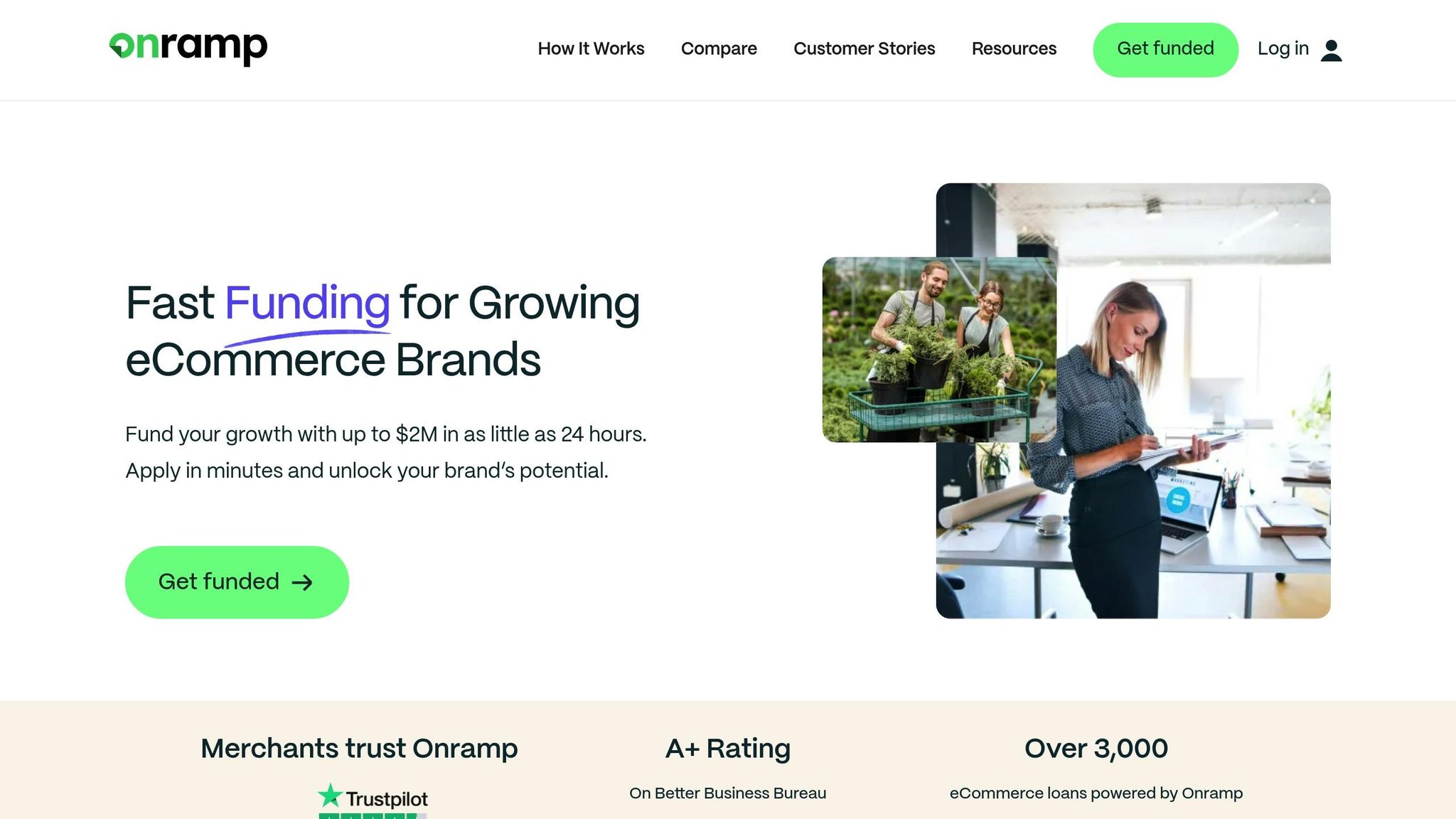
Onramp Funds goes beyond the basics by offering dedicated support tailored specifically for WooCommerce sellers.
They provide equity-free funding designed to fit the needs of WooCommerce businesses. By integrating directly with your store, Onramp Funds securely accesses your sales history, making the qualification process quick and seamless. Once approved, funding can be delivered in as little as 24 hours, giving you the flexibility to seize time-sensitive opportunities or prepare for peak sales periods.
Their fee structure is straightforward, with fees ranging from 2% to 8%, and no hidden charges. This transparency helps you plan your cash flow more effectively. Plus, their Austin-based team offers personalized support, ensuring you work with real people who understand your business - not just automated systems.
Repayment terms are flexible, adjusting based on your sales performance. This means you won’t be stuck with fixed monthly payments during slower periods, allowing you to maintain cash flow and reinvest in your business when it matters most. Onramp Funds also uses domestic retail trends to shape funding and repayment plans, ensuring they align with seasonal sales patterns.
Perhaps most importantly, their financing model allows you to retain full ownership of your business. With no equity required, you stay in control while scaling your operations. Onramp Funds is available to WooCommerce sellers with a minimum of $10,000 in monthly sales, making it a great option for established businesses ready to grow. These features make it easier for WooCommerce sellers to expand without compromising control or stability.
Conclusion: Growing Your Business with Revenue-Based Financing
Revenue-based financing offers a flexible way for WooCommerce sellers to grow without the rigid terms of traditional loans. Unlike fixed monthly payments that can strain your budget during slower months, this model adjusts to your sales performance, making it easier to manage cash flow while expanding your business.
With direct integration between your WooCommerce store and the funding platform, approvals and funding can happen in as little as 24 hours. This quick access to capital allows you to restock inventory, fund urgent campaigns, or seize unexpected opportunities without delay.
Repayment terms are tied to a percentage of your revenue, which means higher sales can speed up repayment, while slower periods ensure you have the working capital to cover essential expenses. This flexibility is a game-changer for sellers aiming to maintain financial stability while scaling.
For WooCommerce sellers generating at least $10,000 in monthly sales, revenue-based financing is an excellent alternative to traditional bank loans or equity financing. It allows you to retain full control over your business decisions while accessing the funds needed to grow - whether that means expanding your product line, ramping up marketing efforts, or scaling operations.
When choosing a financing partner, look for one with clear terms and no hidden fees. With rates typically ranging from 2% to 8%, this transparent approach helps you plan your investments with confidence. Revenue-based financing empowers WooCommerce sellers to take strategic steps toward long-term success, all while keeping their business firmly in their hands.
FAQs
What makes revenue-based financing a better fit for WooCommerce sellers compared to traditional bank loans?
Revenue-based financing (RBF) gives WooCommerce sellers a funding option that adapts to the ups and downs of their business. Instead of sticking to fixed monthly payments like a traditional bank loan, RBF adjusts repayments based on your sales. If sales are booming, you pay more; during slower months, you pay less. This setup helps smooth out cash flow and aligns perfectly with the natural rhythm of your business.
What sets RBF apart from bank loans? For starters, approvals are typically quicker, there's no need to put up collateral, and repayment terms are based on your actual sales performance. It's a great option for sellers aiming to grow, manage inventory, or invest in their business - without the stiff rules and stress that often come with traditional financing.
What are the risks of using revenue-based financing for my WooCommerce business?
Revenue-based financing comes with a few potential drawbacks for WooCommerce sellers. One notable concern is the chance of paying more in the long run compared to traditional loans. Since repayments are calculated as a percentage of your revenue, strong sales could lead to higher overall costs over time.
Another issue is managing cash flow during periods of inconsistent revenue. Because repayments are tied directly to your sales, a dip in revenue can still put pressure on your finances - especially if your business experiences seasonal or unpredictable sales patterns. This financing model tends to work best for businesses with steady or upward-trending sales.
What do I need to qualify for revenue-based financing for my WooCommerce store?
To be eligible for revenue-based financing for your WooCommerce store, your business usually needs to bring in at least $10,000 in average monthly sales and must be registered in the United States. Steady revenue ensures repayment terms that are easier to manage.
Having an active sales history and operating for more than 12 months can also boost your chances. These elements highlight your store’s stability and consistent performance, which are essential for securing financing that aligns with your sales.
Related Blog Posts
Onramp Funds
Funding built around your sales
Connect your store and see what you qualify for. Repay as a percentage of sales, with no personal credit check.
Funding in as little as 24 hours.
