


Your eCommerce business is thriving - sales are up, and orders are flowing in. But rapid growth often leads to cash flow challenges: you can't restock inventory fast enough, supplier payments pile up, and marketing campaigns stall just as they gain traction. These are common hurdles when growth outpaces available capital.
By 2026, funding for eCommerce has tightened significantly. Investors now demand profitability and clear break-even plans. Meanwhile, return rates (20.4%-24.5%) and rising costs leave businesses with thinner margins. The result? Many sellers face funding gaps caused by inventory shortages, delayed payouts from platforms, and limited resources to scale operations.
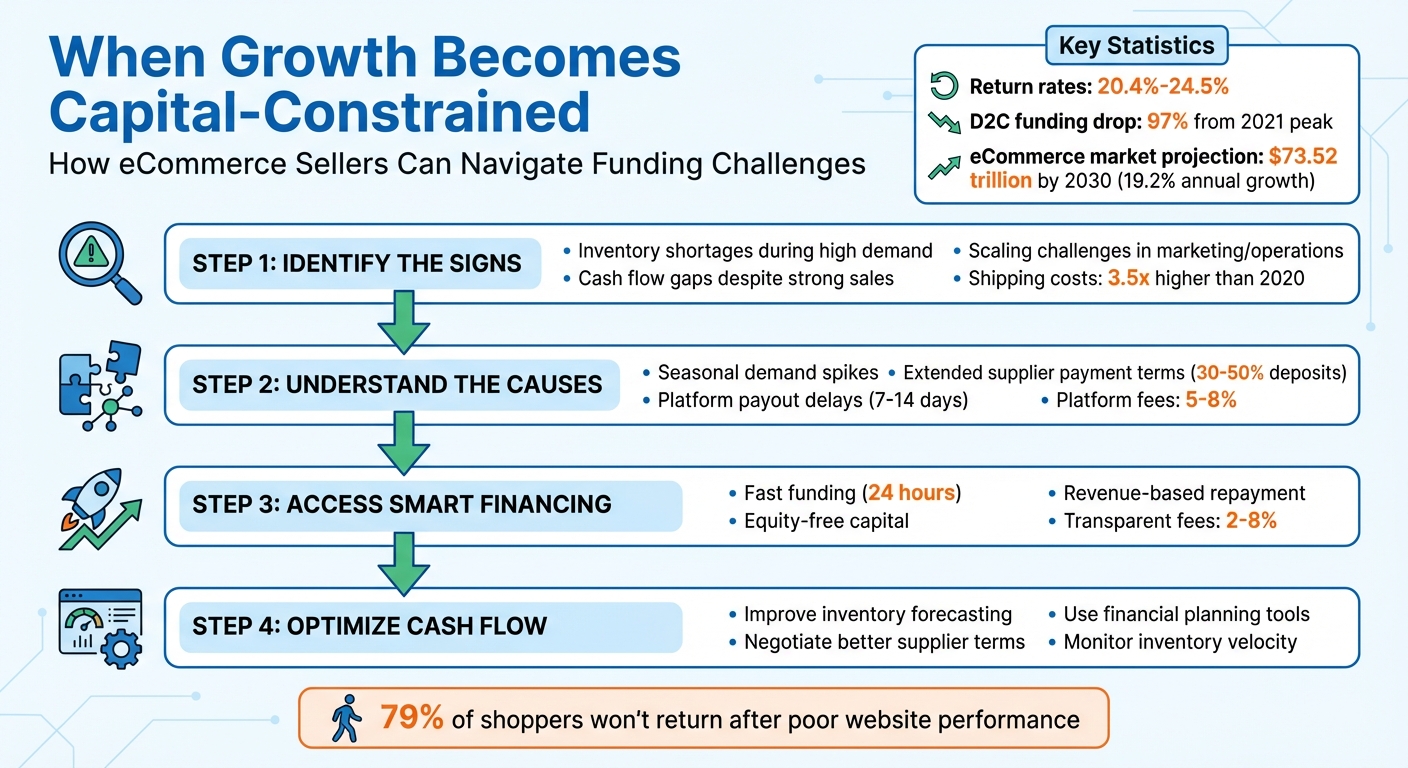
Here’s how you can tackle these challenges:
- Spot early signs of capital constraints: Inventory issues, cash flow gaps, and scaling struggles are red flags.
- Address common causes: Seasonal demand spikes, extended supplier terms, and payout delays often create cash shortages.
- Use financing tools like Onramp Funds: They provide fast, equity-free funding with revenue-based repayment options that align with your sales cycles.
- Improve cash flow management: Focus on better inventory forecasting, negotiating supplier terms, and leveraging financial tools for planning.
With smart strategies and tailored funding solutions, your business can navigate growth challenges and sustain momentum.
eCommerce Funding Secrets Every Seller Should Know
sbb-itb-d7b5115
How to Identify Capital Constraints in Your Business
Spotting capital constraints in your business can be tricky. The warning signs often start small but can quickly grow into major roadblocks if left unchecked. Recognizing these early clues - like inventory shortages, cash flow gaps, and difficulties scaling - can help you address problems before they derail your growth.
Inventory Shortages and Delayed Restocking
Running out of stock when demand is high is one of the clearest signs of capital issues. You might have customers ready to buy, but without the cash to place adequate orders, you’re left with empty shelves and missed opportunities. Often, cash is tied up in pending payouts from platforms or locked in unpaid supplier invoices, leaving little flexibility to restock inventory quickly. This can lead to lost sales and even customer churn.
To make matters worse, the cost of maintaining inventory has skyrocketed. For example, shipping container costs in August 2022 were more than 3.5 times higher than they were in January 2020 [1]. This makes it even harder for businesses to keep an inventory buffer.
Ash Read from Wayflyer emphasizes, "It's better to have too much stock than not enough with so much uncertainty, so you don't have to miss out on sales opportunities" [1].
But for many sellers, following this advice is easier said than done. Without enough cash, keeping 12–16 weeks of inventory on hand feels impossible. Limited capital also means losing out on supplier discounts for early payments or bulk orders, putting you at a disadvantage.
Cash Flow Gaps from Rapid Sales Growth
It might seem odd, but even strong sales can create cash flow problems. When sales skyrocket on platforms like Amazon or Shopify, the revenue often gets stuck in pending payouts. Meanwhile, you still need to pay for immediate expenses like advertising, restocking inventory, and operational costs.
This timing mismatch can be especially painful during busy periods. Imagine generating $50,000 in weekly sales, but your funds won’t clear for 14 days. If you need $30,000 to reorder inventory immediately, you’ll face a cash crunch. To add to the challenge, real average weekly earnings for consumers dropped by 4.5% between January 2021 and late 2022, which reduced overall spending power [1]. This creates even more pressure to maintain inventory while waiting for platform payouts, potentially stalling your growth.
Scaling Challenges in Marketing and Operations
Beyond immediate cash flow, a lack of capital can make it harder to invest in the infrastructure needed to grow. Scaling up often exposes weaknesses in your systems.
As Adaora Afoedozie, an eCommerce operations expert, explains: "Growth doesn't create problems. It reveals them. It shows where systems are missing. Where processes aren't clear. Where structure hasn't caught up with demand" [3].
For example, if your daily orders jump from 20 to 200, manual processes for inventory management, fulfillment, and customer service can quickly fall apart. Upgrading to automated systems becomes essential, but these improvements require upfront investment. Similarly, profitable advertising opportunities may slip through your fingers if you don’t have the funds to scale campaigns.
Data shows that 79% of shoppers are less likely to buy again from a brand if they experience poor website performance - often a result of underfunded tech infrastructure [2]. Without the capital to improve these systems, you’re stuck choosing between maintaining current operations and pursuing growth. This limits your business’s potential and makes it harder to compete. Identifying these constraints early on is critical to finding financing solutions that can help bridge the gap between where you are and where you want to be.
Common Causes of Funding Shortfalls
When your business grows faster than your available capital, funding challenges can quickly arise. One of the biggest culprits? Cash flow gaps caused by mismatches between when you have to pay expenses and when revenue actually comes in. For eCommerce businesses in particular, rapid growth often means covering costs like marketing and inventory well before you see any return from product sales [4]. These gaps can put the brakes on your growth. Let’s dive into some of the main reasons behind these funding shortfalls.
Seasonal Demand Spikes
Big sales periods like Black Friday, back-to-school season, or the holidays can bring in huge revenue, but they also demand heavy upfront investment. Stocking up on inventory months ahead of these peak seasons is critical, but it ties up cash. For instance, a toy retailer might see most of their annual sales during the holidays, but they need to place large inventory orders far in advance. This creates a timing issue - cash is spent long before the revenue comes in. For many eCommerce startups, this mismatch leads to cash flow crunches, making it hard to fully capitalize on these high-demand periods [5].
Extended Supplier Payment Terms
Suppliers often add another layer of complexity to cash flow management. Many require upfront payments or deposits of 30–50% before production even starts. Others may offer net-30 or net-60 terms, but only after a long-standing relationship is established. For a growing business, this means locking up significant funds in inventory that won’t generate revenue for weeks - or even months. On top of that, negotiating bulk discounts or early-payment incentives can further strain cash reserves, as these deals typically require immediate payment. Simply put, scaling up often demands more cash than your business has on hand.
Platform Payout Delays
Even after you’ve made sales, getting access to your revenue isn’t always immediate. Most eCommerce platforms, like Amazon or Shopify, hold your funds for 7–14 days before releasing payouts. Newer platforms, such as TikTok Shop or Walmart Marketplace, may take even longer as they refine their systems. These delays can create a liquidity gap just when you need cash the most. On top of that, selling across multiple platforms adds complexity, with varying platform fees ranging from 5–8% eating into your profits [6]. If you’re waiting on a payout while needing to restock inventory, this timing issue can force you to miss growth opportunities or slow down your momentum [4].
Onramp Funds: Financing Built for eCommerce Sellers

Onramp Funds provides a financing solution specifically designed for the fast-moving world of eCommerce. Traditional funding options often fall short when cash flow issues slow down inventory restocking. That’s where Onramp steps in - offering quick and adaptable capital to help eCommerce businesses overcome these hurdles and keep growing.
Fast, Equity-Free Funding for eCommerce Sellers
With Onramp Funds, you can access capital within 24 hours while keeping full ownership of your business[5]. Whether you’re gearing up for a busy holiday season or jumping on a hot product trend, speed is critical. And the best part? There’s no need to give up equity or control over your company’s future[5].
Flexible, Revenue-Based Repayment Options
Forget the rigid structure of traditional loans. Onramp Funds uses a revenue-based repayment system, where payments are automatically adjusted as a fixed percentage of your daily sales. If sales slow down, your payments decrease; when sales pick up - like during Q4 - they increase[7]. This setup is ideal for eCommerce businesses that experience fluctuating demand, ensuring payments stay manageable no matter the season. Plus, seamless integration makes the process even smoother.
Integration with Major eCommerce Platforms
Onramp Funds connects directly with platforms like Shopify, Amazon, TikTok Shop, and Walmart, using real-time data to streamline the funding process[6]. By leveraging AI-powered analysis, the platform evaluates your business metrics and provides funding solutions tailored to your specific needs and operations[5].
Cash Flow Management Strategies
Capital can bridge short-term gaps, but achieving sustainable growth requires smart cash flow management. Top-performing eCommerce sellers strike a balance between strategic financing and operational improvements to keep their cash flowing smoothly.
Improving Inventory Forecasting
Getting inventory forecasting right is key to avoiding cash being tied up in excess stock or missing out on sales. By analyzing historical sales data, you can identify seasonal trends and establish demand patterns. Most eCommerce platforms provide analytics tools to help you pinpoint which products sell quickly and which tend to linger on shelves.
Instead of focusing solely on sales volume, prioritize inventory velocity - how quickly products sell and free up cash for reinvestment. Monitor inventory turnover rates by category and focus on restocking fast-moving items. At the same time, factor in supplier lead times and maintain a safety stock of your bestsellers. This strategy not only improves cash flow but also strengthens your position when negotiating with suppliers.
Negotiating Better Supplier Terms
Suppliers that have a direct impact on your revenue and customer satisfaction deserve special attention during negotiations. By sharing your demand forecasts and growth plans, you can often secure better pricing or extended payment terms.
Take the example of Pashion, a footwear brand that faced supply chain challenges in November 2021, just before the holiday season. To address potential delays, they used working capital to airship 20% of their stock rather than relying entirely on ocean freight. This decision ensured product availability during peak shopping months, contributing to an impressive 375% increase in holiday sales compared to the previous year[8]. Smart supplier strategies like this not only boost sales but also improve cash flow.
Using Onramp Funds' Tools for Financial Planning
While inventory management and supplier terms are essential, tools like those offered by Onramp Funds can further streamline your financial planning. Their funding calculator allows you to model different cash flow scenarios by inputting monthly sales figures. With transparent fees ranging from 2-8%, this tool helps you estimate funding needs with precision.
What sets Onramp apart is its revenue-based repayment model. Payments adjust automatically based on daily sales - decreasing during slower months and increasing when sales are strong. This flexibility ensures you can allocate funds effectively across inventory, marketing, and operations without the stress of fixed repayments. It’s a practical way to align funding with your business performance.
Conclusion
For eCommerce businesses experiencing rapid growth, managing limited capital can be a major hurdle. With D2C funding levels plummeting by 97% from their 2021 peak, finding flexible financing solutions has become more critical than ever [5].
Onramp Funds offers a practical solution to this challenge by delivering fast, equity-free financing that aligns repayments with your actual sales performance. This means you can retain full ownership of your business while accessing the funds needed for key expenses like inventory, marketing, and operations. With transparent fees ranging from 2-8%, there are no hidden costs, and the revenue-based repayment model adjusts to your sales cycles - lower payments during slow months and higher payments when sales are booming.
Looking ahead, the global eCommerce market is expected to hit $73.52 trillion by 2030, with an impressive annual growth rate of 19.2% [5]. To navigate this expanding market effectively, combining flexible financing with smart cash flow strategies - like improved inventory planning, better supplier negotiations, and data-driven decision-making - can help you grow sustainably while keeping control of your business.
This growth potential highlights why having a financing partner that understands the unique challenges of eCommerce is so important. Whether you're dealing with seasonal fluctuations, platform payout delays, or the need to capitalize on new opportunities, having access to tailored support from an experienced team, like Onramp Funds' Austin-based experts, can make all the difference.
FAQs
How do I know if my growth is becoming capital-constrained?
If your business is experiencing rapid sales growth but facing cash flow gaps, inventory shortages, or delays in order fulfillment, it could be a sign that your available capital isn't keeping pace with your expansion. These challenges can create bottlenecks that hinder your ability to scale effectively. Addressing these issues is crucial to ensuring your growth remains steady and manageable.
What’s the quickest way to fix cash gaps caused by payout delays?
Revenue-based financing is one of the quickest ways to tackle cash flow issues caused by payout delays. With this approach, you can access funds in as little as 24 hours. Repayments are tied directly to your sales, making it a flexible option. This type of financing allows you to keep inventory stocked, fulfill orders, and manage marketing expenses effectively during times of rapid growth - all without relying on traditional credit checks or collateral.
How much inventory should I keep on hand without hurting cash flow?
To maintain smooth cash flow, ensure you have enough inventory to meet customer demand during your supplier's lead time and any sales ups and downs. Add a safety stock buffer to cover unexpected spikes. Keep an eye on key metrics like your cash conversion cycle and Days Inventory Outstanding (DIO) to avoid overstocking. Too much inventory can lock up cash and lead to higher carrying costs. Instead, align your inventory levels with accurate forecasts, and explore financing options to support growth without straining resources.
Related Blog Posts
Onramp Funds
Funding built around your sales
Connect your store and see what you qualify for. Repay as a percentage of sales, with no personal credit check.
Funding in as little as 24 hours.
