

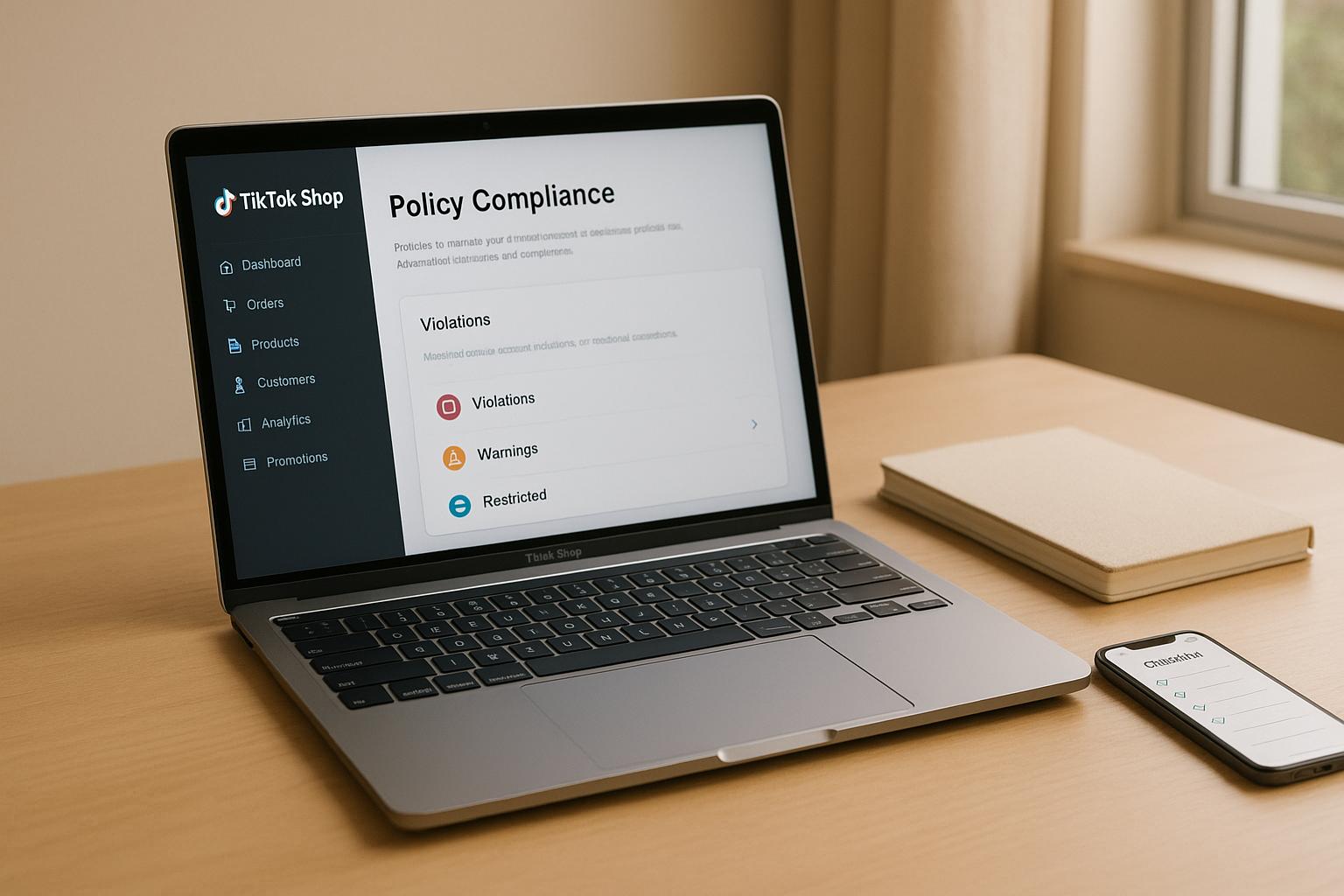
TikTok Shop is a growing online marketplace with strict rules to ensure quality and safety. Sellers must follow these policies to avoid penalties, which can range from temporary suspensions to permanent bans. TikTok uses a violation points system, where accumulating points leads to escalating consequences:
- 12 points: 7-day suspension from campaigns and benefits.
- 24 points: 14-day suspension, reduced traffic, and limited features.
- 36 points: 28-day shop deactivation and extended benefit suspension.
- 48 points: Permanent shop suspension and possible legal action.
Key compliance areas include accurate product descriptions, adhering to safety standards, and avoiding prohibited items like counterfeit goods or unsafe products. Sellers also need to maintain proper documentation, such as safety certificates and regulatory approvals, especially for regulated categories like cosmetics or electronics.
To stay compliant:
- Regularly review TikTok policies and update listings.
- Ensure product descriptions and visuals are accurate.
- Maintain proper documentation for safety and legality.
- Monitor performance metrics to identify and resolve issues early.
Financial health is also critical. Sellers should invest in quality control, inventory, and technology to meet compliance demands. Flexible funding options, like revenue-based financing, can help maintain cash flow and support compliance efforts.
Non-compliance can damage visibility, sales, and trust. Following these guidelines helps sellers protect their accounts and grow their businesses on TikTok Shop.
Remove Non-Compliant Store Behavior Violation | TikTok Shop Violation
TikTok Shop Requirements You Need to Know
Getting started on TikTok Shop means meeting specific eligibility criteria and completing your account setup. Knowing these requirements upfront helps you avoid delays and ensures you stay compliant with platform policies.
Who Can Sell on TikTok Shop
TikTok Shop is open to brands, individual creators, and small businesses looking to showcase their products to a broad audience. However, there are key requirements you must meet to begin selling.
Age and Location Requirements
To sell on TikTok Shop, you must be at least 18 years old. The platform currently supports sellers in the USA, UK, and select Southeast Asian countries.
Account Types Available
TikTok Shop offers two types of seller accounts, tailored to different business needs:
| Requirement | Individual Seller | Business Seller |
|---|---|---|
| Age | 18+ | N/A |
| Tax Info | Last 4 digits of SSN or ITIN | EIN |
| Bank Account | Active bank account | Business bank account |
- Individual seller accounts are ideal for small-scale entrepreneurs, those running side businesses, or sellers without a registered company.
- Business seller accounts cater to registered companies, corporations, or sellers managing larger inventories and requiring advanced tools like multi-user access and detailed analytics.
Before you proceed, make sure your products comply with TikTok's guidelines. Prohibited items can lead to immediate account suspension.
Setting Up Your Account Correctly
Properly setting up your TikTok Shop account is essential for a smooth start. Following TikTok's Seller Center guidelines ensures your account is verified and ready for business.
Registration Process
You can register using your TikTok account, email, or phone number. During the process, provide accurate business details, including your legal name, address, and tax ID. Choose the right account type to ensure your documentation matches TikTok's requirements.
Required Documentation
You'll need to upload verification documents like a passport, national ID, driver’s license, or business license. Use a valid bank account that matches your business name to avoid payment issues. Additionally, set up your shop's warehouse or pickup and return addresses. Once verified, your shop will be ready to display products and start selling.
Final Setup Steps
Complete all verification steps, link your bank account, and agree to TikTok's terms and conditions. Pay attention to your initial product listings - they should be accurate and professional, as they create the first impression for potential buyers.
"If you want to build a sustainable brand on TikTok Shop, compliance isn't optional; it's your foundation. From accurate listings to safety documents and shipping performance, every piece plays a role in how your store is ranked, promoted, and trusted."
How to Stay Updated on Policy Changes
TikTok Shop policies are constantly evolving to keep up with new regulations and platform growth. Staying informed is crucial to avoid unintentional violations that could harm your business.
Official Resources
The TikTok Seller Center and Seller University are your go-to platforms for updates. These tools announce policy changes in advance, giving you time to adjust your operations. Enable notifications or check them weekly to stay ahead.
Proactive Monitoring
Certain product categories, like cosmetics, face stricter scrutiny. If you sell regulated items, pay extra attention to safety standards and documentation requirements. Regularly review your listings to ensure they align with the latest guidelines.
Content Standards
TikTok's content guidelines can shift based on user feedback, safety concerns, or regulatory updates. Regularly review your product descriptions and videos to ensure they meet current standards. What worked last month might not comply with today's rules, so staying vigilant is key.
With TikTok drawing 170 million active users, many aged 18-24, the platform evolves rapidly to meet the needs of its dynamic audience. Keeping up with policy changes isn’t just helpful - it’s essential to maintaining your seller status. Once your account is set and policies are monitored, your next focus should be refining product listings to align with TikTok's content rules.
Product Listings and Content Rules
Creating product listings that meet TikTok Shop's standards is crucial. Last year alone, TikTok blocked 37 million product listings, showing just how serious the platform is about enforcing its guidelines. To keep your shop running smoothly, your product descriptions, images, and promotional materials must align with these rules.
Writing Clear and Honest Product Descriptions
Accurate and transparent product descriptions are non-negotiable. Customers need precise details about what they’re buying, free from misleading claims or exaggerated promises.
Use specific language to describe your product’s features. For example, instead of vague terms like "premium quality", provide concrete details such as "100% organic cotton" or "stainless steel construction." Include all relevant specifications, such as dimensions (in imperial units), materials, usage instructions, and any applicable warnings. Avoid making claims like "miracle cure", "instant results", or "guaranteed weight loss" unless you have verifiable proof to back them up. This is especially important for health and beauty products, where you should focus on the product's ingredients and intended use rather than promising specific outcomes.
Your visual content should align with the clarity and honesty of your written descriptions.
Video Content and Promotion Rules
Promotional videos on TikTok Shop must respect intellectual property and adhere to community standards.
Respect Intellectual Property Rights
Before creating promotional content, confirm that you have the proper authorization to sell and advertise your products. This includes verifying supplier permissions and having documentation such as letters of authorization, intellectual property certificates, or legal documentation for self-made products. TikTok enforces strict IP protections, and violations can lead to immediate account suspension.
Follow Content Standards for All Audiences
TikTok’s community guidelines are designed to ensure content is suitable for users of all ages. The platform explicitly prohibits creators from posting content that targets minors inappropriately. Make sure your promotional videos avoid suggestive themes, inappropriate language, or anything that could be harmful to younger viewers. Content should remain appropriate for general audiences.
Use High-Quality, Accurate Visuals
Your visuals should accurately represent the products you're selling. Avoid using stock photos that don’t reflect your specific item. Instead, include high-quality images and videos that show the product clearly from multiple angles, ensuring the color, size, and condition match what customers will receive. Misleading visuals can quickly lead to policy violations and customer dissatisfaction.
Regular Content Reviews
Staying compliant requires ongoing effort. TikTok’s policies change frequently, so you’ll need to stay on top of updates to ensure your listings remain acceptable.
Conduct Monthly Audits
Review your product listings monthly to confirm they’re still accurate and compliant. Check descriptions for precision, ensure prices are up to date, and verify that images reflect the actual products being sold. Look for any claims that might now be flagged as misleading under updated rules. Regular audits help you catch and fix issues before they escalate.
Monitor Performance Metrics
Use TikTok Seller Central’s analytics to track performance. Pay close attention to listings with high return rates or frequent customer complaints, as these may point to inaccuracies in descriptions or visuals. Respond promptly to any warnings or notifications from TikTok about specific listings to avoid potential penalties.
Update Content Based on Policy Changes
When TikTok updates its policies, review all your listings to ensure compliance. Categories like cosmetics, supplements, and electronics often face stricter scrutiny, so they may require more frequent updates. Keep your documentation well-organized and readily available, as TikTok may request proof of compliance during reviews or if questions arise about specific products.
Maintaining accurate and compliant content isn’t just about avoiding penalties - it’s about creating a trustworthy shopping experience for your customers. Listings that are well-maintained and meet TikTok's standards are more likely to perform well in the platform’s algorithm, driving better visibility and higher sales over time.
Product Safety and Documentation Requirements
Adhering to TikTok Shop's safety standards is non-negotiable if you want to succeed as a seller. Starting December 13, 2024, sellers shipping to Europe and Northern Ireland will need to comply with the General Product Safety Regulation (GPSR). Failing to meet these standards could result in penalties or even product removal. Beyond Europe, TikTok Shop enforces strict safety guidelines across all markets, and understanding these is crucial for every seller. Here's a breakdown of the essential safety labeling and documentation practices to help you stay compliant.
Safety Standards and Product Labels
The safety labeling requirements differ depending on your product category and target market. For instance, in the United States, beauty products must align with FDA regulations, which oversee labeling, ingredient safety, and testing. In Europe, cosmetics must meet the EU Cosmetics Directive, which ensures consumer protection through strict rules on safety, labeling, and claims.
Key Labeling Requirements
Every product must include the following on its label:
- Manufacturer's and, if applicable, importer's details
- Clear safety information
- A unique identifier, such as a model number or batch code, for tracking purposes
If your product has a GTIN (Global Trade Item Number), display it prominently alongside the barcode on the packaging. For sellers targeting European markets, you'll also need to appoint a Responsible Person (RP) based in the EU. This individual acts as a regulatory contact and ensures product safety. Their contact details must appear on the product packaging or documentation in a language understood in the respective EU market.
Category-Specific Guidelines
Different product categories come with additional requirements:
- Electronics: Need CE marking in Europe and FCC compliance in the U.S..
- Children's Products: In the U.S., toys must meet ASTM safety standards, while in Europe, EN 71 Certification is mandatory for access to EU markets. Products designed for children aged 12 or younger must include a clear photo of the product tracking label.
Prohibited Product Categories
TikTok Shop has a strict list of banned items to ensure safety and compliance. Prohibited categories include:
- Adult products, alcohol, tobacco, e-cigarettes, drugs, and drug paraphernalia
- Weapons, ammunition, and hazardous items
- Certain beauty items, such as those making unapproved medical claims or containing banned ingredients
- Live animals, products derived from endangered species, and specific pet-related items
- Counterfeit goods, discriminatory or offensive items, and anything tied to human exploitation
Managing Compliance Documents
Properly organizing compliance documents is key to avoiding delays or account suspensions. TikTok Shop can audit sellers at any time, so keeping your files in order is essential, especially for restricted product categories.
Document Organization Tips
Before listing your products, gather all necessary compliance documents. Depending on the product type, TikTok may request:
- CE certificates
- FCC approvals
- CPSIA test reports
For children’s products, you'll need a test report from a CPSC-accredited lab and a Children's Product Certificate issued by the manufacturer, importer, or private labeler. These documents must follow the guidelines on the Consumer Product Safety Commission website and be in English.
Uploading Documents to TikTok Shop
All compliance documents and certifications should be uploaded to the TikTok Shop Seller Center. Ensure files are in an accepted format (PDF or JPG) and meet size limitations. Include clear images, detailed descriptions, and any required warning labels.
Staying Current with Requirements
Regulations vary by region, and failing to meet them can lead to fines, product delistings, or restricted market access. Stay informed by regularly checking TikTok Shop's Seller University for updates on product requirements.
Some categories, like children’s products, medical devices, and fine jewelry, require additional qualifications through TikTok Shop’s evaluation process. Review the restricted products list and update your practices as TikTok's policies evolve. Double-check all submitted documents - common errors like blurry ID uploads or mismatched information can delay account registration.
Meeting safety and documentation requirements not only ensures compliance but also builds customer trust and supports long-term success on TikTok Shop. Solid safety practices can positively influence your shop’s performance and visibility on the platform.
sbb-itb-d7b5115
How to Avoid and Handle Policy Violations
Policy violations on TikTok Shop can seriously disrupt your business operations. Compliance isn’t just a good practice - it’s a must if you want to thrive. By aligning your product listings and overall practices with TikTok’s safety standards, you can avoid unnecessary setbacks. Below are actionable steps to help you prevent and manage policy violations effectively.
Common Violations and Their Consequences
TikTok Shop enforces a strict violation point system where accumulating 48 points leads to permanent account suspension. Each repeated infraction adds more points, making it critical to understand and avoid common violations.
- Seller Qualification Violations: These occur when businesses submit fake or inaccurate registration documents.
- Product Eligibility Violations: Listing prohibited items like alcohol, drugs, tobacco, weapons, or counterfeit goods can quickly rack up violation points.
- Product Listing Quality Violations: Using misleading descriptions, low-quality images, exaggerated claims, or clickbait titles can result in penalties.
- Service Level Failures: U.S.-based merchants must maintain low dispatch and cancellation rates while meeting TikTok’s customer service expectations.
- Content Violations: Misleading or deceptive content that breaks TikTok’s community guidelines can lead to serious penalties.
Building a Violation Prevention System
Creating a robust system to prevent violations starts with thoroughly understanding TikTok’s policies, such as the Seller Enforcement Policy, Prohibited Products Policy, Content Policy, and Seller Terms of Service. Here’s how you can proactively safeguard your account:
- Regular Audits and Documentation: Frequently review your product listings to ensure descriptions are accurate and images represent your products well. Maintain detailed records of compliance activities, including supplier certifications and product testing results.
- Reliable Fulfillment Systems: Use dependable inventory management tools and trusted logistics partners. Address dispatch delays promptly to maintain efficiency.
- Content Review Process: Establish a process to review promotional materials, ensuring all claims are truthful and align with TikTok’s guidelines.
- Customer Service Excellence: Monitor response times, resolution rates, and customer satisfaction. Train your team to handle inquiries effectively and maintain high service standards.
- Performance Monitoring: Keep a close eye on key metrics like dispatch rates and customer feedback. Regular team reviews can help you identify and resolve issues early.
- Enhance the TikTok Shop Experience: Focus on creating a seamless shopping experience directly within TikTok, avoiding redirections to external sites. Address customer feedback quickly to prevent small issues from growing into larger problems.
Using Financial Solutions for Compliance and Growth
Staying compliant with TikTok Shop policies isn’t just about following the rules - it’s also about having the financial resources to support those efforts. Building a successful operation on TikTok Shop often requires investments in areas like quality control, inventory, and technology, all of which are vital for staying on the right side of compliance.
Why Cash Flow Matters for Compliance
Having a healthy cash flow is the backbone of ensuring compliance on TikTok Shop. With sufficient working capital, sellers can implement the necessary systems and processes to avoid costly violations before they happen.
For example, maintaining compliance often involves spending on quality control measures, proper documentation, and certifications. This might include professional product photography, thorough testing, or ensuring suppliers provide the right paperwork. Cutting corners to save money can lead to violations, but strong cash flow allows sellers to invest in these areas properly.
Good cash flow also supports efficient inventory management and timely order fulfillment, both of which are critical for compliance. Additionally, technology plays a key role. Automated tools for tracking performance metrics, managing customer service, and monitoring content quality require upfront investment but can significantly reduce the risk of violations. Many TikTok Shop sellers rely on specialized software to maintain high standards consistently.
Interestingly, 71% of eCommerce sellers have turned to alternative financing to address cash flow challenges. This is where flexible financial solutions become game-changers.
How Onramp Funds Supports TikTok Shop Sellers
To meet these financial needs, options like Onramp Funds provide a tailored solution for TikTok Shop sellers. Onramp Funds offers revenue-based financing, a model that adjusts repayments based on your actual sales performance. Unlike traditional loans, which demand fixed monthly payments, this approach aligns with the ebb and flow of your revenue.
One major advantage is the speed of access. Onramp Funds can provide capital within 24 hours, helping sellers address urgent needs like restocking inventory, upgrading technology, or securing compliance documentation without the delays associated with traditional loans.
Flexible repayment terms are another key benefit. During slower sales periods, repayment amounts decrease, preserving cash flow for essential operations. When sales pick up, payments scale accordingly, ensuring sellers can continue investing in compliance and growth.
The equity-free financing model is especially appealing for sellers who want to maintain full control of their business. As TikTok Shop expands in the U.S., keeping decision-making power in-house becomes even more important for sellers building their brand presence.
Onramp Funds also integrates directly with TikTok Shop and other major eCommerce platforms, simplifying the application and monitoring process. Businesses generating at least $10,000 in monthly sales can qualify, making this an accessible option for growing sellers who might not meet the requirements for traditional business loans.
"If you want a good price on your capital, you need to have clean financial statements." – Stephen Brown, LedgerGurus
Additionally, Onramp Funds offers personalized support from an Austin-based team, providing sellers with guidance tailored to their specific needs. This hands-on approach helps sellers navigate financing decisions and maintain compliance as they grow.
Revenue-based funding typically costs between 6% and 12% of the borrowed amount, making it a cost-effective alternative to higher-priced options like merchant cash advances. With its speed, flexibility, and seamless integration, revenue-based financing is a smart choice for TikTok Shop sellers looking to balance compliance requirements with growth opportunities in a fast-moving market.
Key Points for TikTok Shop Compliance Success
Thriving on TikTok Shop isn't just about knowing the rules - it's about actively implementing them. With TikTok's upgraded content moderation and algorithmic screening tools in 2024, even minor policy breaches are more likely to be flagged, making compliance critical for success.
Start with the basics: understand the core policies. Following TikTok Shop's rules is non-negotiable if you want to keep your seller account in good standing. Violations can lead to penalties like account suspensions or permanent bans. While TikTok may handle sales tax collection and remittance for U.S. sellers, you’re still responsible for knowing and reporting your tax obligations.
Accurate and honest product listings are essential. Misleading descriptions or unverified claims can put your account at risk. Make sure your documentation confirms product safety and supplier authorization. Intellectual property compliance is equally important - double-check that your products don’t infringe on copyrights, trademarks, or patents before listing them.
Stay ahead with proper documentation and product safety measures. TikTok conducts regular compliance checks and may request updated business or product documentation at any time. Having these materials ready ensures you can address concerns before they escalate.
Keep up with TikTok’s policy updates. The platform frequently revises its guidelines based on regulations and user feedback. To stay informed, set up alerts or regularly visit TikTok’s policy center. Beyond compliance, factors like customer satisfaction and fast order fulfillment significantly influence your seller ratings and long-term success.
Financial stability plays a big role in staying compliant. A healthy cash flow allows you to invest in safety-compliant inventory, secure necessary documentation, and quickly adapt to policy changes. Tools like Onramp Funds can help by offering revenue-based financing that aligns repayments with your sales, ensuring you can meet compliance demands without straining your finances. Without these investments, non-compliance risks grow exponentially.
The consequences of falling short on compliance are steep. Sellers with a history of bans, fake documentation, or excessive customer complaints may face permanent disqualification from the platform. On the flip side, sellers who proactively maintain compliance records and respond swiftly to TikTok's requests often report smoother operations, improved customer trust, and higher sales.
To succeed in TikTok Shop’s competitive environment, build systems that support accurate listings, financial preparedness, and ongoing compliance monitoring. These practices not only protect your account but also position you for long-term growth.
FAQs
How can I ensure my TikTok Shop follows platform policies and avoid penalties?
To ensure your TikTok Shop stays in good standing and avoids potential penalties, it's crucial to stay up-to-date with TikTok's Seller Guidelines and Content Policies. Regularly check official resources like the Seller Center and Policy Pulse for any updates or changes.
Keep your product listings accurate, steer clear of selling prohibited or restricted items, and focus on delivering top-notch customer service. By sticking to these practices, you’ll help keep your shop running smoothly and minimize the risk of any violations.
What steps should I take to manage product documentation and safety certifications for TikTok Shop compliance?
To comply with TikTok Shop policies, it's crucial to stay on top of your product documentation and safety certifications. Be sure to upload all necessary documents - like safety test reports, packaging images, Safety Data Sheets (SDS) for hazardous items, and any other required certifications - directly to the TikTok Shop Seller Center under the correct product categories.
Your documentation should meet TikTok's guidelines for restricted and dangerous goods, proving that your products adhere to essential safety and quality standards. Keeping everything accurate and up to date not only ensures compliance but also minimizes the risk of violations that could disrupt your business operations.
How can I manage my finances to stay compliant and grow my TikTok Shop without overextending my budget?
To manage your TikTok Shop effectively and keep your finances under control, focus on strategic financial planning. Begin by setting up a clear budget that tracks your expenses and helps you predict sales trends. This approach ensures you're prepared for costs like inventory, marketing, and compliance.
You might also explore revenue-based financing as a way to keep your cash flow steady without accumulating unnecessary debt. With this option, repayments are tied to a percentage of your sales, giving you the flexibility to scale your business at your own pace. By pairing thoughtful budgeting with flexible funding, you can confidently invest in your shop's growth while staying financially secure.
Related posts
Onramp Funds
Funding built around your sales
Connect your store and see what you qualify for. Repay as a percentage of sales, with no personal credit check.
Funding in as little as 24 hours.
