

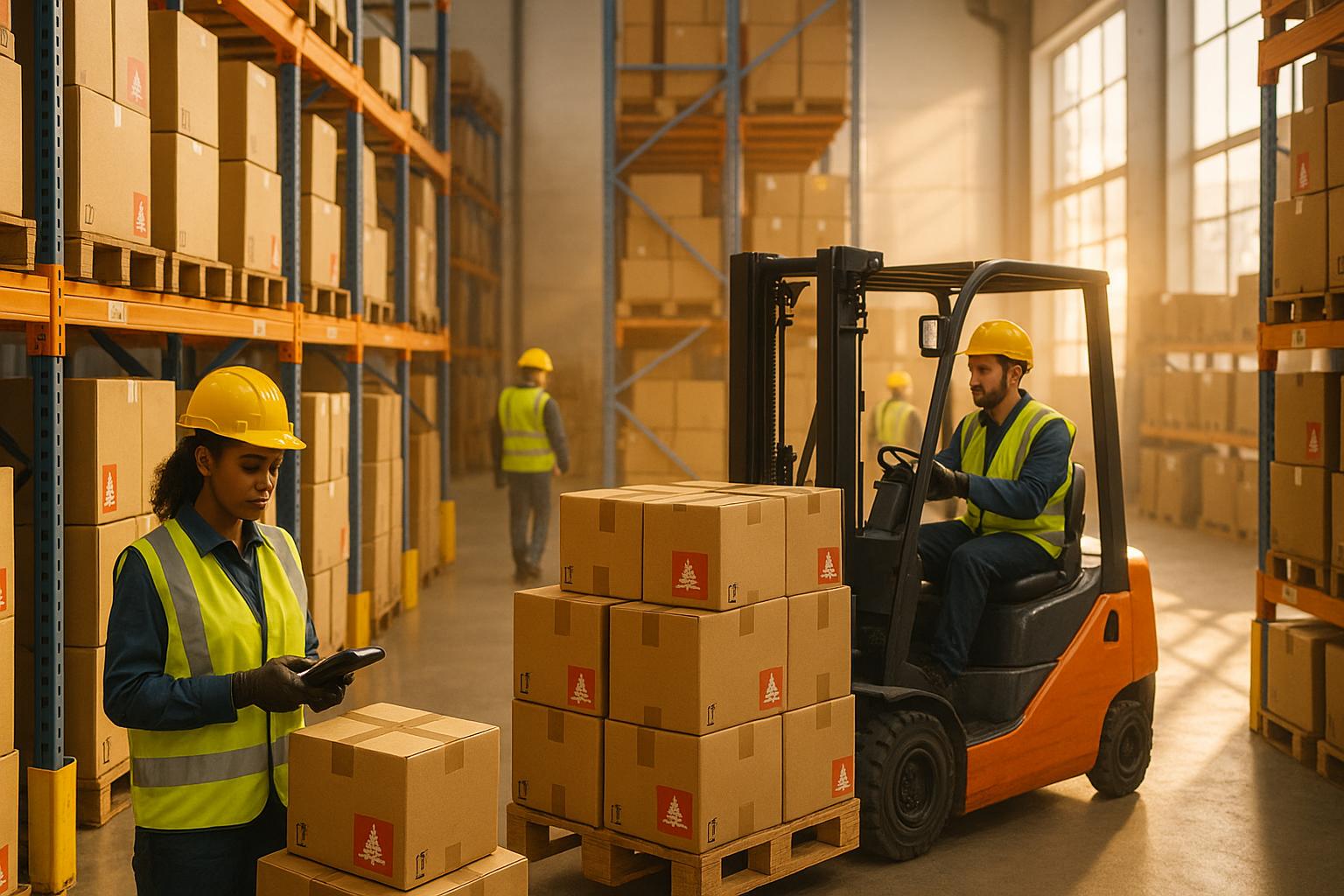
Seasonal warehouse surges can lead to increased injuries and operational risks. During peak periods, like holidays or back-to-school, warehouses face overcrowded spaces, fatigued workers, and undertrained seasonal staff. These factors contribute to higher accident rates, equipment failures, and disrupted operations.
Key takeaways for safer warehouses during busy seasons:
- Overcrowding Risks: Overloaded storage and blocked aisles increase falls and collisions.
- Temporary Worker Training: Seasonal hires are 50% more likely to face injuries without proper training.
- Fatigue Management: Long shifts raise accident risks by up to 37%.
- Equipment Maintenance: Regular checks prevent breakdowns and ensure safety.
- Safety Inspections: Daily checks on inventory and machinery reduce hazards.
- Flexible Scheduling: Staggered shifts and voluntary overtime improve worker well-being.
Investing in safety measures - training, inspections, and equipment upgrades - not only protects employees but also ensures smooth operations during critical sales periods.
Tips to Protect Workers During the Holidays: A Holiday Workplace Safety Guide
Common Seasonal Safety Challenges in eCommerce Warehouses
Peak seasons turn warehouses into bustling hubs where safety risks skyrocket. Recognizing these challenges is crucial to protecting both your workforce and operations.
Higher Inventory Levels and Crowded Spaces
Seasonal demand often pushes warehouse capacity to its limits. For example, in 2023, Amazon handled 29% of global order volume in the two weeks leading up to Christmas [2]. This surge forces warehouses to cram more inventory into the same space, creating overcrowded aisles and overloaded storage areas. These tight spaces increase the chances of falls, collisions, and even structural issues with storage racks.
The problem doesn’t stop there. Overcrowding and heavy traffic can accelerate wear and tear on equipment, leading to more frequent breakdowns. Injuries become more likely, with sprains, strains, and fractures accounting for over 45% of warehouse injuries in 2022 [1]. Adding to the risk, seasonal hires - often with minimal training - are tasked with navigating these cramped, high-pressure environments, further raising the stakes.
Temporary Workers and Training Issues
Seasonal staffing presents another major safety challenge. Temporary workers, often inexperienced, face a steep learning curve. Statistics show they are four times more likely to have an accident during their first month on the job and 50% more likely to suffer serious injuries or fatalities [3]. With November and December contributing to 20% of annual sales for many companies [3], the rush to onboard these workers often results in shortened training sessions that skip critical safety measures.
These workers may not know the facility’s layout, proper lifting techniques, or how to safely operate equipment. On top of that, they might hesitate to ask questions or report safety issues, which can make a bad situation worse. When you combine these training gaps with the extended hours common during peak seasons, fatigue becomes an inevitable problem.
Worker Fatigue and Long Shifts
Long shifts during peak seasons amplify safety risks. Fatigue from extended hours is a key factor in workplace accidents, with research showing that injury rates increase by 18% on evening shifts and 30% on night shifts. Workers on 12-hour shifts face a 37% higher risk of injury [5].
Fatigue-related incidents are alarmingly common. Studies suggest that 13% of workplace injuries are linked to fatigue, and 43% of Americans admit they may be too tired to work safely [6]. Fatigue doesn’t just cause physical exhaustion - it also impacts mental sharpness, leading to reduced alertness, poor decision-making, and impaired memory. After being awake for 17 hours, cognitive function can drop to the equivalent of having a 0.05% blood alcohol level [4]. In a warehouse setting, where quick thinking often prevents accidents, these impairments can have serious consequences.
The combination of physical strain, mental fatigue, and constant time pressure creates a perfect storm for safety risks, even for seasoned workers.
Adjusting Safety Protocols for Peak Seasons
When the busy season rolls around, your usual safety measures might not cut it. With more activity, crowded spaces, and temporary workers in the mix, you need to rethink and refine your safety protocols to meet these heightened challenges.
Modifying Safety Procedures for Seasonal Demands
As seasonal risks increase, it’s critical to fine-tune your procedures to minimize hazards. Make adjustments to accommodate higher workloads and the influx of temporary staff.
For example, lighten case weights to 35 pounds or less, and elevate pallets for heavier cases so workers can lift within the safest range - between their knees and mid-chest [7].
Equipment adjustments can also make a big difference. Forklift operators should have seats with adjustable lumbar support and vibration dampening for those long shifts. Adding cameras to assist with safely retrieving unit loads in tight spaces is another smart move. Shorter loads can also help, allowing for forward driving and reducing the need to back up over long distances [7].
Workspace organization is another key area. Elevate pallets used for order consolidation to reduce bending, and ensure workers can access three sides of these pallets. Place high-demand items at elbow height to minimize strain, keep individual item weights under 10 pounds (or 2 pounds if a pinch grip is needed), and limit tote weights to 35 pounds [7]. To further enhance safety, clearly mark permanent aisles and passages, and install visual warnings near dock edges to maintain safe clearances for equipment handling [7].
Running Regular Safety Inspections
With the increased activity of peak season, daily safety inspections become non-negotiable. This includes daily checks on heavily used equipment like forklifts [9]. Your inspection routine should cover essential areas such as inventory storage, employee safety, order fulfillment, equipment operation, and warehouse automation systems [8]. Pay close attention to how hazardous materials and heavy items are stored.
Environmental assessments are equally important. Look for damage to floors, ceilings, doors, and windows caused by higher traffic. Cracks in floors or uneven surfaces can become serious hazards when workers are moving quickly or handling heavy loads [7]. Regularly inspect shelving and racking systems to ensure they can handle the extra weight. Gathering feedback from staff about working conditions and potential risks can also provide valuable insights [8].
Nick Watson, EHS Manager at Neovia Logistics, sums it up perfectly:
"My brain never shuts off on proactively changing processes and looking at the facility to ensure that we do everything in our power to make sure that someone doesn't get hurt…their safety is 100% my drive." [9]
Documentation is another critical piece. Keeping detailed and accurate records of injury logs, maintenance schedules, and training sessions helps identify patterns and prevent future incidents [9].
Once equipment and facility checks are in place, shift your focus to preparing your staff.
Training Staff for Seasonal Safety
Safety training plays a pivotal role during peak season. Every employee, including temporary hires, needs thorough OSHA-compliant training [10]. This is particularly important for temporary workers, who are at a higher risk of accidents during their first month [3].
Given that 40% of employees have been found to include misleading details on their resumes, verifying qualifications for safety-critical roles is a must [3].
Your onboarding process should cover workplace safety policies, emergency procedures, and personal protective equipment requirements in detail [10]. Tailor training to specific roles: warehouse workers need hands-on instruction for machinery, while those handling hazardous materials require specialized chemical safety training.
Forklift training should be a priority. Only certified operators should handle these vehicles, and they must be trained on the specific equipment and conditions they’ll face. Stress key safety practices like wearing seatbelts, avoiding overloads, maintaining clearances when raising and loading, and following correct procedures for stacking and picking up loads [7].
Regular refresher courses and on-the-job training help reinforce these protocols. Monitoring staff ensures that temporary workers don’t compromise safety for productivity [10][3]. Fostering an environment where employees feel comfortable reporting hazards and asking questions also strengthens workplace safety.
Ryan Donovan, President of States Logistics, emphasizes this point:
"I want all of our associates going home at the end of the day, the same way they came in, only happier because, at the end of the day, they've had a great shift, they've done their work, they're happy, they get to go home." [9]
Managing Workers to Prevent Fatigue
During peak seasons, order volumes can skyrocket by 30–400%, putting workers at a higher risk of fatigue - a serious safety concern. Fatigued workers are 70% more likely to experience accidents [11][14]. This makes managing fatigue a key part of any seasonal safety plan.
Planning Better Work Schedules
Effective scheduling can help reduce fatigue and improve worker retention. Warehouses that adopt at least three flexible scheduling strategies see turnover rates drop by 25–40% during peak seasons [11].
Here are some scheduling strategies to consider:
- Flexible shift lengths: Offer shifts of varying lengths (4, 6, 8, or 10 hours) to align staffing with workload demands [11].
- Staggered start times: Begin shifts at multiple times (e.g., 6:00 AM, 8:00 AM, 10:00 AM) to distribute workloads evenly throughout the day [11].
- Voluntary overtime pools: Instead of mandating extra hours, allow workers to opt into overtime. Warehouses with high scheduling satisfaction report 30% lower absenteeism and 45% higher retention during busy periods [11].
- Advance scheduling: Give employees 2–4 weeks' notice of peak season schedules so they can prepare [11].
- Fatigue management protocols: Set limits on weekly hours and ensure mandatory rest periods between shifts [11].
"The best approach for peak season is to aim to over-staff slightly, as this will ensure you can fulfill all orders that drop in."
– JP Lichtenberg, Warehouse Design Engineer, Locus Robotics [12]
By establishing these practices, you can create a safer and more efficient environment. But managing fatigue isn't just about schedules; training seasonal staff is equally important.
Training and Supervising Seasonal Staff
Seasonal workers face unique risks, especially since 60% of workplace injuries happen during a worker's first year on the job [14]. In fact, new employees are just as likely to have an accident in their first six months as they are during the rest of their careers [15]. Proper training and supervision are critical.
- Job-specific safety training: Go beyond generic safety briefings. Tailor training to the specific tasks and hazards workers will encounter. Use engaging formats like videos, hands-on demonstrations, and real-life case studies to cater to different learning styles [14][15].
- Gradual task progression: Assign lower-risk tasks to new employees initially, increasing responsibilities as they gain confidence and skill [15].
- Regular supervision: Experienced supervisors should check in frequently with seasonal staff to monitor their progress [15].
Hold monthly safety meetings to address high-risk tasks and review recent near-misses. Pre-shift safety huddles led by supervisors can reinforce training and help reduce accidents caused by inexperience [14].
"Education and training are important tools for informing workers and managers about workplace hazards and controls so they can work more safely and be more productive."
– Occupational Safety and Health Administration [13]
Additionally, monitor overtime closely and limit consecutive shifts to avoid burnout. Encourage breaks during long or demanding tasks, especially for newer employees who may not yet recognize their own fatigue.
Communication and Incident Reporting
Clear communication is essential, particularly when managing a mix of permanent and seasonal workers. High turnover during peak periods requires systems that are easy to use and accommodate temporary staff.
- Shift marketplace platforms: Digital tools allow employees to pick up, drop, or swap shifts, giving them greater control over their schedules while ensuring adequate coverage [11].
- Employee feedback: Use surveys and online portals to understand what scheduling arrangements work best for your team [11].
- Work-life balance: Offer guaranteed weekends off or limit consecutive workdays to prevent burnout. Allowing employees to self-schedule for some shifts can also help [11].
Distribution centers that use robust scheduling platforms report 15–30% reductions in overtime costs [11], proving that well-managed schedules benefit both safety and efficiency.
"Warehouses should get a jump start on peak planning the earlier the better to avoid last-minute disruptions that could impact your ability to properly serve your customers and meet your SLAs."
– Steve Simmerman, Head of Global Alliances, Locus Robotics [12]
sbb-itb-d7b5115
Safe Inventory and Equipment Practices
Expanding on earlier safety strategies, these practices focus on ensuring that inventory and equipment management do not jeopardize workplace safety. While staffing and scheduling are crucial, maintaining safe storage and equipment protocols is equally important, especially during peak seasons. With slips, trips, and falls accounting for 15% of all accidental deaths in general industry [17], implementing these measures can literally save lives. Below are targeted strategies to address inventory, equipment, and workspace safety during high-demand periods.
Avoiding Overloaded Storage and Blocked Aisles
During busy seasons, it’s tempting to fill every available inch of storage space. However, this approach can lead to unsafe conditions. Properly organized inventory helps prevent overloaded shelves and ensures pathways remain clear [16], significantly reducing the risk of accidents.
Here’s how to manage storage safely:
- Arrange pallet racks with the heaviest items on the bottom for stability [17]. This minimizes the risk of top-heavy loads tipping over during retrieval.
- Maintain adequate spacing between racks to avoid collisions, especially when forklifts are in frequent use [17].
- Train employees on proper stacking and shelving techniques [16]. Many accidents occur because workers, under pressure to meet demand, skip safety protocols. Teach your team to recognize when storage areas are nearing capacity and set clear guidelines for load limits.
- Use safety nets or barriers to catch falling objects [16].
- Regularly inspect storage racks for stability [16]. Make routine checks part of your safety protocol, looking for issues like loose bolts or bent frames that could signal structural problems.
- Clearly mark aisles, storage zones, and emergency exits [16]. This is especially critical when temporary workers are on-site and may not be familiar with the layout.
"Preventing accidents in the warehouse requires a proactive approach and a commitment to safety from everyone involved. By implementing proper safety measures, warehouses can create a better work environment for all employees." - Safety By Design [16]
Regular Equipment Maintenance Checks
Equipment maintenance becomes even more critical during peak periods when machines are pushed to their limits. Equipment failures not only disrupt operations but also pose serious safety risks. For example, forklift impacts are responsible for 90-95% of rack damage [18], making regular inspections essential during high-use periods.
| Inspection Frequency | Warehouse Environment |
|---|---|
| Monthly | High-risk warehouses with heavy loads and frequent equipment use |
| Quarterly | Medium-risk warehouses with moderate traffic and variable loads |
| Annual | Low-risk warehouses with stable conditions and minimal equipment use |
Most eCommerce warehouses are classified as high-risk during peak seasons and should conduct monthly inspections [18]. Focus on areas like upright frames, beams, connections, base plates, and anchors [18].
Leverage a Computerized Maintenance Management System (CMMS) to streamline preventive maintenance tasks [19][20]. A CMMS can help schedule inspections, manage work orders, and track spare parts inventory, ensuring that equipment stays in optimal condition.
Additionally, inspect forklifts, conveyors, and other machinery regularly [2]. Pay close attention to hydraulic systems, brakes, steering, and safety features, especially during busy periods when extended use accelerates wear and tear. Comprehensive training on equipment operation and emergency procedures can reduce accident rates by up to 70% [21].
Keeping Workspaces Clean and Organized
A clean and organized workspace is essential to prevent slips, trips, and falls - one of the leading causes of workplace injuries [16].
Here’s how to maintain tidiness during peak seasons:
- Establish regular housekeeping routines beyond end-of-shift cleanups [16]. Hourly or mid-shift cleaning schedules can help prevent debris from piling up. Spilled liquids, dropped inventory, and packaging materials are common hazards that increase with activity.
- Ensure proper lighting throughout the warehouse [16]. Longer operating hours during peak seasons often mean working in low-light conditions, which can lead to accidents. Good lighting is especially important for temporary workers unfamiliar with the space.
- Keep aisles and passageways clear [21]. When inventory levels rise, blocked pathways can force workers to take unsafe shortcuts. Designate temporary storage areas that don’t obstruct walkways or emergency routes. Loading docks, where nearly 25% of warehouse injuries occur [21], should be kept organized with protocols for securing loose items and maintaining non-slip surfaces.
- Safely label and store hazardous chemicals [21]. Peak seasons often see increased use of cleaning supplies, battery acids, and other chemicals. Store these materials securely, away from high-traffic areas, and ensure they are clearly labeled to minimize the risk of spills.
With an injury rate of 5.5 per 100 full-time warehouse workers [21], maintaining clean and organized workspaces is one of the most effective ways to ensure safety, even under the pressures of peak demand.
Using Financial Solutions for Safety Investments
As peak seasons bring increased activity, staying ahead with updated safety protocols is crucial. But ensuring safety often comes with a price tag that requires upfront investment.
Many eCommerce businesses face cash flow challenges during these busy periods. Spending on safety training, upgrading equipment, or hiring additional staff not only safeguards workers but also keeps operations running smoothly.
Funding Safety Investments with Onramp Funds

Onramp Funds provides eCommerce sellers with a fast and flexible way to secure capital for safety upgrades and other essential improvements - without giving up equity. Unlike traditional loans that involve personal credit checks and lengthy approvals, Onramp bases its lending decisions on business performance data. Better yet, funding is often available within 24 hours. The platform’s revenue-based financing model adjusts repayments according to sales, easing cash flow pressure during seasonal fluctuations [22].
Jeremy, the founder of Kindfolk Yoga, shared his experience:
"Onramp offered the perfect solution with revenue-based financing to secure the capital we needed to invest in inventory and pay it back with repayments timed to sales. The process was quick, easy, and the support was great." [22]
Onramp Funds enables businesses to invest in critical safety measures, from upgrading equipment to implementing targeted training programs and hiring extra staff to prevent worker fatigue [22]. With 75% of customers returning for additional funding [22], the platform has become a trusted resource for businesses seeking ongoing capital support.
The impact is clear: Onramp-backed eCommerce businesses grow by an average of 73% within just six months [23]. Supporting sellers across platforms like Amazon, Shopify, Walmart, BigCommerce, WooCommerce, Squarespace, and Shopline, Onramp is available to businesses with at least $10,000 in monthly sales. Flexible repayment options - both variable and fixed - ensure that businesses can choose a plan that fits their needs [22][24].
Eric Youngstrom, CEO of Onramp, highlights the company’s purpose:
"Assisting small business owners with access to capital is Onramp's mission" [23]
To get started, businesses can use the funding calculator on Onramp’s website to estimate how much capital they can access for safety improvements. The simple application process ensures funds are available quickly, allowing businesses to make timely investments in training, equipment, and staffing during peak seasons.
Conclusion: Making Safety a Priority for Seasonal Success
Seasonal warehouse safety is more than just meeting compliance standards - it’s a cornerstone of reducing accidents, improving productivity, and keeping employees happy.
This becomes even more pressing when you consider that the warehousing industry experiences a higher rate of fatal injuries compared to many other sectors [25].
As Shipedge highlights, focusing on employee wellness isn’t just a nice-to-have - it’s a smart strategy [28]. During peak seasons, the link between safety and efficiency becomes undeniable. Simple steps like promoting ergonomic work habits, offering healthy food options, and creating a supportive work environment can significantly boost employee satisfaction and retention [28]. Recognizing achievements, whether for individuals or teams, helps maintain morale and motivation, even during the busiest times [28].
Technology also plays a key role in keeping warehouses safe. Tools like Warehouse Management Systems not only streamline operations but also help enforce safety protocols. Regular audits are equally important for identifying and addressing potential hazards [25].
With online retail expected to account for 23% of global purchases by 2027 [27], warehouse operations are only becoming more demanding. This makes ongoing safety efforts essential - not just for compliance, but for maintaining efficiency [26].
Taking care of employees - both physically and mentally - isn’t just good ethics; it’s essential for thriving in the competitive eCommerce world [28]. A well-rounded safety strategy protects your workforce while positioning your business for long-term success.
And remember the golden rule:
"No order quota is worth a person's life." - TAWI [27]
Prioritizing safety during seasonal peaks isn’t just the right thing to do - it’s a smart investment that pays off in higher productivity, stronger employee loyalty, and smoother operations.
FAQs
What are the best practices for training seasonal warehouse workers to ensure safety during busy periods?
To keep things safe during busy seasons, kick things off with a well-organized onboarding program for seasonal workers. Make sure it includes clear, role-specific training and practical, hands-on experiences like shadowing seasoned team members. Emphasize key safety practices, including hazard awareness, proper equipment use, and emergency procedures, to minimize the chances of accidents.
It's also important to provide ongoing support - pair new hires with mentors who can guide them and reinforce safety measures. Regular check-ins and refresher sessions help ensure safety standards stay high throughout the season. Taking the time to train properly not only creates a safer workplace but also boosts efficiency when it matters most.
How can eCommerce warehouse managers reduce worker fatigue and prevent accidents during long shifts?
To help reduce worker fatigue and cut down on accidents during extended shifts, it's important to adopt structured work schedules. Keep shifts under 12 hours and avoid back-to-back long shifts so employees have enough time to recover. Setting up dedicated rest areas and offering training on fatigue management can also go a long way in keeping workers alert and improving their overall well-being.
On top of that, using thoughtful shift rotations and limiting excessive overtime can prevent fatigue from gradually piling up. Focusing on employee health and safety not only protects your team but also boosts productivity, especially during those hectic seasonal rushes.
What are the best ways for eCommerce businesses to fund warehouse safety upgrades?
eCommerce businesses aiming to improve warehouse safety might find revenue-based financing to be a practical and quick funding solution. Unlike traditional loans, this financing option doesn’t rely on collateral, making it more accessible for many sellers.
What sets revenue-based financing apart is its repayment structure. Payments are linked to your sales, which means you can maintain better control over your cash flow while focusing on essential safety upgrades. This method is particularly beneficial for businesses that want to grow while keeping their warehouse operations safe and compliant.
Related Blog Posts
Onramp Funds
Funding built around your sales
Connect your store and see what you qualify for. Repay as a percentage of sales, with no personal credit check.
Funding in as little as 24 hours.
