

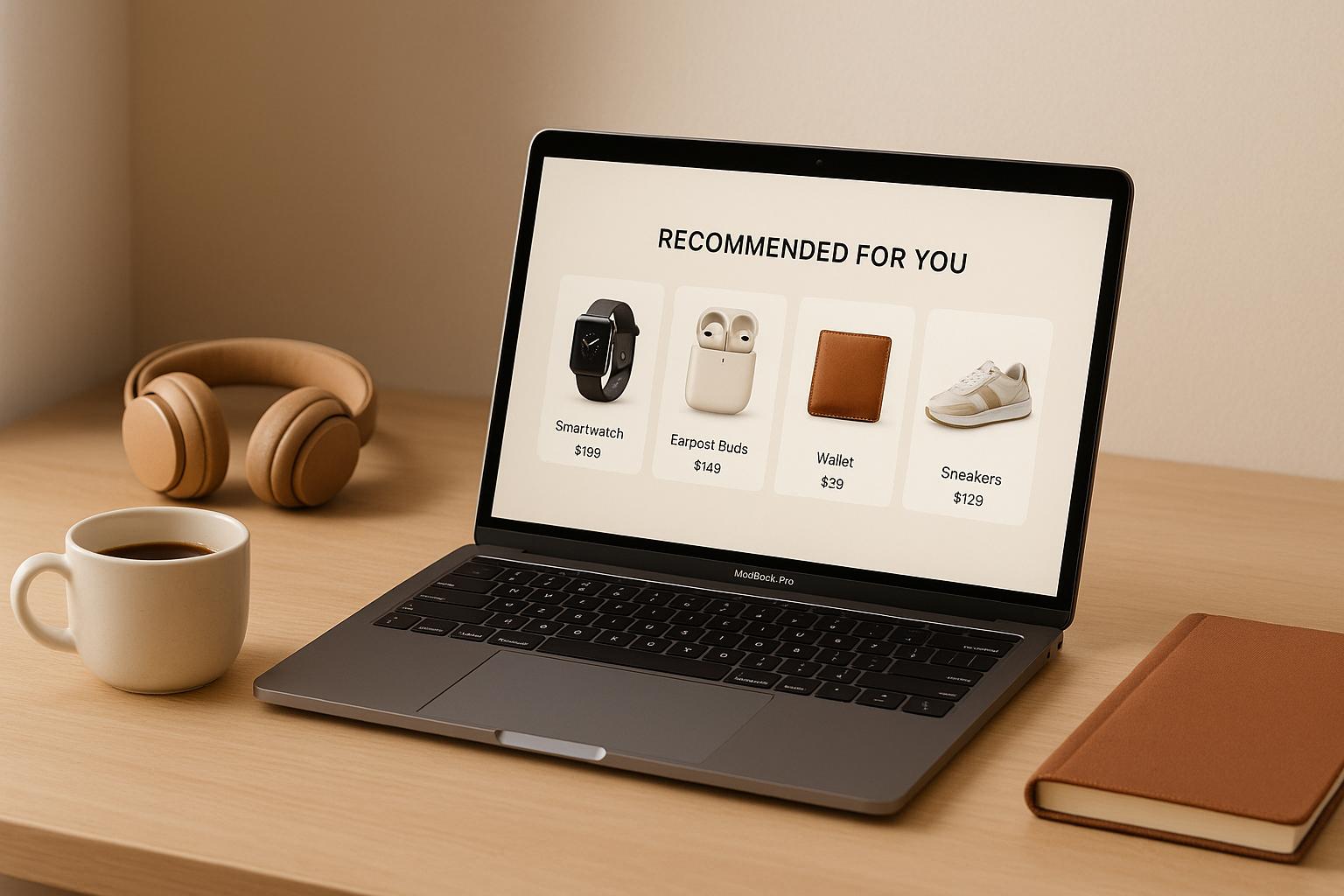
Cross-selling is a powerful way to grow eCommerce revenue by suggesting complementary products during a customer’s shopping journey. This strategy increases Average Order Value (AOV), boosts Customer Lifetime Value (CLV), and improves customer experience. For example, Amazon generates 35% of its revenue through cross-selling tactics like “Frequently Bought Together.” Smaller businesses using AI-driven personalization have seen sales rise by up to 40%, while fashion retailers leverage product bundles to drive 10-30% of their revenue.
Key takeaways:
- 35% of Amazon’s revenue comes from cross-selling and upselling.
- Selling to existing customers is 5-25x more profitable than acquiring new ones.
- Cross-selling can boost profits by 20% and CLV by 20-40%.
- Effective strategies include personalized recommendations, product bundling, and checkout suggestions.
Scaling cross-selling efforts requires investments in inventory, marketing, and technology. Flexible financing options, like revenue-based funding, can help businesses expand without straining cash flow. Prioritize relevance and timing to avoid overwhelming customers and focus on delivering value through tailored recommendations.
7 Super Effective Cross-Selling Strategies to Maximize Profits In eCommerce
Case Studies: Cross-Selling Success Stories
Cross-selling plays a crucial role in increasing both Average Order Value (AOV) and Customer Lifetime Value (CLV). These case studies showcase how businesses have successfully implemented cross-selling strategies to achieve tangible results.
Case Study 1: Amazon's Cross-Selling Powerhouse

Amazon stands as a prime example of how cross-selling can significantly impact revenue. In fact, 35% of Amazon's total revenue comes from cross-selling and upselling efforts. Their success lies in two standout features that have become staples in eCommerce.
The "Frequently Bought Together" section on product pages bundles related items that customers commonly purchase together. For example, when browsing for a laptop, you'll often see suggestions for a laptop sleeve, wireless mouse, and external hard drive - items that naturally complement the main purchase.
Meanwhile, the "Customers Who Bought This Also Bought" feature takes a different angle, leveraging purchase history to recommend related products. This creates a discovery-driven shopping experience, encouraging customers to explore items they may not have initially considered.
Amazon's approach relies on data-driven personalization to recommend the right products at the right time. By analyzing customer behavior and purchase trends, they achieve precise targeting that translates into impressive revenue growth.
Case Study 2: Small Business Success with Personalized Cross-Selling
Smaller eCommerce businesses have also tapped into cross-selling, using AI-driven personalization to achieve remarkable results. Shopify stores that incorporated targeted recommendation engines saw sales increases of up to 40%.
Their strategy focused on presenting complementary items during the checkout process, capturing customers at the peak of their buying intent. For instance, when someone added electronics to their cart, the system would suggest batteries or related accessories. Similarly, furniture purchases prompted recommendations for cleaning supplies or decor.
Rather than overwhelming shoppers with too many options, these businesses limited suggestions to 2-3 highly relevant items. This streamlined approach led to a 20% rise in profit while keeping customers satisfied.
Even without access to vast data resources like Amazon, these businesses achieved success by analyzing browsing behavior, purchase history, and product categories. The result? Meaningful recommendations that felt personalized without requiring overly complex algorithms.
The benefits extended beyond immediate sales. Customers who received helpful cross-sell suggestions were more likely to return, driving a 20-40% increase in customer lifetime value. This created a cycle of better recommendations, higher loyalty, and long-term revenue growth.
Case Study 3: Fashion Retailers and Bundling Strategies
Fashion eCommerce brands have perfected the art of product bundling to create enticing cross-selling opportunities. Instead of promoting individual items, they focus on offering complete looks that cater to customers' desire for coordinated outfits.
For instance, they might pair shoes with a matching outfit, accessories with dresses, or create "Complete Look" bundles featuring multiple complementary pieces. These bundles often include a small discount, making them more attractive while increasing the overall order value.
To boost effectiveness, fashion retailers frequently use limited-time offers, running bundle promotions for 24-48 hours to create urgency. These short-term deals drive immediate purchases, resulting in noticeable spikes in both sales volume and AOV.
The psychology behind bundling is simple but powerful. Many shoppers struggle with styling decisions, so pre-coordinated options remove the guesswork. Instead of wondering if a pair of shoes matches a dress, they can confidently buy an entire outfit.
Beyond the immediate sales impact, bundling also enhances customer satisfaction. Shoppers who purchase bundles are often more content with their choices and more likely to share their purchases on social media. This adds a layer of organic marketing value that amplifies the initial cross-selling success.
Financially, bundling strategies have proven highly effective. Fashion eCommerce sites report that bundling contributes 10-30% of total revenue when executed well. The complementary nature of fashion items makes this strategy particularly impactful - customers often need complete outfits rather than standalone pieces.
Cross-Selling Benefits and Challenges
After exploring the success stories of cross-selling, it’s time to dive into its broader advantages and the hurdles eCommerce businesses often face during implementation. The case studies we’ve looked at highlight both the immense potential and the practical realities of cross-selling in action. By understanding these benefits and challenges, businesses can make smarter decisions about their strategies.
Main Benefits of Cross-Selling
Cross-selling isn’t just about boosting revenue - it can significantly impact profitability when done right. For many eCommerce businesses, cross-selling can account for a large chunk of their overall revenue. This success comes from several interconnected advantages that build on each other over time.
One of the biggest perks is increasing revenue without extra customer acquisition costs. Cross-selling allows businesses to tap into their existing customer base for additional income, avoiding the high costs of acquiring new customers. Statistics back this up: existing customers are 60-70% likely to make a purchase, compared to much lower conversion rates for new customers. Plus, selling to current customers can be 5 to 25 times more profitable.
Another major benefit is the rise in Average Order Value (AOV). By encouraging customers to add complementary items to their carts, businesses often see profit increases of around 20%. In fact, some eCommerce companies report that cross-selling accounts for up to 30% of their total sales.
Cross-selling also boosts Customer Lifetime Value (CLV). Personalized recommendations not only encourage additional purchases but also build trust and loyalty, leading to repeat business. When done well, cross-selling can increase CLV by 20% to 40%. This approach enhances the shopping experience, leaving customers more satisfied and likely to return.
Additionally, cross-selling can lead to better inventory turnover. By selling complementary items alongside bestsellers, businesses can reduce storage costs and improve cash flow.
While the benefits are clear, implementing cross-selling strategies isn’t without its challenges.
Common Cross-Selling Implementation Challenges
Even with the best practices in place, cross-selling efforts can be tricky. Knowing the common challenges can help businesses avoid potential missteps that might hurt their results.
One common mistake is overwhelming customers with too many choices. When shoppers are presented with an overload of options, it can lead to decision paralysis. Instead of encouraging purchases, this confusion may result in abandoned carts and frustrated customers.
Another issue is offering irrelevant or poorly-timed suggestions. Recommending items that don’t align with a customer’s needs - or pushing them at the wrong moment - can feel intrusive and erode trust. This approach can ultimately harm conversion rates.
A lack of deep customer insights is another stumbling block. Successful cross-selling relies on understanding what customers truly want and tailoring suggestions accordingly. Without this knowledge, businesses often resort to generic recommendations that fail to connect with shoppers.
Balancing sales goals with customer satisfaction is also a challenge. If cross-selling feels too aggressive or purely transactional, it can damage relationships rather than strengthen them. The focus should always be on providing value, not just increasing transaction sizes.
Lastly, technology and data limitations can hinder effective cross-selling. Without robust systems to analyze customer behavior and make personalized recommendations, businesses struggle to scale their efforts.
To tackle these challenges, businesses should aim to educate customers about options they might not have considered, ensuring these options genuinely add value. The focus should be on creating a seamless shopping experience where customers feel informed and satisfied, rather than overwhelmed or pressured.
The secret to overcoming these hurdles lies in personalization. By tailoring recommendations to individual preferences, businesses can enhance customer satisfaction while driving sales. This requires ongoing testing, refinement, and a commitment to prioritizing customer needs over short-term gains.
sbb-itb-d7b5115
Using Financing to Scale Cross-Selling Strategies
Understanding the benefits and challenges of cross-selling is one thing, but putting those strategies into action often requires resources that many eCommerce businesses simply don’t have. Scaling cross-selling efforts effectively demands investments in inventory, marketing, and technology - areas that can strain a business’s cash flow. This is where strategic financing steps in, bridging the gap between ambition and execution.
Scaling cross-selling efforts often comes with upfront costs that businesses may struggle to cover with their existing resources. Whether it’s expanding product offerings, launching targeted marketing campaigns, or integrating advanced recommendation systems, these initiatives require funding that isn’t always readily available.
Investing in Cross-Selling Through Flexible Financing
Flexible financing can help eCommerce businesses tackle the challenges of scaling cross-selling initiatives. By providing immediate access to funds, this type of financing allows businesses to invest in key areas like inventory, marketing, and technology - three pillars of effective cross-selling.
Take inventory expansion, for example. To create appealing product bundles or ensure sufficient stock of recommended items, businesses often need to invest in complementary products. A fashion retailer might stock accessories to pair with popular clothing items, or an electronics store could add high-margin add-ons to complement its core products. Without adequate inventory, cross-selling efforts can fall flat.
Jeremy, the founder of Kindfolk Yoga, is a great example of how financing can make a difference. By using revenue-based financing, he secured the capital needed to invest in inventory. This allowed his business to manage cash flow effectively, with repayments tied to sales, ensuring flexibility during slower periods.
Financing also supports marketing efforts like email campaigns, personalized recommendations, and promotional bundles. These strategies require upfront investment but can significantly enhance cross-selling by showcasing complementary products and educating customers on options they might not have considered.
Investing in technology, such as advanced recommendation systems and analytics tools, is another way to scale cross-selling. While these tools often require significant initial funding, they can dramatically improve the efficiency and impact of cross-selling strategies once implemented.
Onramp Funds provides flexible financing options that businesses can use for inventory, marketing, or technology. The funds aren’t tied to specific categories, giving businesses the freedom to allocate resources where they’ll have the most impact - whether that’s a targeted marketing campaign or adopting tools to boost cross-selling opportunities. Repayment terms are also designed to align with business performance, reducing financial strain.
Revenue-Based Financing Benefits for eCommerce Growth
Traditional loans can be a burden for eCommerce businesses, especially during seasonal fluctuations or the early stages of new strategies. Fixed monthly payments can strain cash flow, but revenue-based financing offers a more adaptable solution that aligns with the unpredictable nature of eCommerce.
With revenue-based financing, repayments are calculated as a percentage of sales. This means that during slower months, payments are smaller, and during busier periods, payments increase in line with revenue. This flexibility is particularly helpful when cross-selling strategies are still being fine-tuned, as it gives businesses the breathing room to let these initiatives gain traction.
Another advantage is access to capital. With Onramp Funds, funds typically arrive in one to two business days. Businesses can use funding to stock up on inventory for cross-sell bundles, launch a new marketing campaign, or adopt technology to improve cross-selling efforts.
Revenue-based financing also comes with the benefit of being equity-free, meaning business owners retain full control of their company. Unlike venture capital or equity financing, there’s no dilution of ownership or loss of decision-making power.
For many eCommerce businesses, this type of financing is also more accessible. Decisions are based on business performance and sales history, not personal credit scores, eliminating the need for personal credit checks and reducing risk for the business owner.
The potential return on investment for cross-selling initiatives backed by strategic financing is hard to ignore. Industry data shows that cross-selling can contribute 10-30% of revenue for eCommerce businesses when done effectively. Additionally, businesses that implement cross-selling strategies often see profit increases of up to 20%. By investing in inventory, marketing, and technology through flexible financing, businesses can tap into these opportunities without jeopardizing their cash flow.
This financing model provides the foundation for scaling cross-selling strategies, enabling businesses to grow sustainably while maximizing revenue potential.
Key Takeaways for eCommerce Businesses
Cross-selling has proven to be a powerful driver of revenue. For instance, Amazon attributes about 35% of its total revenue to cross-selling strategies like the "Frequently Bought Together" and "Customers Who Bought This Item Also Bought" features.
Cross-Selling Benefits and Best Practices Summary
Businesses that adopt cross-selling strategies can generate 10–30% of their total eCommerce revenue from these efforts, often boosting profits by approximately 20%. Selling to existing customers is far more profitable than acquiring new ones, with the probability of selling to a current customer sitting at 60–70%, compared to much lower rates for new customer acquisition. In fact, it can be 5 to 25 times more profitable to focus on your existing customer base.
The key to success lies in relevance. Personalized recommendations based on customer purchase history and advanced algorithms are essential. Effective cross-selling aligns suggestions with the customer’s immediate shopping intent. Best practices include analyzing purchase patterns and seasonal trends with data analytics, creating meaningful product bundles, and avoiding overwhelming customers with excessive options. By focusing on these strategies, businesses can lay the foundation for scaling their cross-selling efforts.
Next Steps: Scaling Your Cross-Selling Strategy
Scaling cross-selling initiatives often requires upfront investments in areas like inventory, marketing, and technology, which can put pressure on cash flow. Revenue-based financing offers a flexible solution, allowing businesses to fund these investments without fixed monthly payments. With Onramp Funds (https://onrampfunds.com), funds typically arrive in one to two business days.
With cross-selling capable of contributing up to 30% of revenue when implemented effectively, the data makes a strong case for scaling these strategies. To maximize this potential, evaluate your current cross-selling capabilities, identify any gaps, and secure the necessary funding to expand inventory, enhance marketing efforts, or upgrade technology. These steps can unlock significant revenue opportunities and drive sustained business growth.
FAQs
How can small eCommerce businesses use cross-selling strategies without access to extensive data like large marketplaces have?
Small eCommerce businesses can boost sales through smart cross-selling strategies by paying close attention to customer behavior and using the right tools. Start by diving into purchase patterns or customer feedback to spot items that naturally go together. For instance, someone buying a coffee maker might also appreciate filters or a selection of specialty coffee.
Take advantage of your eCommerce platform’s built-in tools or affordable third-party options to create things like product bundles, “frequently bought together” suggestions, or post-purchase upsell offers. The secret sauce? Personalization. Offer recommendations based on what customers have browsed or purchased before to make suggestions feel relevant and enticing.
Worried about cash flow for funding these campaigns? Companies like Onramp Funds can help. They provide fast, equity-free financing designed specifically for eCommerce businesses. This allows you to stock up on inventory or invest in marketing, with repayment aligned to your sales performance.
How can eCommerce businesses use cross-selling effectively without overwhelming customers?
To make cross-selling work for your business, focus on offering products that naturally go hand-in-hand with what the customer is already interested in. The key is to enhance their shopping experience, not overwhelm them. Instead of showing a laundry list of items, stick to a few carefully chosen recommendations. For instance, you could suggest accessories that complement items in their cart or products they've recently browsed.
Timing matters, too. The best moments to present cross-sell opportunities are during checkout or on product pages - places where these suggestions feel organic and helpful. Interrupting their browsing with irrelevant offers? Not a great move. Personalization is another game-changer. Use customer data to tailor your recommendations, making the shopping journey feel smooth and engaging rather than forced.
How can revenue-based financing help eCommerce businesses grow through cross-selling?
Revenue-based financing offers eCommerce businesses a practical way to strengthen their cross-selling strategies by providing fast, equity-free capital. This type of funding can be directed toward critical growth initiatives such as increasing inventory, running focused marketing campaigns, or fine-tuning product bundles to drive higher sales.
What makes this approach particularly appealing is its flexibility. Repayments are tied to your sales performance, meaning you won’t face the stress of fixed monthly payments. This setup allows businesses to grow confidently while maintaining financial flexibility, even during slower sales periods.
Related Blog Posts
Onramp Funds
Funding built around your sales
Connect your store and see what you qualify for. Repay as a percentage of sales, with no personal credit check.
Funding in as little as 24 hours.
