


Managing customer experiences across multiple platforms like Amazon, Shopify, and TikTok Shop is critical for businesses aiming to meet high consumer expectations. With 86% of buyers willing to pay more for great service, the right tools can help streamline processes, reduce delays, and improve satisfaction. Here's what you need to know:
- Zendesk: Best for omnichannel support and integrations; starts at $19/agent/month.
- Birdeye: Focuses on reputation management and feedback automation; custom pricing.
- Podium: Specializes in SMS-based communication; starts at $399/month.
- Qualtrics XM: Offers advanced analytics and predictive AI for enterprises; custom pricing.
- HubSpot Service Hub: Affordable for small businesses, integrates CRM and automation; starts at $15/seat/month.
These tools consolidate communication, automate workflows, and provide insights to improve customer interactions. Additionally, funding options like Onramp Funds can help businesses invest in these solutions without cash flow concerns. By combining the right tools with flexible financial support, businesses can deliver faster, more reliable service across all platforms.
9 Best Customer Experience Management Software Tools [Full Software Demo]
How to Choose Multi-Platform Customer Experience Tools
Selecting the right tool is key to managing customer experiences across multiple platforms effectively. With over 2,000 integration options available [1], narrowing down your choice can feel overwhelming. However, focusing on five critical factors can help you find the best fit for your business. Start by ensuring the tool integrates smoothly with your current eCommerce setup.
Platform Integration Requirements
A tool that connects effortlessly with your existing eCommerce platforms is non-negotiable. Look for options that offer pre-built connectors or APIs to unify processes like order management, customer data, and support workflows. This is especially important for platforms like Amazon, Shopify, BigCommerce, Walmart Marketplace, WooCommerce, Squarespace, and TikTok Shop [1]. A strong integration eliminates the need for manual data entry, reducing errors and saving time. It also ensures that customer inquiries - regardless of the platform - can be addressed with a complete view of their purchase history.
Take Zendesk, for example. It boasts a marketplace with around 2,000 integrations, giving you the flexibility to expand to new platforms or connect additional tools without hitting a wall [1].
Multi-Channel Support Features
Once integration is sorted, the next step is streamlining customer interactions. A tool that consolidates communication channels - like email, chat, social media, and phone - into a single dashboard can be a game-changer. Platforms like Birdeye and Zendesk excel in this area, bringing all customer touchpoints into one workspace [1]. This unified approach not only speeds up response times but also ensures consistent messaging, as agents have a full view of customer interactions across channels.
Automation and Data Analysis
Integration and communication are just the starting points. To truly elevate your customer support, consider tools equipped with AI-driven automation and data analysis. Features like workflow automation, ticket routing, auto-responses, and AI chatbots can handle routine tasks efficiently. Combine these with dashboards, sentiment analysis, and customer segmentation to identify trends and anticipate customer needs.
For instance, Qualtrics XM uses predictive AI and text analytics to provide actionable insights, while Birdeye automates ticket creation from reviews and surveys [1]. These capabilities not only speed up issue resolution but also help you stay ahead of potential problems.
Growth Capacity and User-Friendliness
Your tool should grow alongside your business. Look for platforms that can handle more users, channels, and data without losing performance. At the same time, ease of use is crucial, particularly for small teams that need intuitive interfaces and quick setups. Zendesk is often praised for its simple workflow setup, while HubSpot Service Hub offers tiered plans that can scale with your needs [1]. Free trials - like the 14-day trial offered by Zendesk - can help you test features with your own data before making a commitment [2].
U.S. Market Requirements
If your business operates in the U.S., compliance with local standards is a must. Ensure the tool supports USD formatting, MM/DD/YYYY dates, 12-hour time, and comma-delimited numbers. It should also comply with regulations like CCPA and ADA. U.S.-based customer support and data hosting are particularly valuable during peak shopping seasons when quick technical assistance is critical.
Here’s a quick summary of these factors and some of the top-rated tools:
Onramp Funds: Funding Solutions for Multi-Platform Sellers
Running a business across multiple eCommerce platforms requires significant investment in tools, inventory, and marketing. However, many sellers struggle with cash flow issues that can hinder growth. Onramp Funds steps in to bridge this gap, offering funding solutions tailored specifically for sellers operating on platforms like Amazon, Shopify, BigCommerce, WooCommerce, Squarespace, Walmart Marketplace, and TikTok Shop.
Fast, Ownership-Friendly Funding
Onramp Funds provides a fast and straightforward way for sellers to access capital - without giving up equity. Funding is available within 24 hours, allowing businesses to act quickly on opportunities or operational needs. The application process is simple, skipping the hassle of excessive paperwork or collateral requirements. Sellers can secure amounts ranging from $10,000 to $250,000 while keeping 100% ownership of their business. For instance, one seller operating on Amazon and Shopify used a $50,000 funding boost to enhance customer experience tools, grow inventory, and launch a focused marketing campaign.
Flexible, Sales-Based Repayment
Unlike traditional loans with fixed monthly payments, Onramp Funds uses a revenue-based financing model. Repayments are calculated as a percentage of daily or weekly gross sales - usually between 5% and 15%. This means payments automatically adjust based on business performance. During busy seasons, repayments increase, while slower months bring lower payments, helping sellers manage cash flow more effectively. Because repayments align with actual sales, businesses only pay what they can afford at any given time.
Seamless Integration with Major Platforms
Onramp Funds’ flexibility extends to its platform integrations. It connects directly with leading eCommerce platforms, enabling real-time sales data analysis to determine eligibility and tailor repayment terms. As sellers expand to new marketplaces, Onramp Funds adapts to include revenue from those channels. With an 80% approval rate for qualified sellers and funding delivered within one business day, the service provides the financial agility needed to improve customer experience and stay competitive across multiple platforms.
sbb-itb-d7b5115
Best Tools for Multi-Platform Customer Experience Management
When managing customer experiences across multiple platforms, having the right tools makes all the difference. With financial solutions like those from Onramp Funds enabling business growth, choosing tools that integrate various channels and provide actionable insights is crucial. Below are some of the top tools designed to streamline operations, automate responses, and ensure consistent service for businesses selling on platforms like Amazon, Shopify, and Walmart Marketplace.
Zendesk
Zendesk is a powerhouse for managing customer support across multiple channels. It consolidates email, chat, phone, social media, and messaging into a single dashboard, making it easier for teams to stay organized. Its AI-driven ticketing system automatically assigns customer inquiries to the right agents, while real-time analytics track response times and resolution rates.
With features like automated chatbots, predictive analytics, and intelligent agent assistance, Zendesk significantly reduces response times and improves efficiency. However, advanced features often require developer support, and costs can quickly rise as you add functionality. Plans start at $19 per agent per month. Despite these challenges, Zendesk boasts a 4.3/5 rating on G2, with users highlighting its scalability for businesses of all sizes[2].
Birdeye
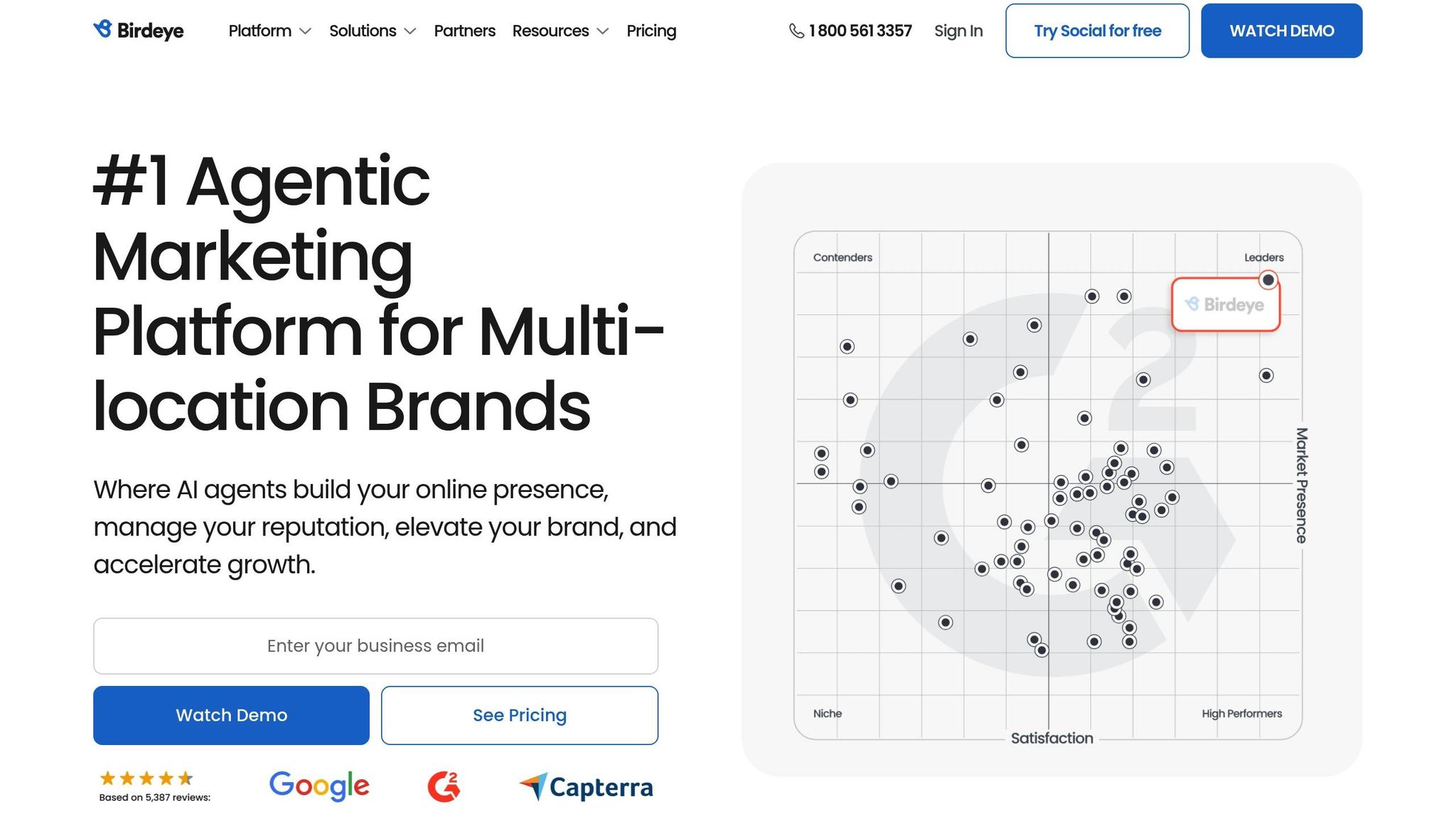
Birdeye stands out as a reputation management tool. It centralizes customer feedback from multiple platforms, automates review requests, and monitors online mentions. Real-time alerts ensure businesses can respond promptly to new feedback, while the centralized dashboard provides a clear overview of brand reputation across channels.
Its sentiment analysis feature helps businesses catch emerging satisfaction trends before they escalate. Additionally, Birdeye’s automated messaging system ensures consistent communication and response times. While its pricing isn’t transparent - requiring custom quotes - and some advanced features are locked behind higher-tier plans, the platform’s 4.7/5 rating on G2 reflects its strong reputation among users[1].
Podium

Podium focuses on SMS communication, a channel where 72% of customers expect immediate responses[3]. It simplifies text-based interactions, making it ideal for businesses that prioritize mobile engagement. The platform supports features like automated review requests, SMS payment collection, and appointment scheduling, making it particularly valuable for local retailers and service providers.
Its intuitive design requires minimal training, allowing teams to hit the ground running. However, Podium’s starting price of $399 per month may be steep for smaller businesses, and its support for non-SMS channels is limited. Even so, it earns a 4.6/5 rating on G2, with users praising its ease of use and efficiency[1].
Qualtrics XM
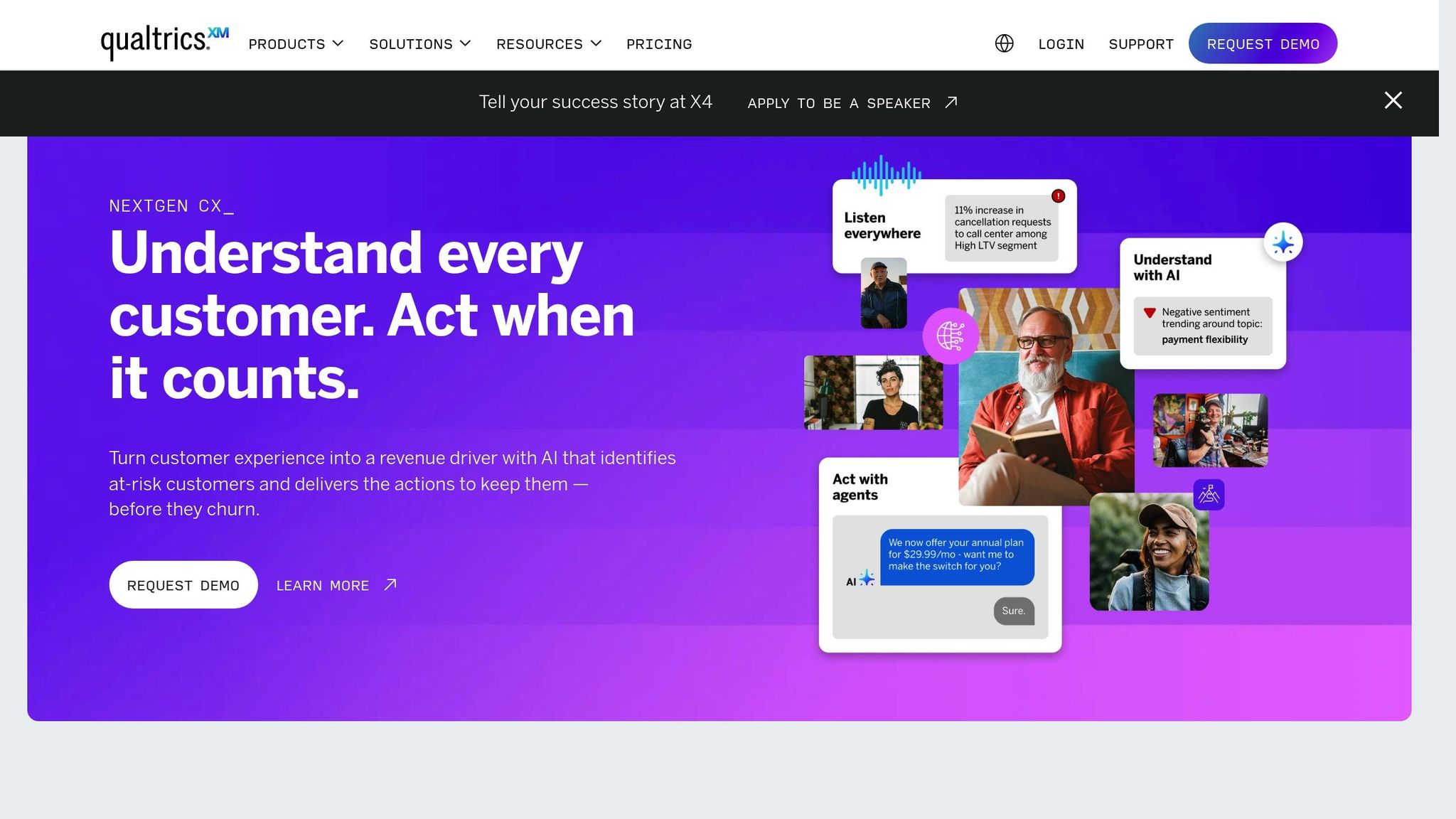
Qualtrics XM is designed for businesses that need advanced analytics and predictive AI to manage customer experiences. The platform gathers data from every customer touchpoint - whether it’s customer service, product feedback, or brand perception - and provides customizable dashboards for detailed insights.
Its predictive AI can identify potential issues before they affect customer satisfaction, offering actionable recommendations to improve retention. However, its enterprise-level focus comes with higher costs and complexity, making it better suited for larger organizations with dedicated teams. Despite these barriers, Qualtrics XM holds a 4.4/5 rating on G2, with enterprise users crediting it for driving strategic improvements[1].
HubSpot Service Hub
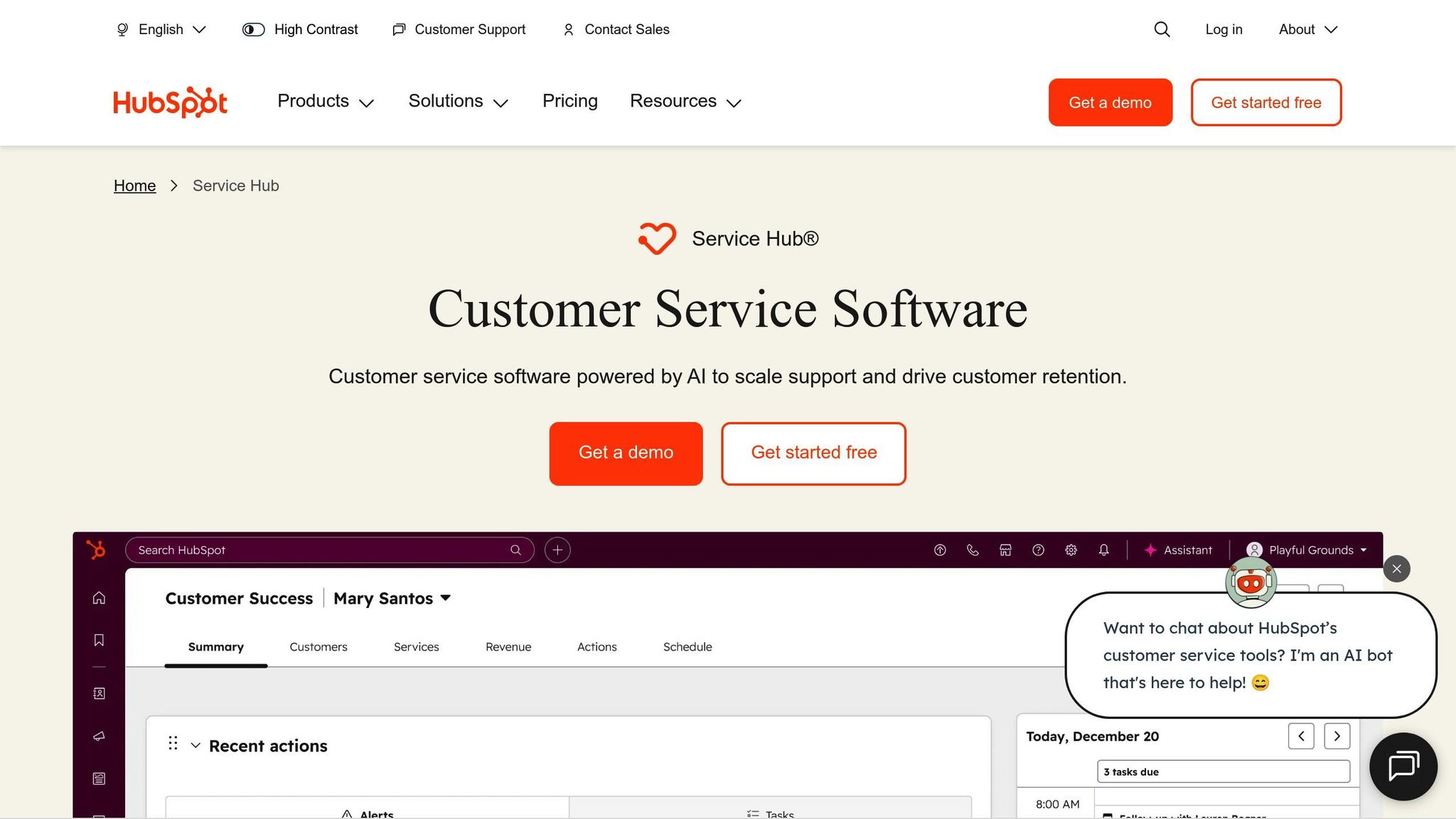
HubSpot Service Hub is a versatile option for small to mid-sized businesses. It integrates data across service, marketing, and sales, giving agents access to complete customer histories during interactions. This integration allows for more personalized and effective service.
With automation features like ticket routing, response templates, and follow-up sequences, HubSpot helps businesses maintain consistent service quality. Its user-friendly interface, combined with a starting price of $15 per seat per month, makes it an accessible choice for growing businesses. While it lacks some of the advanced analytics found in enterprise-focused platforms, its 4.4/5 G2 rating reflects strong satisfaction among users who value its seamless integration of service and sales functions[1].
Each of these tools offers features to meet different business needs. Whether you’re focused on managing reviews, streamlining SMS communication, or leveraging advanced analytics, the key is to choose a solution that aligns with your operational goals and growth plans.
Tool Comparison Chart
This chart summarizes key features, pricing, and suitability to help you choose the right tool for your budget, business size, and specific needs.
Key Insights on Features and Pricing
Each tool brings unique strengths to the table, catering to different business needs. For example, Zendesk supports over 2,000 integrations, making it ideal for businesses with complex tech ecosystems. On the other hand, HubSpot Service Hub excels in CRM integration, even though it offers fewer third-party connections. Birdeye and Podium specialize in tools for local businesses, such as review platforms and SMS-based engagement, while Qualtrics XM is tailored for enterprise-level analytics and experience management.
Pricing models also vary widely. Some tools, like Zendesk and HubSpot Service Hub, offer transparent, tiered pricing, while others like Birdeye and Qualtrics XM require custom quotes, which can make budgeting more challenging.
Ratings and Automation Capabilities
User ratings highlight how these tools perform in real-world scenarios. Birdeye leads with a 4.7/5 rating, followed by Podium at 4.6/5, and both HubSpot Service Hub and Qualtrics XM at 4.4/5. Zendesk rounds out the list with a 4.3/5 rating. These scores reflect factors like ease of use, feature depth, and customer support.
Automation is another key differentiator. Qualtrics XM stands out with predictive AI that identifies potential customer satisfaction issues before they arise. Zendesk offers advanced AI ticket routing and chatbot features, while Birdeye focuses on automating reputation management workflows. Podium excels in SMS automation and review collection, and HubSpot Service Hub provides solid workflow automation that integrates seamlessly with marketing and sales processes.
U.S.-Specific Considerations
Designed with U.S. businesses in mind, these tools align with local standards, such as USD currency formatting, U.S. date/time conventions, and SOC 2 compliance. They also integrate smoothly with major U.S.-based eCommerce platforms and payment systems, ensuring compatibility with local operational needs.
Conclusion: Building Your Multi-Platform Customer Experience Strategy
Delivering a seamless customer experience across multiple platforms requires the right tools and smart financial strategies. The five platforms we’ve discussed - Zendesk, Birdeye, Podium, Qualtrics XM, and HubSpot Service Hub - each offer distinct advantages to help you manage customer interactions effectively across eCommerce channels.
Investing in customer experience tools isn’t just about keeping operations running smoothly; it’s a strategic move that can directly impact your revenue. Customers today expect fast, reliable service on every platform, and meeting those expectations can set your business apart. These tools provide solutions tailored to different needs, from managing online reputations to using predictive analytics to anticipate and address customer concerns.
Of course, implementing these tools comes with costs, whether for software, marketing, or scaling operations. That’s where Onramp Funds steps in, offering revenue-based financing that aligns with the ebb and flow of eCommerce cycles. This approach ensures businesses have the financial flexibility to invest in customer experience improvements without straining cash flow.
"Applied, got our offer, and had cash in our bank account within 24 hours." – Nick James, CEO Rockless Table[5]
Unlike traditional loans with fixed monthly payments, Onramp’s repayment model adjusts with your sales. This means you can focus on scaling your customer experience across platforms like Amazon, Shopify, Walmart Marketplace, or TikTok Shop without worrying about cash flow during slower periods.
AI-driven automation and omnichannel support are becoming non-negotiable in today’s competitive eCommerce landscape[2][4]. Businesses that succeed are those that combine advanced customer experience tools with the financial agility to act quickly. Whether you’re streamlining complex customer interactions with unified workspaces or integrating CRMs to support growth, having access to fast, equity-free funding ensures you won’t miss opportunities.
FAQs
What’s the best way to choose a tool for managing customer experiences across multiple eCommerce platforms?
When choosing the best tool to manage customer experiences across multiple platforms, the first step is to pinpoint your business's specific needs. It's crucial to ensure the tool works smoothly with the eCommerce platforms you rely on, like Amazon, Shopify, BigCommerce, WooCommerce, Squarespace, Walmart Marketplace, or TikTok Shop.
Look for tools that go beyond basic functionality. Features such as tailored funding solutions can be a game-changer, helping you expand operations, maintain cash flow, or allocate resources to inventory and marketing. Tools that provide flexible repayment options tied to your sales performance and offer personalized support can make managing customer experiences much more efficient and effective.
What are the benefits of using revenue-based financing like Onramp Funds to invest in customer experience tools?
Revenue-based financing through Onramp Funds offers eCommerce businesses a fast and adaptable way to secure funding, empowering them to invest in tools that improve the customer experience. With approvals possible in as little as 24 hours and funding amounts reaching up to $2,000,000, businesses can expand their operations without sacrificing ownership.
Repayments are based on a percentage of sales, automatically adjusting to your revenue stream. This approach makes managing cash flow more manageable, allowing businesses to concentrate on growth initiatives, such as enhancing customer experiences across various platforms.
Why are integration capabilities important for managing customer experiences across platforms like Amazon and Shopify?
Integration capabilities play a key role in ensuring customer experience tools work smoothly with platforms like Amazon, Shopify, and others. By connecting these systems, businesses can achieve a unified view of their operations, making it easier to manage orders, inventory, and customer interactions in one place.
When systems integrate effectively, workflows can be automated, cutting down on manual tasks and reducing errors. This streamlines operations and ensures consistent service across all sales channels. The result? Time saved for your team and a smoother, more reliable experience for your customers - leading to stronger satisfaction and loyalty.
Related Blog Posts
Onramp Funds
Funding built around your sales
Connect your store and see what you qualify for. Repay as a percentage of sales, with no personal credit check.
Funding in as little as 24 hours.
