


Revenue-based financing (RBF) is a flexible funding option for BigCommerce sellers. Instead of fixed loan payments, RBF ties repayments to a percentage of your monthly sales. This means payments adjust based on your revenue, easing cash flow during slower months and accelerating repayment during high-sales periods. Here's what you need to know:
- How It Works: You receive funding in exchange for a percentage of your revenue until a repayment cap (1.2x–3x the funding amount) is reached.
- Why It Fits BigCommerce Sellers: No personal guarantees or collateral are required, making it ideal for eCommerce businesses with fluctuating sales.
- Benefits: Fast access to funds, no equity loss, and repayment flexibility tied to sales performance.
- Eligibility: Minimum $10,000 monthly revenue and six months of operation.
- Process: Connect your BigCommerce store to a funding provider, share sales data, and receive funds in as little as 24–48 hours.
RBF is a practical option for growing your BigCommerce store, especially for inventory purchases, marketing campaigns, or seasonal sales cycles.
Funding your eCommerce Marketing: Revenue-based finance explained with Daniel Lipinski
Eligibility Requirements for Revenue-Based Financing on BigCommerce
If you're a BigCommerce merchant considering revenue-based financing, it's key to understand the qualifications. Unlike traditional loans, this option focuses on consistent revenue generation rather than credit scores or collateral.
Minimum Requirements for BigCommerce Sellers
To qualify, BigCommerce merchants need to meet a few basic benchmarks: generating at least $10,000 in monthly revenue and operating for a minimum of six months. For merchants earning over $1 million annually, there may be perks like fee-free advances of up to $50,000 [4][5].
Your store must be active, with steady sales rather than occasional spikes. Lenders value predictable revenue patterns, which often come from recurring revenue models like subscriptions or products that encourage repeat purchases. Maintaining consistent customer transactions, managing inventory effectively, and running ongoing marketing campaigns can all strengthen your eligibility [2].
Once these criteria are met, the application process is designed to be straightforward.
Application Process Steps
Applying for revenue-based financing involves integrating your BigCommerce store with the funding platform. This connection allows providers to review your sales data in real time and offer tailored financing options.
- Store Integration: Start by linking your BigCommerce store to the funding platform using their app. This involves copying a verification code from BigCommerce, ensuring a secure connection [6]. Once connected, the platform can access your sales data to customize financing offers.
- Sales Data Submission: After integration, your sales data is automatically shared with the provider. This eliminates the need for manual uploads of financial statements. The platform analyzes your historical sales, revenue trends, and growth potential.
- Business Documentation: You'll need to provide basic details like business registration, tax IDs, and bank account information to finalize the process and set up fund distribution.
How Providers Evaluate Applications
Once your application is submitted, providers evaluate your business using several key metrics. These go beyond just meeting revenue thresholds and focus on your store's overall performance.
- Revenue Consistency: Providers review your monthly sales over the past six to twelve months, prioritizing businesses with stable or growing revenue.
- Growth Trajectory Analysis: Metrics like customer acquisition rates, average order values, and repeat purchases are examined. A positive growth trend and strong customer retention can lead to higher funding offers.
- Platform Integration Benefits: BigCommerce's integrations with tools like Stripe, Facebook, and Xero provide additional data points. These integrations help providers create detailed revenue forecasts and assess your business's potential [3].
This data-driven approach allows BigCommerce merchants with strong sales performance to secure funding, even if they lack a robust credit history or significant physical assets.
Step-by-Step Process: How Revenue-Based Financing Works for BigCommerce Sellers
Once you confirm you’re eligible, securing revenue-based financing is a quick and straightforward process. From start to finish - application to receiving funds - it usually takes just a few days, much faster than traditional business loans.
Applying for Revenue-Based Financing
The process starts by linking your BigCommerce store to your chosen funding provider’s platform. This integration allows the provider to analyze your sales data directly, eliminating the need for extensive financial documentation.
First, create an account and install the provider’s BigCommerce app. During setup, you’ll copy a verification code from your BigCommerce dashboard and paste it into the funding platform’s system [6]. This secure connection grants the provider access to your sales history and revenue trends.
You’ll also need to provide some basic business details, like your tax ID, business registration information, and bank account details for fund transfers. Unlike traditional loans, you won’t need to submit financial statements or a business plan - the connected sales data does the heavy lifting by showcasing your performance.
If you run multiple storefronts, check with technical support to ensure proper integration [3][6]. Once everything is connected, the approval process kicks off quickly.
Approval and Fund Distribution
With your store linked and data submitted, the provider begins reviewing your information. Automated systems analyze your sales performance, often delivering a decision within 24 hours of your application [7]. This process prioritizes cash flow and sales trends over traditional credit scores.
After the review, you’ll receive funding offers based on your revenue history and growth patterns. Typically, providers offer up to one-third of your annual recurring revenue or as much as seven times your monthly recurring revenue [8]. Factors like consistent revenue, growth trends, and seasonality influence the final amount.
Once you accept an offer, the funds are deposited directly into your business bank account within 24–48 hours [6]. This quick turnaround lets you seize growth opportunities immediately - whether it’s restocking inventory, launching marketing campaigns, or expanding your product lineup.
BigCommerce sellers have seen impressive results with this funding model. For instance, one food brand co-founder used $125,000 in financing to purchase inventory and achieved a 235% ROI. Similarly, a direct-to-consumer brand secured $200,000 for inventory and experienced a 400% revenue boost alongside a 508% ROI [3].
How Repayment Works
Repayment aligns with your actual sales performance, making it flexible and manageable. A fixed percentage of your gross monthly revenue - typically between 5% and 25% - is deducted until you reach a predetermined repayment cap [8][9].
For most BigCommerce sellers, this percentage falls between 6% and 12% of gross profits [8]. While the percentage stays the same, the dollar amount adjusts based on your sales. This means lower payments during slower months and higher payments during peak periods, helping you manage cash flow effectively.
The total repayment amount usually ranges from 1.2x to 1.6x the original funding. For example, if you receive $100,000, you’ll repay between $120,000 and $160,000, depending on your agreement [9].
This repayment model is especially helpful during fluctuating business cycles. In slower months, your payments shrink automatically, while during high-sales periods, you can pay off the funding more quickly. Unlike traditional merchant cash advances that focus only on credit card transactions, revenue-based financing accounts for all your sales, regardless of payment method, offering a more flexible and comprehensive approach [10].
sbb-itb-d7b5115
Benefits and Considerations for BigCommerce Merchants
Revenue-based financing (RBF) offers a compelling option for BigCommerce sellers seeking capital to grow. However, like any financial tool, it comes with both advantages and trade-offs. Below, we break down the key benefits and considerations to help you make an informed decision.
Benefits of Revenue-Based Financing
Keep Full Ownership
One of the biggest perks of RBF is that you don’t have to give up equity. Unlike venture capital or angel investments, you retain complete control over your business decisions, product direction, and overall strategy while accessing the funds you need to grow.
Flexible Payments
RBF payments are tied to your sales. This means during slower months, payments decrease, easing cash flow pressure. On the flip side, during peak seasons, higher payments help you repay the financing faster - perfect for managing seasonal fluctuations in your BigCommerce store.
Fast and Simple Approval
The approval process is quicker and less complicated compared to traditional bank loans. With minimal documentation required, your BigCommerce sales data plays a key role in the evaluation, making the process smooth and efficient.
No Personal Risk
Unlike traditional loans, RBF doesn’t rely on your personal credit or require personal guarantees. This means your personal assets remain protected, as the financing is based on your business performance.
Important Considerations Before Choosing RBF
While RBF has clear advantages, there are a few factors to carefully consider before diving in.
Higher Overall Cost
The convenience and flexibility of RBF come at a price. The total repayment amount will be higher than the initial funding received. It’s essential to weigh this cost against the value of quick access to capital and the potential for business growth.
Revenue Stability Is Key
RBF works best for businesses with a consistent revenue stream. If your sales are unpredictable or you’re just starting out, this financing model might not align with your current business needs.
BigCommerce Platform Challenges
Your store's profitability and budgeting can be affected by frequent pricing changes on BigCommerce. Research shows that 29% of failed e-commerce startups cited pricing and costing issues as a factor in their failure [13]. Additionally, 80% of B2B buyers have switched suppliers within two years due to frustrations like pricing or service mismatches [12].
Cash Flow Management
Even though payments adjust with sales, they still represent a percentage of your revenue. During tough periods, this commitment could strain your cash flow. In fact, 32% of failed startups reported poor financial record-keeping as a major contributor to their closure [13].
"Entrepreneurs are often left to choose between costly venture capital or traditional debt." – Asher Ismail, Co-founder of Uncapped [14]
Weighing the Pros and Cons
Here’s a quick side-by-side comparison of RBF benefits and considerations:
Final Thoughts
Before committing to revenue-based financing, consult a financial advisor to ensure it fits your cash flow and revenue cycles [11]. Take time to review the financing terms thoroughly, and consider conducting market research to address potential challenges like pricing adjustments on BigCommerce [12]. For many BigCommerce sellers, RBF can be a valuable tool to seize growth opportunities or address urgent cash flow needs when used strategically.
BigCommerce-Specific Tools and Resources
BigCommerce sellers can take advantage of specialized tools that simplify financing management, particularly through revenue-based financing (RBF) solutions. These tools streamline processes like funding applications and repayments, making it easier for sellers to access and manage financing. Let’s dive into how Onramp Funds and other integrations enhance the financing experience for BigCommerce users.
Onramp Funds: Tailored Solutions for BigCommerce Sellers
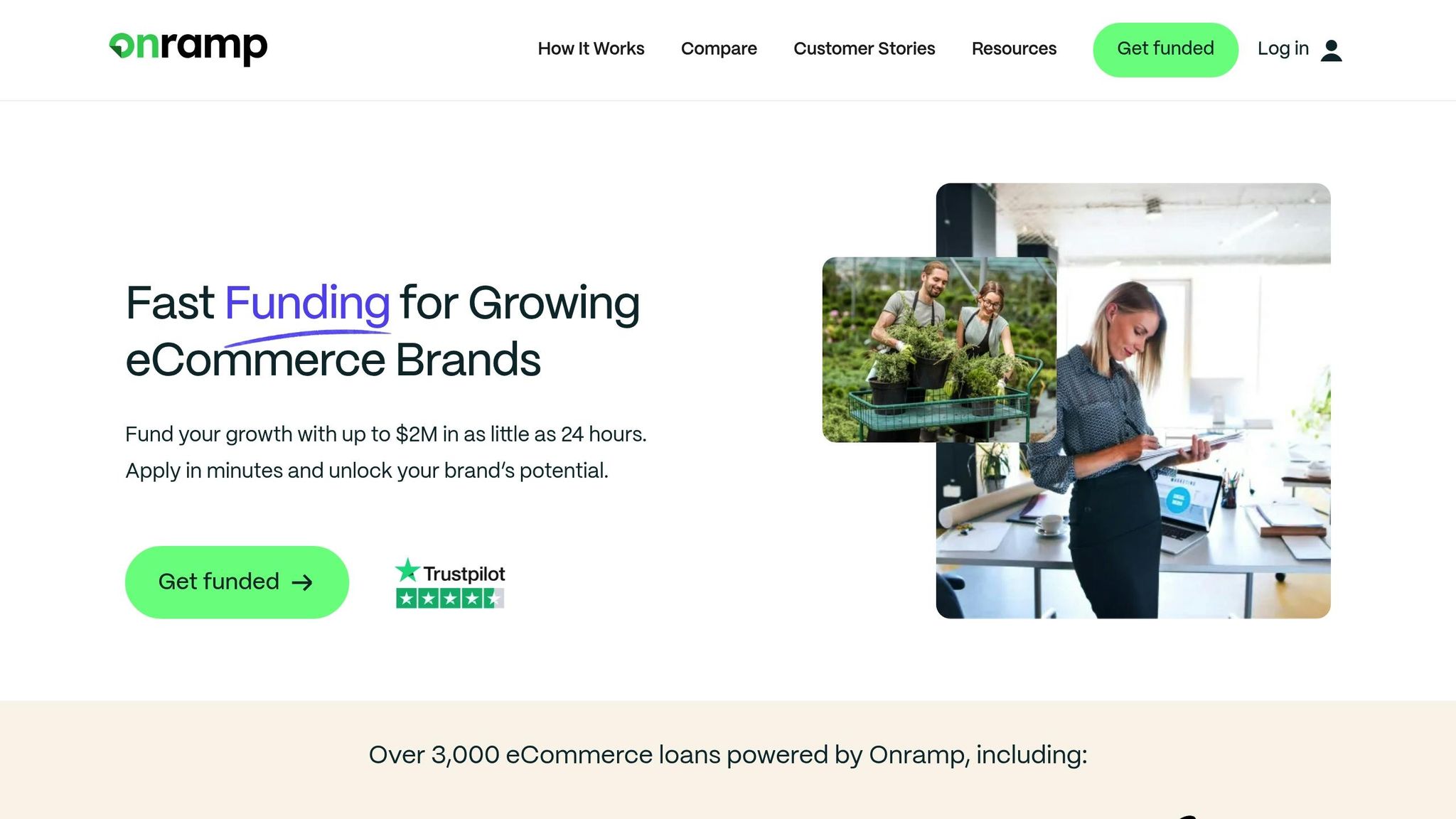
Onramp Funds is specifically designed for eCommerce businesses and integrates seamlessly with BigCommerce. Sellers can easily install the Onramp app from the BigCommerce App Marketplace, where it boasts a perfect 5-star rating [17].
What sets Onramp Funds apart is its flexible repayment model. With no upfront fees and terms starting as low as 1% of sales, repayments align with actual sales performance, providing relief during slower periods [17].
"Most lending services in the market are built for traditional retail and don't really reflect the unique needs of eCommerce. We've built a solution that is uniquely tailored to the eCommerce industry."
– Eric Youngstrom, CEO and Founder of Onramp [19]
Onramp Funds reports that businesses see a 7% revenue boost within 180 days of receiving funding [18]. Additionally, it claims to save merchants 50% on average compared to traditional loans and high-cost cash advances [17].
Customers appreciate the simplicity and efficiency of Onramp’s process. Torrie V., founder of Torrie's Natural, shared:
"Onramp has simplified cash flow by automating everything: easy to request, set it and forget it payments - quick and fast!" [18]
Similarly, Adam B. from The Full Spectrum Company highlighted the speed and ease of the experience:
"Onramp's process is very straightforward and easy to navigate. I had funds in my account within a day of final approval." [18]
BigCommerce Platform Integrations
BigCommerce’s platform integrations further enhance financing options by automating key processes. For instance, Onramp Funds uses a read-only API to pull essential business metrics - such as sales, orders, fulfillment, and inventory data - directly from BigCommerce. This automation speeds up loan approvals and ensures repayments are tied to actual sales performance [19].
BigCommerce also offers its own financing options through the control panel, helping businesses secure working capital for growth or asset purchases [16]. Additionally, the BigCommerce App Marketplace provides access to third-party financing apps. These apps offer features like flexible repayment terms, detailed analytics, and automated payment processing [15].
Funding Calculators and Support Tools
To help merchants plan their finances, funding calculators and support tools are invaluable. For instance, Onramp Funds offers a funding calculator that allows sellers to estimate potential funding amounts based on their average monthly revenue - say $10,000 - without needing a full application [22].
Other tools, like Finaloop’s e-commerce loan calculator, break down the true costs of financing options [21], while Element SaaS Finance’s revenue-based financing calculator estimates the percentage of revenue needed for loan repayment [20].
In addition to calculators, many platforms provide robust support. Onramp Funds, for example, has an “Excellent” rating on Trustpilot from 202 reviews, with users praising its fast funding process and attentive Austin-based support team [18].
For sellers exploring financing options, the BigCommerce App Marketplace is a centralized hub. Apps like Wayflyer combine flexible funding with in-depth analytics [6], while Reliant Funding caters to businesses with annual sales over $100,000, offering funding between $5,000 and $250,000 [15]. Choosing the right tool involves evaluating factors like revenue, loan amounts, and repayment terms to find the best fit for your business [15] [1].
Why Revenue-Based Financing Benefits BigCommerce Sellers
Revenue-based financing (RBF) offers a flexible funding option for BigCommerce merchants looking to grow without the hurdles of traditional loans. Back in 2019, the RBF market was valued at $901.41 million, and it's expected to soar to $42.3 billion by 2027, growing at an impressive 61.8% annual rate [23]. This surge shows how well RBF aligns with the unique needs of eCommerce businesses.
Key Advantages for BigCommerce Sellers
RBF stands out because it adjusts to your business's performance. Repayments scale with your revenue, meaning they decrease during slower months [23]. Funding decisions are often made quickly, sometimes within days or weeks, allowing you to capitalize on opportunities like restocking inventory or ramping up marketing efforts [23].
Another big plus? RBF is non-dilutive, so you maintain full ownership and control of your business [23]. Unlike traditional loans, RBF usually doesn’t require personal guarantees and is accessible to businesses that haven’t yet reached profitability. Providers focus on your future revenue potential rather than current profits [23]. This flexibility can help safeguard your cash flow during unpredictable times by tying repayments to your actual sales performance [24].
How to Get Started with RBF
If you're a BigCommerce seller considering RBF, here’s how to prepare. First, review your business metrics. Most RBF providers will want to see at least six months of consistent revenue history and minimum monthly revenues of $10,000 to $20,000 [25]. Gather data from your BigCommerce admin panel, payment processors, and bank statements to streamline the application process.
Next, evaluate the terms from potential providers. Use their specific repayment percentages to model how the financing will impact your cash flow. Ensure the repayment terms fit comfortably within your financial projections [25]. Before applying, create a clear plan for how you’ll use the funds - whether it’s for inventory, marketing, or launching new products [25][26].
For those ready to dive in, Onramp Funds is a great option tailored to eCommerce businesses. They integrate seamlessly with BigCommerce and offer flexible repayment terms starting as low as 1% of sales. This makes them an excellent choice for accessing growth capital without giving up equity.
Ultimately, the key is finding the right RBF provider that matches your business needs. Consider factors like funding amounts, repayment caps, revenue share percentages, and platform features to ensure your financing choice supports your growth goals [25].
FAQs
What are the key differences between revenue-based financing and traditional loans for BigCommerce sellers?
Revenue-based financing (RBF) stands out with its flexible repayment terms that shift in line with your monthly sales. This makes it particularly appealing for BigCommerce sellers dealing with seasonal or fluctuating revenue patterns. Unlike traditional loans, RBF skips the need for collateral or personal guarantees, and the approval process is quick - often wrapping up within just 24 hours.
On the other hand, traditional loans come with fixed monthly payments, demand extensive financial documentation, and can take weeks or even months to finalize. These loans are typically a better fit for businesses with steady, predictable income. For BigCommerce sellers aiming to scale rapidly or handle cash flow during growth spurts, RBF offers a funding option that's both flexible and accessible.
Is revenue-based financing a good fit for my BigCommerce store?
Revenue-based financing (RBF) might be a solid choice for BigCommerce sellers, but it ultimately depends on your store's unique financial needs and goals. Since repayments are tied to a percentage of your sales, this type of funding works particularly well for businesses with seasonal revenue swings or consistent growth. During busy periods, you'll pay more, while slower months mean smaller repayments - offering flexibility that aligns with your cash flow.
One major advantage of RBF is that it’s non-dilutive, meaning you don’t have to give up equity or control of your business. This makes it a great option if maintaining full ownership is a priority for you. However, it’s important to evaluate whether your cash flow can comfortably support the variable repayment structure. Think about how the funding could be used - whether it’s for boosting inventory, expanding marketing efforts, or scaling operations. If you’re looking for financing that adjusts to your sales, RBF might be just what your store needs.
How can I keep my BigCommerce store's revenue stable to qualify for revenue-based financing?
To qualify for revenue-based financing, steady revenue is a must. This means focusing on strategies that keep your sales consistent. Start by refining your marketing campaigns to ensure they’re reaching the right audience, managing your inventory to meet demand without overstocking, and building stronger relationships with your customers to encourage repeat business. Keeping a close eye on sales trends and addressing potential dips early can also help prevent major fluctuations.
Since repayments for revenue-based financing are tied directly to your sales, having a predictable income not only makes repayment easier but also increases your chances of qualifying. On top of that, keeping your profit margins healthy and controlling operational costs can further stabilize your revenue, making your BigCommerce store a more appealing candidate for funding.
Related Blog Posts
Onramp Funds
Funding built around your sales
Connect your store and see what you qualify for. Repay as a percentage of sales, with no personal credit check.
Funding in as little as 24 hours.
