


Long-term growth in eCommerce comes from channels that build value over time. Unlike short-term paid ads, these strategies create lasting assets like loyal customers, strong social media presence, and valuable content. Here's how to identify and fund these channels effectively:
- Compounding Channels: Focus on assets that grow over time, such as customer loyalty, influencer partnerships, and platform-specific campaigns.
- High-Return Channels: Prioritize direct-to-consumer (DTC) websites, social commerce for Gen Z, and marketplaces like Amazon or Walmart for reach.
- Financing Options: Revenue-based financing, like Onramp Funds, provides quick, flexible funding without sacrificing equity.
- Key Metrics: Track Customer Acquisition Cost (CAC), Customer Lifetime Value (CLV), and Return on Ad Spend (ROAS) to measure success.
The takeaway: Invest in channels that deliver ongoing results, use smart financing to scale, and measure performance to maximize ROI.
Understanding Growth Limitations: How capital controls your ecommerce expansion
sbb-itb-d7b5115
How to Identify High-Return Growth Channels
High-return growth channels don’t just generate short-term sales - they create lasting value, integrate seamlessly with your systems, and connect with customers where they’re most active. Leading retailers allocate over 10% of their revenue to digital technologies and rely on agile, cross-functional teams to manage these channels effectively [2]. The goal isn’t just to spend more but to invest smarter in channels that deliver enduring benefits.
Start by focusing on data ownership and customer relationships. Your direct-to-consumer (DTC) website should be a top priority. It allows you to control the customer journey, collect valuable data, and build loyalty. Use marketplaces like Amazon or Walmart strategically - as tools to expand your reach - while keeping your DTC site as the central hub for high-margin sales and retargeting opportunities.
Tailor your channel strategy to your audience. For instance, if you’re targeting Gen Z, social commerce is essential. A striking 66% of Gen Z use social media to research products, and nearly half of those who follow a brand on Instagram make purchases through the platform [1]. Globally, social selling has seen massive success, generating $360 billion in gross merchandise value (GMV) in China compared to $36 billion in the U.S. [1].
Before committing to any channel, ensure it integrates with your inventory and fulfillment systems in real time. This prevents overselling, avoids costly marketplace penalties, and keeps your rankings intact. Automated feed management tools can streamline the process, ensuring your product data is optimized for each platform’s algorithm - whether it’s Google Shopping, TikTok, or Amazon. While the setup may seem tedious, it’s a critical step for turning potential into scalable growth.
Once your evaluation is complete, you can move forward with strategies that turn these insights into actionable, scalable tactics.
Using Paid Advertising on Major Platforms
Paid advertising isn’t just about driving traffic - it’s about building a long-term acquisition engine. By combining retargeting with lookalike strategies, you can amplify audience retention and continually refine your campaigns. On Amazon, for instance, a dual approach of paid search (PPC) and organic optimization can simultaneously boost brand awareness and purchase intent.
What separates effective campaigns from wasted ad spend is alignment. Your keywords should match user intent, your ads should align with those keywords, and your landing pages must deliver on the promise of the ad [4]. When these elements work together, you’re not just buying clicks - you’re creating a system that gets smarter and more cost-efficient over time.
A great example of this is Pacsun. Under Co-CEO Alfred Chang, the company doubled its digital business in 2021 by focusing on digital touchpoints like the Pacsun app and TikTok. These platforms became key drivers of customer acquisition and engagement [1]. Their success came from treating paid advertising as part of an integrated ecosystem rather than isolated campaigns.
Retargeting and lookalike strategies become more effective with each iteration. As you build a customer file, your targeting improves, and your cost per acquisition decreases. Over time, this compounding effect can significantly boost your ROI.
Building Long-Term Influencer Partnerships
Long-term influencer partnerships go beyond one-off promotions - they help you build trust and brand loyalty. Authentic storytelling consistently outperforms transactional campaigns in social commerce. By collaborating with the same influencers over months or years, their audience begins to see your brand as a trusted recommendation rather than just another ad.
Smaller, niche influencers often deliver better results than mega-celebrities because their followers are more engaged and share specific interests. The financial upside is clear: returning customers typically spend up to 30% more and cost up to 70% less to retain compared to new ones [3]. When an influencer’s audience makes repeat purchases, you’re not just gaining customers - you’re building a community. This ripple effect grows as happy customers share their experiences, creating organic word-of-mouth.
To maximize results, structure influencer agreements to reward ongoing performance rather than one-time posts. Consider affiliate models, revenue sharing, or tiered compensation based on customer lifetime value. Track metrics like repeat purchase rates and lifetime value to identify which partnerships are worth scaling up.
Running Platform-Specific Campaigns
Platform-specific campaigns, like Amazon Sponsored Products or Google Shopping ads, offer more than just immediate sales - they can improve your organic rankings and sustain visibility over time. Paid placements drive sales velocity, signaling to the platform’s algorithm that your product deserves higher organic placement. This creates a flywheel effect where paid and organic performance reinforce each other.
On Amazon, for example, products that rank well in both paid and organic search dominate market share. Start with Sponsored Products to build momentum, then leverage that growth to climb organic rankings. As your organic position strengthens, you can reduce ad spend while maintaining visibility - turning the channel into a long-term profit driver.
The key to success lies in optimizing your product feeds. Each marketplace has specific requirements for titles, descriptions, images, and attributes. Automated tools can help you meet these standards without the hassle of manual adjustments. Poorly formatted feeds can hurt your rankings, no matter how much you spend on ads, while optimized feeds allow you to compete effectively - even with smaller budgets.
To measure true channel performance, track your advertising cost of sale (ACoS) alongside organic rank improvements. A campaign might appear costly based solely on ACoS, but if it boosts your organic rankings and reduces future ad dependency, the investment is well worth it. This is how platform-specific campaigns evolve from short-term expenses into long-term assets.
How to Finance Your Growth Channels

Securing the right financing can turn your growth channels into lasting assets. Scaling often demands quick access to capital, but traditional bank loans, which can take 6–8 weeks to process, aren't ideal for seizing fast-moving opportunities. In fact, the revenue-based financing market is expected to grow to $42.3 billion by 2027 [5].
Revenue-Based Financing with Onramp Funds
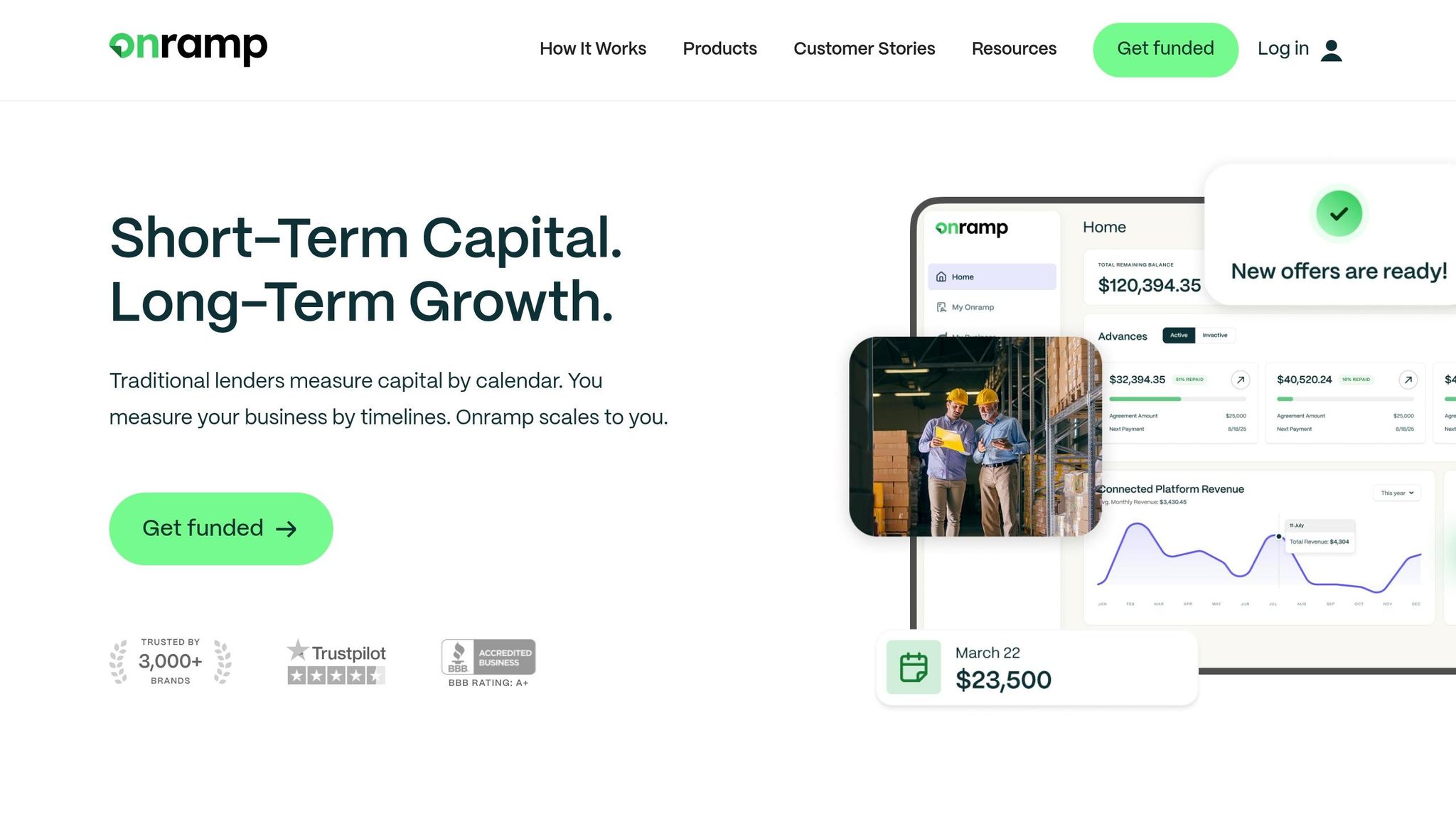
Revenue-based financing offers upfront capital in exchange for a fixed percentage of your daily or weekly revenue until the principal and a flat fee are repaid [5]. This flexible repayment model adjusts to your sales cycles - higher repayments during strong sales periods and lower ones during slower months - making it a great fit for eCommerce businesses dealing with seasonal fluctuations.
Onramp Funds takes this a step further by integrating directly with platforms like Shopify, Amazon, TikTok Shop, and Walmart Marketplace. Instead of requiring extensive financial documentation, it uses real-time sales data for underwriting. This streamlined process means you can receive funding within 24–48 hours, allowing you to quickly scale ad campaigns or secure bulk inventory deals. The best part? It’s equity-free and typically doesn’t require personal guarantees, so you maintain full ownership of your business. Flat fees range from 2% to 8%, with no hidden costs - repaying faster can even reduce your total costs.
"Financing should be viewed as a growth tool and as an opportunity."
Before diving into funding, map out your cash conversion cycle to ensure your investments generate returns before repayments kick in. Revenue-based financing works best for initiatives with short payback periods, such as ad campaigns (14–30 days) or inventory purchases (60–120 days). Avoid using it to cover ongoing operational losses.
Once you’ve secured funding, managing your cash flow effectively becomes the next critical step.
Managing Cash Flow for Continuous Reinvestment
Even with strong revenue growth, poor cash flow management can derail your business. For instance, 28% of UK eCommerce businesses fail due to cash flow issues, and in 2024, 35% of online retailers reported cash flow difficulties despite increasing revenues [7]. Automating repayments through platform-integrated financing can help, as it ensures payments adjust during slower sales periods. However, delays in accessing funds - such as the 2–14 day hold periods imposed by payment processors like Stripe and PayPal - can still slow reinvestment.
"The aim of the game is to make sure funds are coming in before cash is going out - that's cash flow."
- Oliver Whelan, Chief Revenue Officer, Storfund [6]
To improve liquidity, consider negotiating extended payment terms with suppliers, such as moving from Net-30 to Net-60 or even Net-90. Some sellers also opt for split payment models, like paying 30% upfront and the remaining 70% upon shipment. During high-revenue periods like Q4, set aside 20–30% of profits to build a reserve that can cover at least three months of operating expenses. Diversify your revenue streams - subscription models for consumables can provide a more stable cash flow - and establish relationships with multiple financing providers to ensure flexibility.
Real Examples: eCommerce Sellers Who Scaled with Funding
These stories highlight how eCommerce sellers have used funding strategies to overcome challenges and achieve rapid growth.
HEALiX, a wellness brand known for its infrared sauna blankets, teamed up with Onramp Funds in 2022 to tackle inventory shortages that were stalling their progress. Founder Michael Browne secured eight advances over three years, with the average advance amount growing by 140% from the first to the last. They directed 90-95% of the funds toward inventory and the remaining 5-10% toward marketing and video production. This focused strategy paid off, leading to a 3x increase in revenue and 140% year-over-year sales growth for two straight years [8].
"Without Onramp, my business would be much smaller."
- Michael Browne, Founder, HEALiX [8]
The Plug Drink, a plant-based recovery beverage company founded by Ray and Justin Kim, secured $1.3 million in working capital over a six-month period. They allocated 75% of the funds to inventory and 25% to digital marketing, driving an impressive 500% year-over-year sales growth for two consecutive years. By June 2023, the company reached profitability and achieved a 300% year-over-year increase in customer repurchase rates [10].
"We really like the flexibility of allocating the funds where we want to and where it makes sense for our needs at the time of disbursement."
- Justin Kim, Co-founder, The Plug Drink [10]
Both examples highlight how revenue-based financing allows businesses to reinvest consistently. As sales increased, these companies gained access to larger advances, enabling them to scale inventory and marketing efforts simultaneously - all without sacrificing equity or taking on restrictive terms. These cases illustrate the potential of this funding model and set the stage for refining performance metrics in the following sections.
How to Measure and Improve Your Growth Channels
Tracking the right metrics is the key to distinguishing between sustainable growth and wasted spending. Start with Customer Acquisition Cost (CAC), which calculates the total cost of acquiring a customer, and Customer Lifetime Value (CLV), which estimates the total revenue a customer will bring during their relationship with your brand. A healthy eCommerce business aims for a 3:1 ratio, meaning your CLV should be three times higher than your CAC to ensure profitability over the long haul [13].
Other crucial metrics include Return on Ad Spend (ROAS), which measures revenue earned per dollar spent on ads, and Average Order Value (AOV), which indicates the average amount customers spend per transaction. Additionally, retention and churn rates highlight how well you're keeping customers engaged - strong retention is critical for scaling effectively. With the average eCommerce conversion rate hovering around 2% to 3%, tracking conversion rates across channels helps pinpoint where to focus your efforts [13].
"As long as it's cheaper to acquire customers than what they're worth long-term, keep the traffic flowing." - NetSuite [13]
From here, it’s essential to zero in on four core metrics to optimize your growth channels.
Key Metrics to Track Channel Performance
To evaluate channel performance, focus on four primary factors: traffic, conversion, price, and availability. These elements are interconnected, so neglecting one can undermine the others. For instance, ramping up traffic won’t help if inventory levels are low or conversion rates are weak [15].
- Traffic: Monitor unique visitors, click-through rates (CTR), and conversion rates to assess how effective your channels are at driving and converting traffic.
- Price: Keep an eye on price consistency and your Buy Box share if you’re selling on marketplaces. This ensures competitive pricing while safeguarding margins.
- Availability: Maintain a high in-stock percentage and optimize fulfillment processes. Inventory shortages are one of the biggest roadblocks to growth.
Review metrics strategically: high-velocity data like traffic and ad impressions should be checked weekly, while more detailed indicators like AOV and CPA can be reviewed biweekly. Broader metrics like CLV and overall channel performance are best assessed quarterly [13]. Also, don’t overlook your checkout abandonment rate - with 60% to 80% of potential sales lost at this stage, understanding where customers drop off during payment is crucial [13].
By consistently tracking these metrics, you’ll ensure your growth strategies deliver the compounding returns necessary for long-term success.
Tools for Real-Time Data and Adjustments
To make these metrics actionable, real-time data is essential. Without it, you risk missing critical opportunities to adjust your strategy.
Integrated platforms are particularly helpful for breaking down data silos and spotting performance issues early. For example, NetSuite SuiteCommerce consolidates finance, inventory, and sales data across all channels into one platform [13]. Meanwhile, tools like Ramp integrate with Shopify and Amazon to provide real-time expense management and custom revenue-based financing options that adapt dynamically to your store’s performance [14].
Real-time visibility is especially important when you consider that the average gross margin for eCommerce businesses is around 45.25%. Knowing which channels are protecting or eroding your margins allows you to make quick, informed decisions to sustain growth [14].
Conclusion: Next Steps for Funding Your Growth
To keep your business growing, securing the right financing is crucial. Scaling growth channels like paid ads, influencer partnerships, or platform-specific campaigns often creates a gap between spending and revenue. This gap can put pressure on your cash flow, and that's where flexible, equity-free financing becomes a game-changer.
Onramp Funds provides revenue-based financing tailored for eCommerce sellers on platforms such as Amazon, Shopify, Walmart, and TikTok Shop. Unlike traditional bank loans with fixed payments or equity financing that requires giving up ownership, this model adjusts repayments based on your sales. During slower months, payments drop to 5%–25% of your monthly turnover. When sales increase, repayments scale naturally, ensuring your margins remain intact [12].
The process is straightforward and fast. By connecting to your storefront's real-time sales data, funding can be approved and delivered within 24 to 48 hours [9][12]. You keep full ownership of your business, with no need for personal guarantees or collateral. With flat fees ranging from 6% to 12% of the borrowed amount and no hidden charges, you can calculate the total cost upfront, making it easier to align with your unit economics [12].
This type of financing works particularly well for high-margin products or during seasonal spikes when sales volume surges [9]. To ensure a smooth approval process, keep your storefront data and accounting software clean and integrated, as this visibility enables quick decisions and flexible terms [9][12]. These benefits directly support the growth strategies highlighted earlier.
With global eCommerce sales expected to hit $8.3 trillion by 2025 and D2C funding levels significantly lower than their 2021 peak, non-dilutive financing has become a necessity for sustainable growth [11]. The right funding partner doesn’t just provide capital - it aligns with your business rhythm, protecting your ownership while fueling your growth channels. This approach turns capital into a strategic tool, helping you scale effectively and sustainably.
FAQs
Which growth channels actually compound for my brand?
Growth channels that build momentum over time often include paid advertising, influencer partnerships, and platform-specific campaigns on platforms like TikTok or Shopify. These methods work by tapping into network effects, growing adoption rates, and fostering long-term engagement. For instance, teaming up with influencers can elevate your brand's visibility and strengthen customer loyalty. Similarly, paid ads can consistently drive traffic and generate sales, setting off a cycle of returns that keeps compounding for your eCommerce business.
How much funding should I take without hurting cash flow?
To keep your cash flow healthy, it's important to match your funding strategy with your business needs and growth goals. Regularly forecasting cash flow and monitoring key metrics like Return on Ad Spend (ROAS) can help you focus your funds on areas that deliver the best returns, like marketing or inventory.
One option to consider is sales-based financing, where repayments are tied to your revenue. This approach can lower your financial risk by adjusting payments based on how much you earn. Always aim to secure funding that's proportional to your revenue and growth targets. This way, you maintain enough liquidity for daily operations while avoiding the pitfalls of overextending your resources.
What targets indicate a channel is profitable long-term?
Sustained growth in customer lifetime value (CLV), regular repeat purchases, and recent transactions among key customer groups are clear indicators of long-term channel profitability. Tools like RFM analysis are particularly useful for spotting these patterns and evaluating performance trends over time.
Related Blog Posts
Onramp Funds
Funding built around your sales
Connect your store and see what you qualify for. Repay as a percentage of sales, with no personal credit check.
Funding in as little as 24 hours.
