

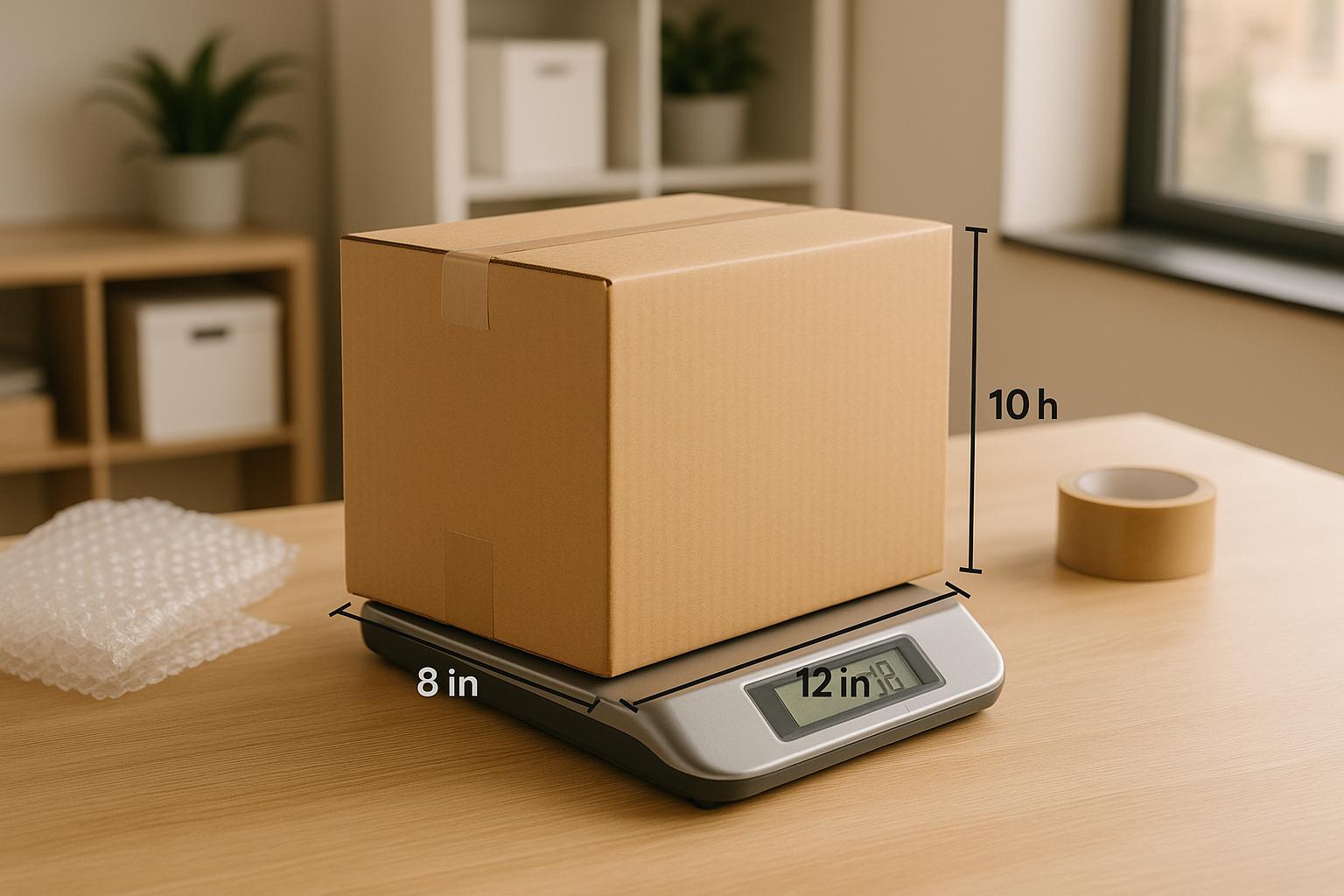
Dimensional weight pricing (DIM pricing) has become a standard for major carriers like UPS, FedEx, and USPS, significantly affecting how shipping costs are calculated. Instead of charging based only on actual weight, carriers now factor in package size, billing for the greater of the two. This shift can lead to higher costs, especially for lightweight but bulky items.
Here’s what you need to know:
- What is DIM Pricing? Shipping costs are calculated based on a package's size (volume) or its actual weight - whichever is higher.
- Why it Matters: Bulky, lightweight items like pillows or clothing can cost much more to ship under DIM pricing, impacting your bottom line.
- How to Calculate: Use the formula:
(Length × Width × Height) ÷ DIM Factor = Dimensional Weight. Each carrier has its own DIM factor (e.g., UPS uses 139 for ground shipping). - Billable Weight: Carriers charge based on the greater of the actual weight or dimensional weight.
- Reducing Costs: Optimize packaging by using smaller boxes, lightweight materials, and custom sizes. Negotiate better DIM factors with carriers and consider shipping software to find the best rates.
DIM pricing forces sellers to rethink packaging, fulfillment, and pricing strategies to control shipping expenses. By understanding how it works and using tools like dimensional weight calculators or custom packaging, you can manage costs effectively and maintain profitability.
Dimensional Weight: Cut Shipping Costs with USPS, DHL, FedEx & UPS | Between The Boxes | FirstMile
How to Calculate Dimensional Weight
Figuring out dimensional weight is pretty straightforward once you understand the formula and how to measure your package. Let’s break it down step by step.
The Dimensional Weight Formula
Here’s the formula you’ll use:
(Length × Width × Height) ÷ DIM Factor = Dimensional Weight.
This calculation sets a minimum charge based on the space your package takes up, rather than just its actual weight.
When measuring, keep in mind that the longest side of the package is considered the length. For irregularly shaped packages, use a bounding rectangle to approximate the dimensions. This ensures bulges or odd shapes are included, avoiding any surprises like special handling fees.
Measurements should be in inches, and each dimension must be rounded up to the nearest whole number. For instance, if a side measures 12.3 inches, round it to 13; if it’s 8.7 inches, round it to 9.
Here’s an example to make it clearer:
A package measuring 30 × 12 × 12 inches has a volume of:
30 × 12 × 12 = 4,320 cubic inches.
If you’re using a DIM factor of 139 (commonly used for UPS Ground), divide 4,320 by 139. The result? A dimensional weight of about 31 pounds.
DIM Factors by Carrier
Each carrier has its own DIM factor, and it can even vary between service levels. These factors determine how many cubic inches equal one pound in their pricing model. That’s why the same package might have a different dimensional weight depending on which carrier you choose.
For example, UPS, FedEx, and USPS all use different DIM factors. Domestic and international shipments often follow different rules, and premium services may have their own rate structures. Take USPS Priority Mail, for instance - it uses one DIM factor for Zones 1–4 but switches to another for Zones 5–9.
Your relationship with the carrier can also affect the divisor used. For example, UPS business accounts with Daily rates may have a different DIM factor compared to standard Retail rates.
Here’s a quick look at some typical DIM factors:
| Carrier | Service Type | Typical DIM Factor |
|---|---|---|
| UPS | Ground (Daily rates) | 139 |
| UPS | Ground (Retail rates) | 166 |
| FedEx | Ground | 139 |
| USPS | Priority Mail (Zones 1–4) | 194 |
| USPS | Priority Mail (Zones 5–9) | 166 |
These differences make it important to choose the right carrier to keep your shipping costs under control.
What is Billable Weight?
Billable weight is what carriers use to determine shipping charges. It’s the greater value between the package’s actual weight and its dimensional weight. This ensures carriers are compensated fairly, whether they’re transporting something heavy and compact or light and bulky.
Here’s how it works:
Imagine you’re shipping a 5-pound box of books that measures 10 × 8 × 6 inches. Using a DIM factor of 139, the dimensional weight would be:
(10 × 8 × 6) ÷ 139 = ~3.5 pounds.
Since the actual weight (5 pounds) is higher, you’d be billed for 5 pounds.
Now, let’s look at a different scenario - a 3-pound box of pillows measuring 24 × 18 × 12 inches. The dimensional weight would be:
(24 × 18 × 12) ÷ 139 = ~37 pounds.
Even though the box only weighs 3 pounds, you’d be charged for 37 pounds because the dimensional weight is higher.
For eCommerce sellers, understanding billable weight is a game-changer. Oversized packaging for lightweight items can lead to much higher shipping costs, so optimizing your packaging is key to keeping expenses in check.
How DIM Pricing Affects Your Shipping Costs
Understanding the impact of DIM pricing on your shipping costs is key to managing expenses effectively. Dimensional weight pricing often leads to higher shipping charges, especially for certain types of packages. Knowing when and why these costs spike can help you make better decisions about packaging and fulfillment.
When DIM Pricing Raises Your Shipping Costs
DIM pricing tends to hit hardest when shipping large, lightweight items that occupy a lot of space compared to their actual weight. Carriers like FedEx, UPS, and DHL commonly use this pricing model.
The main issue here is package density. A bulky but light package often costs more because carriers calculate charges based on dimensional weight rather than actual weight. For example, a 3-pound box of pillows measuring 24×18×12 inches could cost significantly more to ship than a 15-pound box of books packed tightly in a 12×10×8 inch box.
Air freight shipments are especially affected by DIM pricing due to limited cargo space. Carriers aim to maximize revenue per cubic inch, so dimensional weight calculations are stricter for air shipments.
Your choice of carrier also plays a big role. While most major carriers use DIM pricing, their specific rules and DIM factors vary. This means the same package could cost different amounts depending on which carrier you choose. Comparing DIM factors across carriers can help you find the best option.
Ultimately, the billable weight - whether it’s the actual weight or the dimensional weight, whichever is higher - determines your shipping cost. If the dimensional weight exceeds the actual weight, you’ll be charged for the dimensional weight. This makes it essential to rethink your packaging and fulfillment strategies.
Impact on Packaging and Fulfillment Decisions
DIM pricing directly affects how you approach packaging and shipping. Every extra inch of packaging can lead to higher costs, so optimizing your packages is crucial.
For example, using a 20 × 16 × 12 inch box when a 14 × 12 × 8 inch box would suffice can result in unnecessary DIM charges. With a DIM factor of 139, the larger box might have a dimensional weight of around 28 pounds, compared to a much lower weight for the smaller box.
You may also need to revisit your product bundling strategies. While combining lightweight items into one shipment might seem efficient, using an oversized box could increase the dimensional weight enough to erase any savings.
Fulfillment center locations can also play a role in managing DIM costs. If dimensional weight is inflating your shipping expenses, positioning fulfillment centers closer to your customers may allow for more ground-based shipping, which is less affected by DIM pricing.
The type of products you ship matters too. Dense items like books or electronics can often be shipped with minimal packaging, keeping costs down. However, fragile or irregularly shaped items that need extra protection may increase dimensional weight and, consequently, shipping costs. Striking a balance between protecting your products and minimizing excess space is essential.
DIM pricing can even influence inventory planning. Storing and shipping bulky, lightweight items becomes more expensive, which might lead you to rethink your product offerings or explore alternative shipping methods for items prone to high DIM charges.
Custom packaging can be a game-changer. If standard box sizes leave too much empty space, switching to custom-sized or adjustable packaging can help reduce dimensional weight charges and boost your shipping efficiency.
sbb-itb-d7b5115
How to Reduce Dimensional Weight Costs
Cutting down on dimensional weight costs involves a mix of smarter packaging choices, better negotiations with carriers, and leveraging technology to make informed decisions.
Tips for Optimizing Packaging
Choose the right-sized boxes for your shipments. Carriers calculate dimensional (DIM) weight based on package dimensions, so using the smallest box that fits your product can save you money. Every inch counts.
Start by reviewing your current packaging sizes. Many businesses stick to standard box sizes, which often leave too much empty space. If you're shipping small items in oversized boxes filled with packing material, you're essentially paying to ship air. Offering a variety of box sizes tailored to your products can help avoid this.
Custom packaging is another way to cut down on wasted space and lower DIM charges. Just make sure you don’t sacrifice product protection - damaged goods can lead to extra costs.
Use lightweight materials for packaging. By swapping out heavier protective materials for lighter alternatives, you can reduce both actual and dimensional weight.
Reduce void fill by using smaller boxes or adjustable packaging that molds to your product’s shape. When cushioning is necessary, opt for lightweight fillers to keep the overall weight down.
If you're considering product bundling, pay attention to how combining items affects the package size. A larger box might push you into a higher DIM weight category, so balance the benefits carefully.
Negotiating Better Shipping Rates
Leverage your shipping volume when negotiating rates. Carriers value consistent business, so if you ship regularly, you may be able to secure discounts or better terms.
Negotiate DIM factors to reduce costs. While carriers typically use standard DIM factors, some businesses have successfully negotiated more favorable terms. Showcasing consistent shipping volumes and committing to regular shipments can give you an edge in these discussions.
Work with multiple carriers to increase your bargaining power. By maintaining relationships with several carriers, you can negotiate better rates and switch providers if the terms become less favorable. This approach is particularly effective during contract renewals.
Consider regional carriers for specific zones. While major carriers dominate nationally, smaller regional carriers often offer more flexible pricing for localized shipments.
Timing matters too. Negotiate during slower seasons or near the end of a carrier’s sales quarter, when representatives are more likely to offer discounts to meet their targets.
Before entering negotiations, gather and analyze your shipping data. Detailed insights - such as package weights, dimensions, destinations, and shipping frequency - can strengthen your position and help you make a compelling case for lower rates.
Using Technology to Cut Costs
Shipping software platforms can simplify the process by calculating dimensional weight across various carriers and automatically selecting the most cost-effective option for each shipment.
Packaging optimization tools analyze your product dimensions and recommend the most efficient box sizes and packing configurations. Some advanced systems even suggest custom packaging based on your shipping volume and product catalog.
Automated packaging systems can create right-sized boxes on the spot, which is especially useful for high-volume operations.
Rate comparison tools allow you to evaluate real-time shipping rates across carriers, including DIM weight calculations. These tools can automatically pick the cheapest option based on delivery speed, cost, or carrier preference.
Analytics dashboards provide a clear view of DIM charges and trends, helping you make smarter decisions about packaging and shipping.
Finally, integrating dimensional weight calculators into your checkout process can help you set accurate shipping rates for customers, preventing unexpected DIM charges from eating into your profit margins.
Managing Cash Flow for Higher Shipping Costs
After reducing DIM-related expenses through packaging optimization, the next hurdle is effectively managing your cash flow.
Why Cash Flow Is Crucial for Shipping Cost Management
DIM pricing can unexpectedly increase shipping costs, creating a strain on your cash flow. These expenses often hit after customer orders are placed, forcing you to cover the gap until you can adjust pricing or further refine your packaging. High-demand seasons, like Black Friday, can amplify these challenges, making cash flow management even more critical.
Paying upfront for higher shipping fees can tighten your cash conversion cycle. This can be especially challenging when your business is scaling quickly or launching new products with packaging that hasn't been optimized yet. To safeguard against these issues, it's smart to build cash reserves and factor in potential DIM pricing increases when budgeting for shipping - not just rely on historical weight-based charges.
How Onramp Funds Supports eCommerce Sellers

Maintaining healthy cash flow is essential for implementing better shipping and fulfillment strategies. As DIM pricing affects your bottom line, having access to flexible financing becomes a game-changer. That’s where Onramp Funds steps in, offering revenue-based financing tailored to the needs of eCommerce businesses.
With Onramp Funds, you can secure funding in as little as 24 hours, giving you the ability to act quickly - whether it’s investing in new packaging solutions or covering unexpected shipping costs. Their repayment model adjusts to your sales performance, meaning payments decrease during slower months, easing financial pressure.
The platform integrates seamlessly with major eCommerce platforms, using your store’s sales data to simplify the funding process and cut down on paperwork. Plus, Onramp’s equity-free financing ensures you retain full ownership of your business while accessing the capital needed to tackle DIM pricing issues.
Their transparent pricing, with fees ranging from 2% to 8%, allows you to calculate the cost of funding accurately. Since repayment is tied to a percentage of your sales, managing cash flow becomes less stressful, even as you work on cost-saving initiatives like custom packaging or negotiating better shipping rates.
If your eCommerce store generates at least $10,000 in monthly sales, Onramp Funds can provide personalized support from their Austin-based team. They understand the unique challenges of online retail, including the complexities of DIM pricing and shipping cost management, helping you keep your business running smoothly.
Key Takeaways
Grasping the concept of dimensional weight (DIM) pricing is critical for navigating today's shipping landscape, especially for eCommerce businesses. Major carriers like UPS, FedEx, and USPS calculate shipping costs based on package size rather than just weight, which can significantly impact profitability.
To calculate DIM weight, use the formula: (Length × Width × Height) ÷ DIM factor (commonly 139). The billable weight will be the greater of either the actual weight or the DIM weight.
Optimizing your packaging is one of the simplest ways to cut down on DIM charges. Using custom-sized boxes and reducing void fill can make a big difference. Even small reductions in package dimensions across multiple shipments can lead to significant savings over time.
As your shipping volume grows, negotiating better rates with carriers becomes increasingly important. High-volume shippers often have the leverage to secure improved DIM factors and pricing tiers. Don’t settle for standard published rates - there’s usually room to negotiate.
Beyond packaging and rate adjustments, managing cash flow is vital. Rising shipping costs, especially during peak seasons or product launches, can strain your working capital. Flexible financing options, like those offered by Onramp Funds, can provide quick, equity-free funding to bridge cash flow gaps and help implement cost-saving measures without disrupting operations.
Leveraging automated tools is another smart move. These tools can help you calculate DIM weights accurately, compare carrier rates in real time, and make informed packaging decisions. Over time, these investments can yield significant returns as your shipping demands grow.
Take the time to audit your packaging processes, evaluate the impact of DIM pricing, and make adjustments before costs spiral. With a strategic focus on packaging, rate negotiations, and cash flow management, you can turn DIM pricing into an opportunity to enhance your business operations.
FAQs
How can eCommerce sellers negotiate better DIM factors with carriers to lower shipping costs?
To work out better DIM factors with carriers, eCommerce sellers should emphasize their shipping volume and ask about bulk discounts or the possibility of customized DIM divisors. Streamlining packaging to eliminate extra space and combining shipments where possible can also help cut down on dimensional weight charges. Another smart move is placing inventory closer to customers, which shortens shipping distances and boosts cost efficiency.
Establishing solid relationships with carriers and showcasing consistent shipping demands can give sellers an edge in negotiations. These strategies can help businesses manage shipping costs more effectively and protect their profit margins.
How can eCommerce sellers reduce shipping costs affected by dimensional weight pricing?
To keep shipping costs in check under dimensional weight pricing, eCommerce sellers can adopt smarter packaging techniques. One simple yet effective approach is to choose the smallest box that safely accommodates your product. Reducing empty space in packaging not only shrinks overall dimensions but can also lead to noticeable cost savings.
Another strategy is to combine multiple items into fewer packages when possible. Additionally, custom-fit or adjustable packaging can help optimize space and improve efficiency. These methods not only cut down on shipping expenses but also ensure your products stay secure during transit.
How does dimensional weight pricing impact the choice of fulfillment centers and logistics strategies for eCommerce businesses?
Dimensional weight pricing significantly influences how eCommerce businesses choose fulfillment centers and plan their logistics. Shipping costs are calculated based on either the actual weight or the dimensional weight - whichever is higher. This encourages businesses to focus on fulfillment centers that prioritize space-saving packing techniques and are strategically positioned to reduce shipping distances.
By using efficient packaging and selecting fulfillment centers close to major customer hubs, sellers can cut down on dimensional weight fees and lower overall shipping costs. These adjustments not only trim expenses but also improve operational workflows and profitability. To support these efforts, flexible financing options, such as those provided by Onramp Funds, can help businesses manage the costs of upgrading packaging materials or forming new fulfillment partnerships, paving the way for smoother scaling and growth.
Related Blog Posts
Onramp Funds
Funding built around your sales
Connect your store and see what you qualify for. Repay as a percentage of sales, with no personal credit check.
Funding in as little as 24 hours.
