

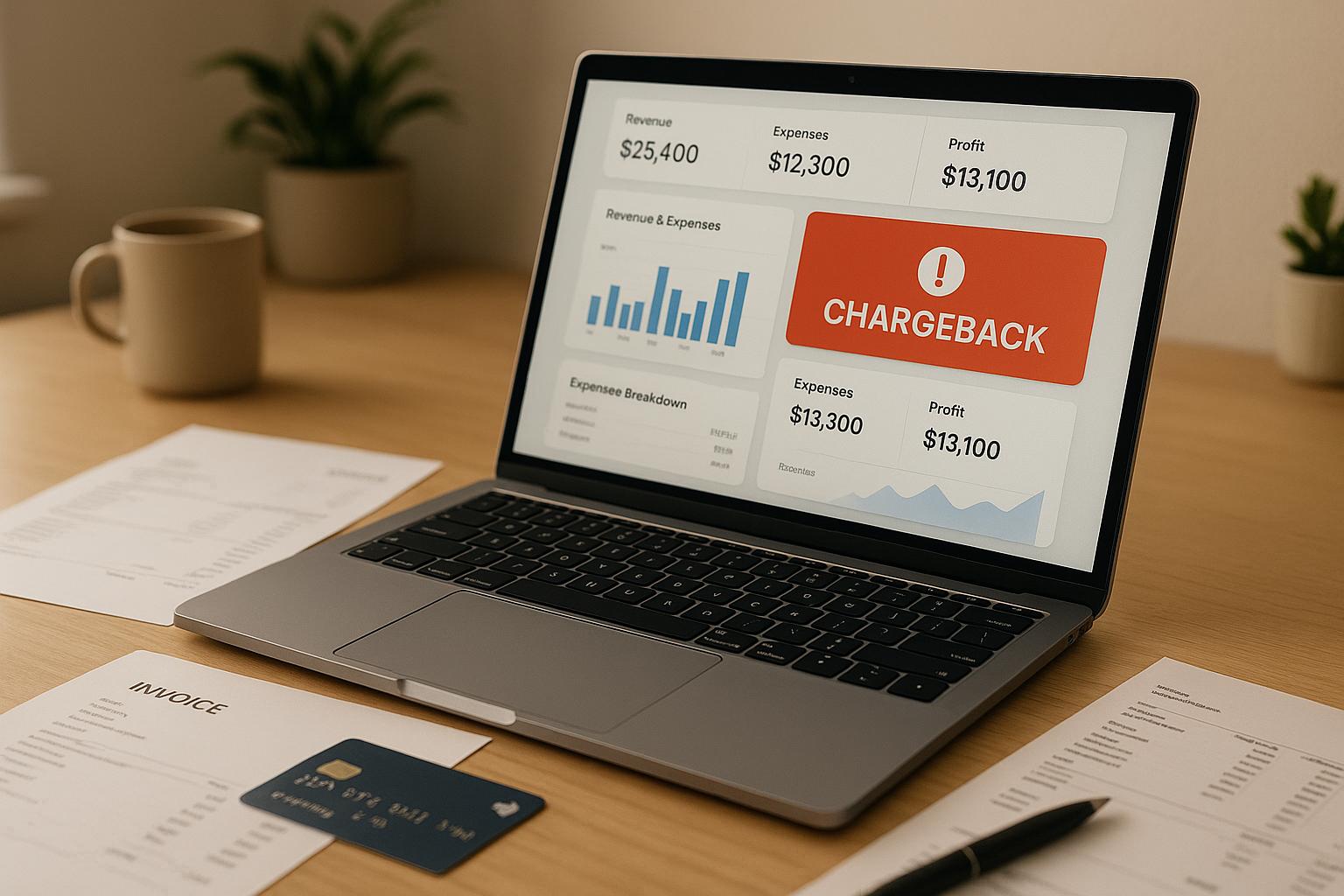
Chargebacks are a costly challenge for eCommerce businesses. They involve not just the reversal of a transaction but also fees, lost revenue, and administrative burdens. Here's what you need to know:
- What are chargebacks? Customers dispute a charge, leading to a refund that bypasses the merchant. Reasons include claims of non-delivery, unauthorized charges, or dissatisfaction with the product.
- Why are they rising? Online shopping, ease of dispute filing, and subscription services have increased chargebacks. Fraud and dispute abuse also play a role.
- Costs involved: Beyond direct fees, chargebacks lead to lost sales, shipping costs, and higher payment processing fees. A high chargeback ratio can even jeopardize your merchant account.
- Common causes: Issues like unclear return policies, inadequate product descriptions, and confusing billing descriptors often lead to disputes.
- Prevention tips: Use fraud detection tools, clear billing descriptors, transparent shipping processes, and strong customer support to reduce disputes.
Chargebacks hurt profitability and growth, but proactive management and tools like financing from Onramp Funds can help mitigate their impact. Investing in prevention strategies saves money and protects your business's future.
Stripe’s NEW Dispute Fees Are Outrageous

What Makes Up Chargeback Costs
Chargebacks don’t just hurt your bottom line - they come with layers of expenses that can quickly eat into your profits. To protect your business, it’s important to understand both the direct and hidden costs tied to chargebacks.
Direct Costs of Chargebacks
The most immediate costs are the fees charged by payment processors whenever a chargeback occurs. These fees depend on your payment processor and the terms of your merchant account. Once a chargeback is filed, the full transaction amount - covering the original sale and any non-refundable processing fees - is deducted from your account. Often, these funds are held while the dispute is being investigated. If you decide to challenge the chargeback, you’ll likely face additional expenses for preparing and submitting the required evidence and documentation. But the financial hit doesn’t stop there.
Indirect Costs and Hidden Expenses
Chargebacks also come with less obvious costs that can significantly impact your margins. For starters, you lose the revenue from the sale, and if the chargeback is upheld, you’re out the cost of the product as well. Expenses like fulfillment, shipping, and labor tied to that sale are unrecoverable. On top of that, managing the dispute process requires a lot of administrative time, pulling resources away from other important tasks. If your chargeback ratio climbs too high, you could face penalties or even risk losing your merchant account, adding another layer of financial strain.
Chargeback Cost Breakdown
When you add up all these expenses - direct fees, lost revenue, product costs, and administrative time - the total cost of a chargeback can easily surpass the original transaction value. A single disputed sale can lead to a cascade of financial losses, making chargebacks far more damaging than they might initially appear.
Long-Term Financial Effects of Chargebacks
While the immediate costs of chargebacks can disrupt daily operations, the long-term financial consequences can be even more damaging. Beyond the initial expenses, recurring chargebacks create ongoing challenges, straining cash flow, increasing operating costs, and slowing overall business growth.
Higher Processing Fees and Penalties
When chargeback ratios remain high, payment networks often respond with additional fees and stricter requirements. Over time, businesses may face increased processing costs and mandatory reserve accounts to cover potential disputes. These measures not only inflate operating expenses but also tie up working capital that could otherwise be used for essential daily operations.
Merchant Account Risks
A high volume of chargebacks sends a red flag to merchant account providers. If the issue persists, providers may decide to terminate the account altogether. Losing a standard merchant account forces businesses to seek alternative payment processing options, often under stricter terms and at higher costs. This can create significant hurdles, making smooth financial operations even more difficult to maintain.
Impact on Profit Margins and Growth
Chargebacks don’t just hurt in the short term - they can have a lasting impact on profitability and growth. As processing fees climb and reserve requirements grow, the net revenue from sales shrinks. This leaves less money available for reinvestment in critical areas like inventory, marketing, or business expansion. On top of that, managing chargeback disputes diverts valuable resources, further limiting opportunities to scale. Together, these factors can make it challenging to sustain growth, underscoring the importance of strong chargeback prevention and management strategies, which will be explored later in this discussion.
sbb-itb-d7b5115
Common Chargeback Causes and Risk Factors
After examining the financial toll chargebacks can take, it’s time to dive into what actually causes them. Understanding these triggers can help eCommerce businesses avoid unnecessary disputes and reduce preventable costs. While some chargebacks are legitimate, many stem from issues that sellers can fix with better practices and a sharper awareness of common risk factors.
Top Chargeback Reasons in eCommerce
Some chargeback reasons pop up more frequently than others. Here are the main culprits:
- Product not received: One of the most common causes, this happens when customers claim they never got their order. It often stems from unclear tracking information or missing delivery confirmations. Delays or lack of communication about shipping can quickly lead to disputes.
- Unauthorized transactions: These disputes occur when customers don’t recognize a charge. Sometimes, it’s due to family members making purchases or billing descriptors that don’t match the store name, leaving customers confused.
- Product not as described: When items don’t align with their online descriptions or images, disputes arise. This includes issues like incorrect sizes, colors, or functionality that doesn’t meet expectations.
- Refund delays: If customers feel they’re waiting too long for a promised refund, they may bypass the seller and go straight to their credit card company.
- Duplicate charges: These happen more often than you’d think. Checkout errors or customers accidentally clicking “submit” multiple times can lead to duplicate transactions. Even technical glitches during payment processing can result in double charges.
High-Risk Product Categories
Some product categories see more chargebacks than others, often due to their nature or customer expectations. Here’s a closer look:
- Electronics and gadgets: These items are prone to disputes because of their complexity and the potential for technical issues. High-value items like smartphones and gaming consoles are also frequent targets for fraud.
- Luxury goods and jewelry: With their high price tags, these products face extra scrutiny from customers and credit card companies. Delivery problems or disputes over authenticity can quickly escalate.
- Digital products and software: Instant delivery makes proving receipt tricky. Subscription services in this category often face disputes over recurring charges, especially if customers forget about automatic renewals or struggle to cancel.
- Fashion and apparel: Sizing issues, color discrepancies, and subjective style preferences lead to frequent “not as described” disputes. The seasonal nature of fashion can also create shipping challenges, adding to the risk.
- Health and beauty products: These often face disputes tied to allergic reactions, unmet expectations, or even regulatory concerns. Supplements, in particular, can lead to chargebacks when customers are unhappy with results or experience side effects.
Recognizing these high-risk categories can help businesses take targeted steps to reduce disputes.
Business Practices That Lead to Chargebacks
Many chargebacks aren’t caused by fraud but by operational missteps. Here are some common practices that can drive disputes:
- Unclear return policies and slow customer service: When customers can’t resolve issues easily, they may turn to chargebacks instead. This is especially true during busy seasons when support teams are overwhelmed.
- Inadequate product descriptions: Missing details about size, materials, compatibility, or functionality can lead to unrealistic expectations. When the product doesn’t match what the customer envisioned, disputes often follow.
- Confusing billing descriptors: If the merchant name on a customer’s statement doesn’t match the store name they recognize, it can lead to “unauthorized” chargebacks. This is a common issue for businesses using parent company names or third-party payment processors.
- Subscription billing issues: Recurring charges can be a minefield if customers aren’t clearly informed upfront. Complicated cancellation processes, hidden fees, or unexpected price hikes can all trigger disputes.
The solution lies in addressing these root causes. Clear policies, better communication, and proactive customer service can go a long way in reducing chargebacks. Fixing these operational issues sets the stage for more effective prevention strategies, which we’ll explore next.
How to Reduce Chargeback Costs
Tackling chargebacks requires a two-pronged approach: prevention and cost management. By reducing chargeback expenses, you not only protect your profits but also create a more stable foundation for your business. The secret lies in proactive strategies, smart monitoring, and maintaining the financial resources to address potential losses effectively.
Best Practices for Preventing Chargebacks
Upgrade your fraud detection tools. Fraud detection systems are your first line of defense. Tools like Address Verification Service (AVS) and Card Verification Value (CVV) checks are essential, while 3D Secure authentication adds an extra layer of protection for high-risk transactions. These measures help block suspicious activity before it becomes a problem.
Use clear and accurate billing descriptors. Make sure the name on customer statements matches what they expect to see. If your company operates under a different name or uses a payment processor with a generic descriptor, work with your provider to customize it. Including a customer service phone number in the descriptor can also encourage customers to contact you directly instead of filing a dispute.
Refine your shipping and delivery processes. Provide tracking numbers for every shipment and send delivery updates to keep customers informed. For high-value orders, requiring a signature upon delivery can serve as proof in case of disputes.
Offer detailed product descriptions. Reduce misunderstandings by providing accurate product details, clear photos, and any necessary sizing or care instructions. When customers know exactly what to expect, disputes over unmet expectations are less likely.
Streamline your customer support. Make it easy for customers to reach you by displaying contact information prominently on your website, order confirmations, and shipping updates. Resolving issues quickly can turn a potential chargeback into a satisfied customer experience.
Be transparent with subscription terms. If you offer recurring billing, clearly communicate the terms upfront. Sending reminder emails before charging renewal fees and offering a simple cancellation process can prevent disputes related to subscriptions.
Tracking and Managing Chargeback Ratios
Your chargeback ratio measures the number of chargebacks compared to total sales in a month. It's a vital metric that directly impacts your standing with payment processors and card networks.
Know how it’s calculated. Different card networks approach this differently. Visa, Amex, and Discover calculate the ratio based on current month sales, while Mastercard uses the prior month’s figures.
Stay within acceptable thresholds. The average chargeback rate for eCommerce is about 0.60%. If your rate climbs too high, card networks may flag your account and enroll you in monitoring programs, which come with additional fees. Keeping your ratio low helps you avoid these penalties.
Track more than just the ratio. Keep an eye on your chargeback win rate and net recovery rate. The win rate shows how successful you are in disputing chargebacks, while the net recovery rate accounts for the costs tied to those disputes. Even if you win a chargeback, it still impacts your overall ratio.
Set up early warning systems. Don’t wait for monthly reports. Monitor chargebacks daily or weekly to spot patterns early. If you notice a surge tied to a specific product or region, address it immediately to prevent larger issues.
These efforts require resources, and having access to financing can help you implement these strategies effectively.
How Onramp Funds Can Support eCommerce Sellers

Managing chargebacks often demands upfront investments, and this is where financing can make a difference. Onramp Funds provides the financial support needed to strengthen your prevention efforts.
Invest in fraud prevention tools. Advanced fraud detection systems, analytics, and customer service software are critical but can be costly. Onramp Funds offers quick, equity-free financing, giving you the flexibility to implement these tools without draining your cash flow. With funding available in as little as 24 hours, you can act quickly to address rising chargeback concerns.
Ensure inventory and fulfillment reliability. Problems like delayed shipments or stock shortages are common causes of chargebacks. Onramp Funds offers revenue-based financing to help you maintain sufficient inventory and improve fulfillment processes. Repayments adjust with your sales, so you’re not burdened during slower periods.
Expand customer service capabilities. As your business grows, managing customer relationships becomes more challenging. Onramp Funds’ flexible financing options allow you to invest in scaling your support team or upgrading tools, ensuring efficient resolution of customer issues.
Onramp Funds integrates seamlessly with leading eCommerce platforms like Amazon, Shopify, BigCommerce, WooCommerce, Squarespace, Walmart Marketplace, and TikTok Shop. With their help, you can better manage dispute costs and protect the health of your merchant account.
The True Cost of Chargebacks for eCommerce Sellers
Chargebacks aren't just about reversing a single transaction - they come with a ripple effect that can seriously impact your bottom line. Beyond the initial reversal, you’re often hit with extra fees, lose valuable merchandise, and face time-consuming administrative tasks. Together, these issues can chip away at your profit margins, creating a financial strain that’s hard to ignore.
Over time, these cumulative costs can make it tough to bounce back unless you’re ready to make significant changes to your operations. But let’s face it - investing in fraud detection tools, improving customer service, and ensuring transparent billing practices often requires upfront cash. For smaller or growing businesses, securing that capital can feel like an uphill battle.
This is where strategic financing becomes a game-changer. Onramp Funds offers fast, revenue-based financing that helps you invest in the tools you need to cut down on these escalating costs. With repayment plans tied to your sales performance and funding available in as little as 24 hours, you can quickly put systems in place to handle disputes more effectively.
Every dollar spent on prevention pays off by reducing future chargeback-related expenses. These targeted investments not only help you save in the short term but also protect your business’s long-term growth. By understanding the true cost of chargebacks and taking proactive measures, you’re not just safeguarding individual transactions - you’re securing the financial health and future success of your business.
FAQs
What steps can eCommerce businesses take to lower chargeback rates and avoid extra fees?
To keep chargeback rates low, eCommerce businesses need to tackle two key areas: fraud prevention and customer satisfaction. Using tools like address verification systems (AVS), 3D Secure, and fraud detection software can help block unauthorized transactions before they happen. On top of that, having clear return and refund policies and ensuring accurate order fulfillment can go a long way in preventing disputes that lead to chargebacks.
Another crucial step is maintaining open lines of communication with your customers. Responding quickly to their concerns can stop small issues from turning into bigger problems. Taking these proactive measures not only helps avoid penalties and keeps processing fees manageable but also safeguards your business's profitability over time.
What common mistakes lead to chargebacks, and how can eCommerce businesses prevent them?
Chargebacks often stem from avoidable issues like billing mistakes, transactions flagged as unauthorized, confusing return policies, or ineffective communication with customers. These problems can leave customers feeling frustrated, often resulting in disputes.
To cut down on chargebacks, focus on accuracy and clarity. Double-check billing details to avoid errors, and adopt fraud prevention measures such as address verification and multi-factor authentication. Make sure your return policies are straightforward and easy for customers to understand. On top of that, prioritize fast and helpful responses to customer questions or concerns - this can go a long way in building trust and resolving potential problems before they escalate. Tackling these areas effectively can help businesses reduce chargeback risks and safeguard their revenue.
How can Onramp Funds help eCommerce sellers reduce and manage chargeback costs?
Onramp Funds helps eCommerce sellers tackle challenges like chargeback costs by offering quick and adaptable funding solutions. With this financial support, sellers can invest in resources and strategies to minimize fraud and disputes, ultimately lowering the chances of chargebacks.
What sets them apart is their revenue-based repayment model, which ties payments to sales performance. This approach reduces financial strain during slower sales periods, giving sellers the freedom to focus on expanding their business while keeping chargeback expenses under control.
Related Blog Posts
Onramp Funds
Funding built around your sales
Connect your store and see what you qualify for. Repay as a percentage of sales, with no personal credit check.
Funding in as little as 24 hours.
