

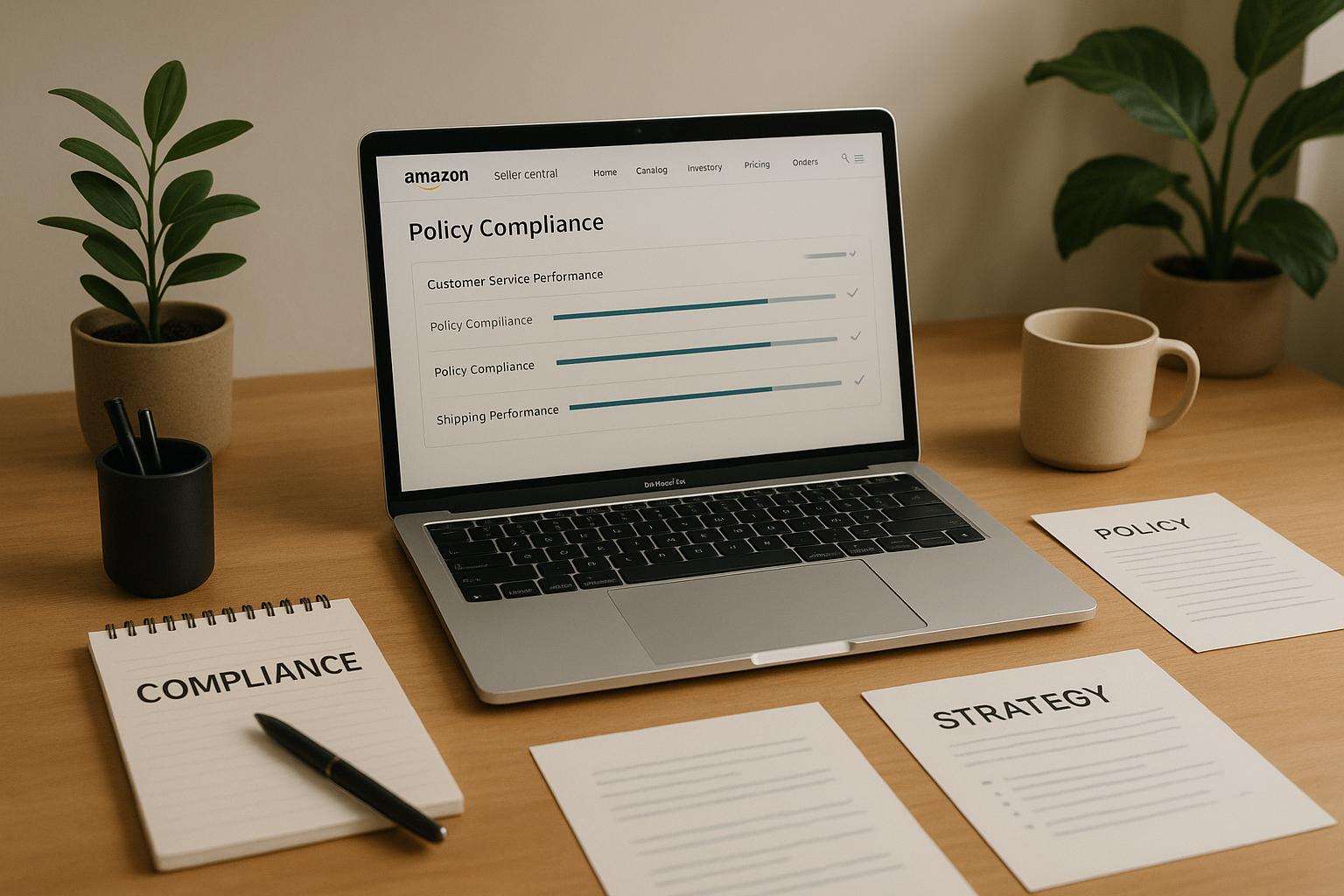
Amazon sellers risk account suspensions, payment holds, or permanent bans if they violate platform policies. Common issues include selling counterfeit items, intellectual property infringement, review manipulation, and listing prohibited products. In Q1 2025, 14% of seller accounts faced suspensions, highlighting the need for strict adherence to rules.
Here’s what you should know:
- Key Violations: High Order Defect Rates, IP complaints, counterfeit goods, and misleading reviews.
- Penalties: Listing removal, account suspension, payment holds (up to 90 days), or permanent bans.
- Prevention Tips: Regularly review Amazon policies, verify suppliers, and monitor account health metrics.
- Response Strategy: If violations occur, create a detailed Plan of Action (POA) addressing root causes, corrective steps, and future prevention.
Staying compliant requires vigilance and proper documentation. Sellers can also use financial solutions, like revenue-based financing, to manage compliance costs and maintain smooth operations.
Amazon Rules Every Seller Should Know (Avoid Suspensions!)
Common Amazon Policy Violations
Understanding Amazon's policies is crucial for maintaining a healthy seller account. Violations can range from performance-related issues to more serious concerns, like selling counterfeit goods or infringing on intellectual property. These infractions can lead to penalties that escalate quickly if not addressed. Let’s break down some of the most common violations and their potential consequences.
Order Defect Rate (ODR) Breaches
The Order Defect Rate (ODR) measures the percentage of orders resulting in negative feedback, A-to-Z Guarantee claims, or chargebacks. Amazon expects sellers to maintain an ODR below 1%. Exceeding this threshold can lead to account suspension or loss of selling privileges.
Common causes of ODR breaches include late shipments, poor product quality, and inaccurate listings. Items that are damaged, misrepresented, or mismatched often lead to negative feedback and claims. A high ODR can also result in losing the Buy Box or being removed from Prime programs, both of which significantly hurt visibility and sales. Intellectual property issues pose similar risks.
Intellectual Property Complaints
Violations involving intellectual property occur when sellers infringe on trademarks, copyrights, or patents. This can happen by listing branded products without authorization or using protected images and text in product descriptions.
Such complaints often lead to listing removals, and repeated offenses can result in account suspension. To avoid these issues, always source inventory from authorized suppliers and keep proper documentation for branded products. Avoid using copyrighted materials in your listings. Next, let’s examine authenticity concerns, which can be equally damaging.
Product Authenticity and Condition Issues
Selling counterfeit, damaged, or misrepresented goods is a serious violation of Amazon’s policies. The platform enforces a zero-tolerance stance on counterfeit items, and even genuine products can be flagged if customers question their authenticity or if documentation is inadequate.
Penalties for authenticity issues include listing removal, account suspension, and payment holds that can last up to 90 days or more. In severe cases, Amazon may pursue legal action or permanently ban the seller. To protect your account, maintain thorough documentation, such as invoices, purchase orders, and authorization letters from suppliers. Let’s also consider the risks tied to reviews and keyword usage.
Review Manipulation and Prohibited Keywords
Amazon strictly forbids attempts to manipulate product reviews. This includes offering incentives for positive feedback, posting fake reviews, or engaging in biased review practices. Additionally, using misleading language or prohibited keywords - especially in sensitive categories like health and wellness - can result in listing removal. For example, terms like "FDA-approved" or claims that a product "cures disease" are not allowed.
Violations in this area can lead to listing suppression, account suspension, and even permanent loss of review privileges. Amazon’s automated systems are designed to detect manipulation patterns and keyword misuse, making compliance critical. Beyond reviews, sellers must also navigate product restrictions.
Listing Restricted or Prohibited Products
Amazon maintains detailed lists of restricted and prohibited products, including illegal or unsafe items, expired goods, and regulated substances like prescription drugs. These lists are frequently updated, meaning products that were once allowed may later become restricted.
Creating unauthorized ASINs or omitting essential safety details, such as allergy warnings, can put customers at risk and lead to policy violations. Consequences range from listing removal to legal action, depending on the severity of the infraction.
In some cases, minor violations may only result in a listing being taken down. However, repeated or serious breaches can lead to account suspension and legal repercussions. High return rates and customer dissatisfaction - often tied to unauthorized sellers or poor-quality products - can create a cycle of performance issues and penalties. Staying informed and proactive is essential for compliance.
How to Maintain Amazon Compliance
Staying ahead of Amazon's policies isn't just about avoiding trouble - it's about building compliance into your daily routine. The best sellers treat it as a core part of their business operations, not an afterthought. This proactive mindset can save you from the headaches of account suspensions and lengthy appeals.
Regular Review of Amazon Policies
Amazon frequently updates its policies, and even small changes can lead to unintentional violations. To stay on top of these updates, subscribe to Amazon Seller Central notifications to get policy changes sent straight to your inbox. It’s also a good idea to set monthly calendar reminders to review these updates.
The "Policy Compliance" section in your Account Health Dashboard is another valuable tool. It provides real-time alerts about new or updated rules, so make it a habit to check it weekly. Amazon also offers official webinars and training sessions that break down policy changes and share tips for staying compliant.
For instance, a U.S.-based electronics seller introduced a monthly compliance audit and used automated tools to track account health. When Amazon updated its restricted keywords list, they updated their listings within 48 hours. This system helped them maintain a strong account health rating and avoid major violations for over two years.
Engage with Amazon seller forums and training programs as well. These platforms can offer practical advice from other sellers who’ve faced similar challenges.
Once you’re up to date on policies, ensure your documentation and supplier verification processes align with Amazon’s standards.
Documentation and Supplier Verification
Accurate records are your best defense against compliance issues. Before working with any supplier, verify their credentials using third-party databases and secure compliance certificates. This step is crucial to avoid problems with counterfeit or inauthentic products, which are among the most serious violations on Amazon.
Organize your records digitally, using clear naming conventions that include details like supplier names, dates, and product categories. Keep these files for at least two years, as Amazon may request documentation long after a sale. A well-organized system can help you resolve authenticity complaints and reinstate suspended listings much faster - sometimes within days instead of weeks. If you sell branded products, make sure to keep authorization letters from manufacturers or authorized distributors to address potential intellectual property complaints.
Staying compliant also means keeping a close eye on your account health metrics.
Monitoring Account Health Metrics
Your Account Health Dashboard is a critical resource for tracking compliance. It highlights key performance indicators like Order Defect Rate (ODR), late shipment rate, cancellation rate, and policy compliance notifications. Reviewing these metrics daily or weekly can help you catch and resolve issues early.
For ODR, aim to stay well below the 1% threshold - keeping it under 0.5% is even better for added security. If you notice a spike in ODR or receive a policy warning, act immediately to investigate and fix the issue. Monitoring customer feedback can also reveal recurring problems with specific products or suppliers that might need attention.
Late shipment and cancellation rates are equally important. These metrics affect your eligibility for the Buy Box and Prime program. Regularly tracking these numbers alongside your fulfillment processes ensures smooth operations. Address warnings or notifications as soon as they appear to avoid escalations.
Finally, consider using third-party tools to automate alerts for account metrics and listing issues. These tools can provide real-time updates, helping you stay ahead of potential problems.
sbb-itb-d7b5115
How to Respond to Policy Violations
When Amazon alerts you about a policy violation, how you respond can determine whether the issue is resolved quickly or leads to a prolonged suspension. The goal is to remain calm, act promptly, and handle the situation systematically.
Understanding Violation Notices
Amazon communicates policy violations through your Account Health Dashboard or via email. These notices outline the breached policy, the affected listings, and the actions Amazon expects from you. Carefully review every detail in the notice, including the type of violation, the date it occurred, and any supporting evidence provided. The Account Health Dashboard is a great resource for understanding performance metrics and compliance issues, helping you pinpoint the root cause and gauge the urgency of your response.
Pay close attention to any deadlines mentioned in the notice. Some violations demand immediate action, while others allow a bit more time. Before crafting your response, gather all relevant documentation and evidence. Avoid making emotional or rushed decisions that could complicate the situation further.
Creating a Plan of Action (POA)
Once you’ve reviewed the violation notice, your next step is to create a clear and focused Plan of Action (POA). A strong POA includes three main components: identifying the root cause, detailing corrective actions, and outlining preventive measures to avoid future issues.
When explaining the root cause, be specific. For example, instead of blaming a generic "supplier issue", describe any lapses in your supplier verification process - such as receiving products without proper documentation or miscommunication leading to counterfeit items.
Your corrective actions should address the immediate problem. This might include removing affected listings, issuing refunds, or providing additional documentation. Preventive measures, like implementing stricter supplier checks or conducting regular audits, demonstrate your commitment to avoiding similar issues in the future. Including concrete details - like timestamps, order numbers, or supplier invoices - can add weight to your response.
Here’s an example: A seller successfully reinstated their account by identifying a lapse in supplier verification, taking immediate corrective steps like removing problematic listings and issuing refunds, and implementing preventive measures such as enhanced supplier vetting and regular inventory audits. Supporting their POA with documentation, including supplier invoices and product photos, was crucial in regaining compliance.
If your case involves intellectual property or authenticity issues, adding letters from rights holders or authorized distributors can further strengthen your appeal.
Escalating Appeals
If your initial POA is rejected, it’s time to escalate your appeal. Keep in mind that many first-level appeals are reviewed by automated systems, and a detailed, well-structured POA is often necessary to trigger a human review. If your appeal is denied, carefully review Amazon’s feedback to identify any gaps in your response. Revise your POA to address these shortcomings and include additional evidence or clarifications as needed.
If the revised appeal still doesn’t lead to reinstatement, consider escalating further. You can contact Seller Performance directly, request a higher-level review, or escalate through channels like the Performance Team or Executive Seller Relations. When taking these steps, provide a thorough case history to support your request for reinstatement. In particularly challenging cases, filing a complaint with the Better Business Bureau may prompt Amazon to reevaluate your case.
Throughout the process, avoid common mistakes like submitting generic POAs, failing to address the actual root cause, or neglecting to include necessary documentation. Timeliness is also critical - respond quickly to any requests for additional information, and don’t miss deadlines, as delays can harm your account health and business momentum. By following these steps, you can ensure your response aligns with your goal of maintaining compliance and keeping your account in good standing.
Using Financial Solutions for Compliance Management
Meeting compliance requirements often comes with hefty upfront costs that can put a strain on your cash flow. From securing product certifications to covering supplier audits, these expenses can pile up quickly, especially when you need to act fast. To tackle these challenges, many successful sellers are turning to revenue-based financing options, which provide quick access to funds and help maintain smooth operations while ensuring compliance.
Funding for Documentation and Supplier Costs
Amazon's compliance rules often require sellers to have immediate access to financial resources - something not all sellers have on hand. For instance, third-party lab tests can cost anywhere from $100 to $500 per product, while supplier audits and certifications may run into the thousands. Without quick access to funds, resolving violations or meeting compliance deadlines becomes a major hurdle.
This is where Onramp Funds steps in, offering fast, equity-free financing specifically for eCommerce businesses. Funds can be made available within 24 hours, which is a game-changer when you need to source compliant inventory from authorized suppliers or secure essential documentation like manufacturer invoices or brand authorization letters. For example, one seller received a $15,000 advance from Onramp Funds after their account was flagged for lacking safety certifications. With this funding, they were able to purchase compliant inventory, pay for updated product testing, and submit a strong Plan of Action that included proof of compliance. This quick action led to the successful reinstatement of their account.
Unlike traditional bank loans, which often require collateral and lengthy paperwork, Onramp Funds evaluates your sales history and business performance, making it a more accessible option for established sellers who need immediate compliance funding.
Flexible Repayment Options for Sellers
Fixed loans can be tough to manage, especially when your sales fluctuate seasonally. Onramp Funds solves this issue with a revenue-based financing model, where repayments are a percentage of your monthly sales - typically between 5% and 15%.
This structure aligns repayment with your business performance, easing financial pressure. For instance, a seller with $50,000 in monthly sales who takes a $20,000 advance and agrees to repay 10% of sales would pay $5,000 per month until the advance is repaid. If sales dip to $30,000 during a slower month, the payment would adjust to $3,000, providing much-needed flexibility.
"Onramp offered the perfect solution with revenue-based financing to secure the capital we needed to invest in inventory and pay it back at a reasonable time frame once we made sales. The process was quick, easy, and the support was great", says Jeremy, Founder and Owner of Kindfolk Yoga.
This type of repayment plan is especially helpful when investing in compliance measures that might not yield immediate returns. Whether you're paying upfront for inventory from authorized distributors or hiring quality control staff to inspect incoming goods, the revenue-based model ensures these essential investments don’t disrupt your cash flow. It not only helps with short-term challenges but also sets the stage for long-term growth.
Scaling Operations While Staying Compliant
As your Amazon business grows - whether through expanding product categories or increasing inventory volumes - staying compliant becomes more challenging and costly. Onramp Funds offers advances ranging from $5,000 to $500,000, giving sellers the capital they need to scale responsibly while keeping up with Amazon’s ever-evolving standards.
Smart sellers use this funding to proactively address compliance needs rather than waiting for issues to arise. This might mean hiring compliance staff, upgrading packaging to meet Amazon’s requirements, or building relationships with certified suppliers before launching new products. For example, a seller planning to expand their product line could use $8,000 from Onramp Funds to secure a year’s supply of certified inventory and hire a part-time quality inspector. These steps reduce the risk of future violations while supporting sustainable growth.
Flexible repayment terms make cash flow management easier as you scale. With over 3,000 eCommerce loans funded and an A+ rating from the Better Business Bureau, Onramp Funds has become a trusted partner for sellers looking to grow without compromising compliance.
"Applied, got our offer, and had cash in our bank account within 24 hours. Their Austin, TX-based team was very professional and helped me deploy the cash to effectively grow our business", shares Nick James, CEO of Rockless Table.
This approach is becoming even more critical as Amazon tightens its enforcement. With 14% of Amazon seller accounts experiencing temporary or full suspensions in Q1 2025 - up from 11% in 2024 - having the financial flexibility to invest in compliance proactively can make the difference between thriving and dealing with costly account suspensions.
Conclusion
Staying compliant on Amazon is the backbone of a stable and growing business. Recent statistics reveal that 14% of seller accounts faced suspensions in the first quarter of 2025, highlighting how crucial it is to adhere to Amazon’s policies.
Top-performing sellers understand that compliance isn’t a one-time task - it’s a continuous process. Actively managing issues like order defects, intellectual property concerns, and product authenticity can help avoid disruptions. And when violations do occur, taking immediate action with the right documentation can significantly speed up reinstatement.
In addition to maintaining compliance, having access to flexible financial resources is equally important. Tools like revenue-based financing from Onramp Funds can help sellers cover unexpected compliance costs without draining their cash flow. Whether it’s investing in product certifications or sourcing inventory from authorized suppliers, financial flexibility ensures sellers can address challenges quickly and effectively.
As Amazon updates its policies and enforcement practices, sellers need to stay ahead by conducting regular policy reviews, keeping thorough documentation, and ensuring they have the financial resources to adapt. A strong compliance strategy is not just a safeguard - it’s an investment that prevents the high costs of suspensions, lost revenue, and lengthy appeals.
As your business grows, your compliance efforts should grow with it. Expanding product lines or increasing inventory demands the same level of diligence that kept you compliant as a smaller seller. By combining proactive compliance practices with strategic financial planning, sellers can scale their businesses confidently while minimizing risks.
FAQs
How can I prevent Amazon policy violations and keep my seller account in good standing?
To keep your Amazon seller account in good standing and steer clear of policy violations, staying informed and taking proactive measures is key. Begin by carefully reviewing Amazon's Seller Code of Conduct and policies related to product listings, customer interactions, and performance metrics. Since Amazon frequently updates its guidelines, make it a habit to check for changes regularly.
When creating product listings, ensure they’re accurate and meet Amazon’s rules. Avoid misleading claims, listing prohibited items, or placing products in the wrong categories. Keep an eye on customer feedback and address any concerns quickly to maintain strong ratings and handle disputes professionally. Using tools like performance dashboards can help you monitor critical metrics such as order defect rate and late shipment rate, which play a big role in staying compliant.
If managing cash flow is making it difficult to meet Amazon’s standards, you might explore options like Onramp Funds. They offer fast, equity-free financing designed specifically for eCommerce businesses. This can help you secure the funds needed for inventory, marketing, or other essentials to ensure compliance and support your business growth.
How can revenue-based financing support Amazon sellers in covering compliance costs and preventing account suspensions?
Revenue-based financing from Onramp Funds offers Amazon sellers quick and adaptable funding to tackle essential business expenses, like compliance costs. By boosting cash flow, it empowers sellers to allocate resources where they’re needed most - whether that’s stocking up on inventory, ramping up marketing efforts, or investing in tools to align with Amazon’s policies and guidelines.
What makes this approach stand out is that repayments are linked to sales performance. This means sellers can stay financially flexible, focusing on compliance and avoiding the hefty consequences of account suspensions. It’s a practical way to support growth while keeping operations steady and minimizing unnecessary risks.
What should I do if my Amazon seller account is suspended for a policy violation?
If your Amazon seller account has been suspended due to a policy violation, taking prompt and strategic action is crucial. Start by carefully reviewing the notification from Amazon to pinpoint the exact reason for the suspension. Make sure to thoroughly read the specific policy or guideline that was violated to fully understand the issue.
The next step is to draft a comprehensive Plan of Action (POA). This document should clearly address three key areas: the root cause of the violation, the steps you’ve taken to resolve the issue, and the measures you’ll put in place to prevent it from happening again. Keep your communication clear, professional, and to the point.
Once your POA is finalized, submit it through Amazon’s Seller Central. While waiting for a response, remain patient but don’t hesitate to follow up if needed. To minimize the risk of future suspensions, make it a habit to regularly review Amazon’s policies and maintain strong account health. If the suspension causes cash flow or inventory challenges, services like Onramp Funds can offer flexible funding options to help stabilize and grow your business during this time.
Related Blog Posts
Onramp Funds
Funding built around your sales
Connect your store and see what you qualify for. Repay as a percentage of sales, with no personal credit check.
Funding in as little as 24 hours.
