

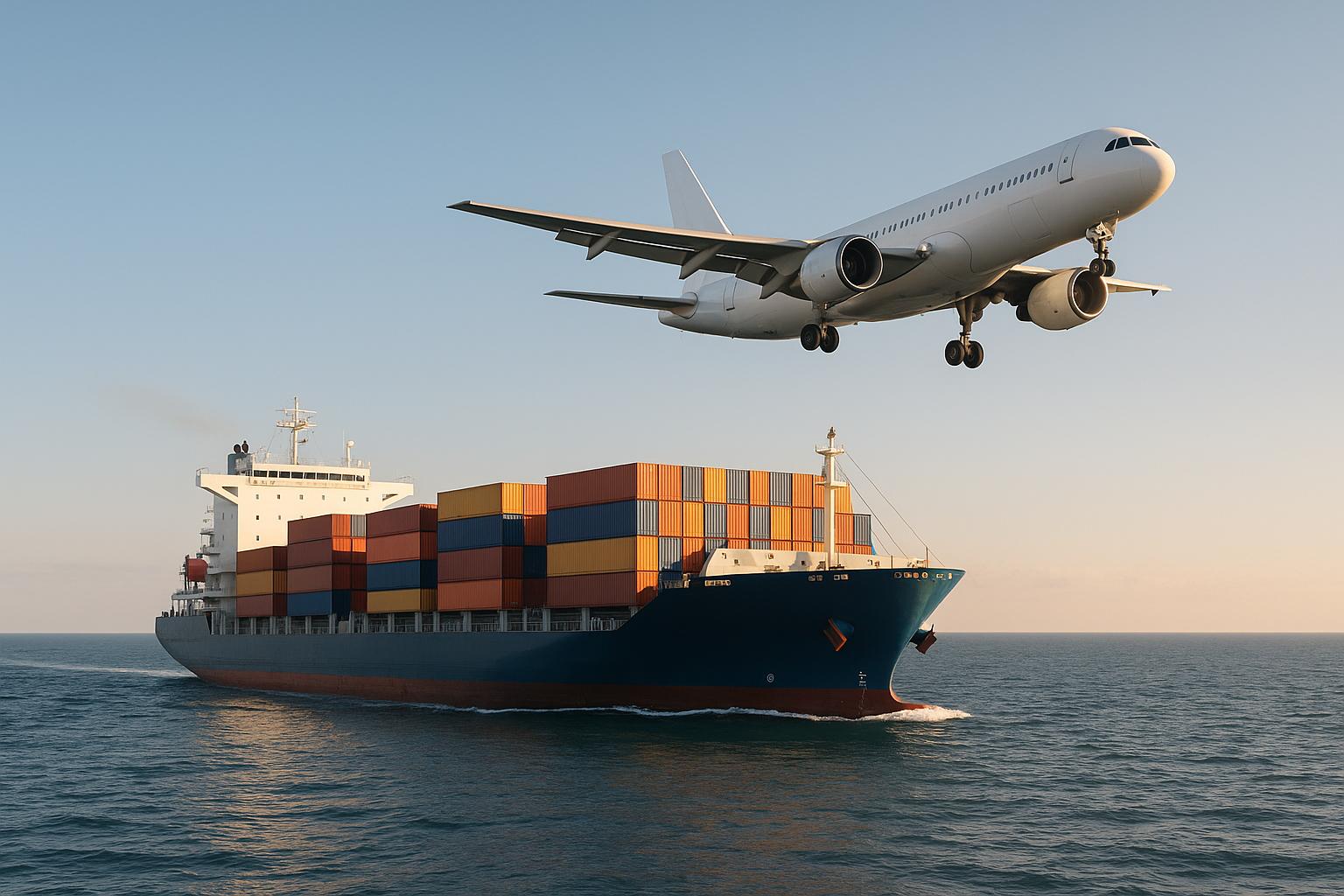
When deciding between air and sea freight for your eCommerce business, the choice boils down to speed, cost, and the nature of your products. Air freight is faster, delivering goods in 1–5 days, but costs 3–10 times more than sea freight. It's ideal for lightweight, high-value, or time-sensitive items like electronics, fashion, or perishables. Sea freight, on the other hand, is slower, taking 20–45 days, but is far cheaper and better suited for bulky, heavy, or non-urgent shipments like furniture or raw materials. Many businesses use a mix of both methods to balance speed and cost effectively.
Here’s a quick comparison:
Choosing the right method depends on your business needs, customer expectations, and inventory planning. Combining both methods can help you optimize costs and delivery times.
Air Freight vs. Sea Freight Which is Right for Your Business #airfreight#seafreight#shippingguide
Air Freight: Features, Benefits, and Use Cases
Air freight is the go-to choice for eCommerce businesses that prioritize speed, offering unmatched delivery times for international shipments.
Key Features and Benefits of Air Freight
The standout feature of air freight is its speed. With delivery times ranging from 1 to 5 days for international shipments, it’s the fastest way to get goods across borders. This quick turnaround allows businesses to restock in-demand products, respond to market needs, and meet tight customer deadlines without hesitation.
Air freight also offers enhanced security. Thanks to strict airport protocols, limited handling, and advanced tracking systems, the risks of theft, loss, or damage are significantly reduced. This reliability gives both sellers and buyers peace of mind.
Another benefit is the ability to ship smaller, more frequent shipments, which helps businesses lower inventory costs and improve cash flow.
However, these advantages come with certain limitations, particularly in cost and capacity.
When to Use Air Freight
Air freight is an excellent choice for specific scenarios, including:
- Electronics retailers that require fast restocking to keep up with product launches or high-demand items.
- Fast fashion brands that need to quickly adapt to seasonal trends and shifting consumer preferences.
- Time-sensitive promotions, such as flash sales, holiday campaigns, or limited-time offers, where prompt delivery is critical.
- High-value, lightweight goods like jewelry, specialty electronics, luxury accessories, or pharmaceuticals, where the speed justifies the higher shipping cost.
- Perishable items, such as fresh flowers or specialty foods, where maintaining quality depends on shorter transit times.
Air Freight Drawbacks and Limits
While air freight shines in speed and reliability, it comes with significant downsides. The most obvious is cost. Shipping via air can be up to 16 times more expensive than sea freight, with rates ranging from $4 to $12+ per kilogram. In comparison, ocean freight costs less than $1.50 per kilogram.
Another challenge is weight and size restrictions. Air freight charges are based on both actual and dimensional weight (calculated as length × width × height in cm ÷ 6,000). This means lightweight but bulky items often incur high shipping costs. Additionally, aircraft have limited cargo space, making them unsuitable for very large or heavy shipments.
Extra fees can also add up quickly. These include fuel surcharges, security fees, flat handling charges (around $20), and seasonal price adjustments, all of which can inflate the total cost.
For businesses mindful of environmental impact, air freight’s carbon emissions are another drawback. It emits about 500 grams of CO₂ per ton-kilometer, a stark contrast to ocean shipping’s 10 grams.
Lastly, air freight is generally impractical for bulk shipments. For large inventory orders or low-margin items, the high costs often outweigh the benefits.
Despite these challenges, air freight remains a crucial option for eCommerce businesses that need to deliver quickly while maintaining flexibility in their operations. It’s especially valuable for time-sensitive or high-value shipments where speed is non-negotiable.
Sea Freight: Features, Benefits, and Use Cases
Sea freight plays a massive role in global trade, accounting for about 90% of goods transported worldwide by volume. It’s an affordable solution for moving large quantities of goods across oceans, making it a cornerstone of international commerce.
Key Features and Benefits of Sea Freight
One of the biggest advantages of sea freight is its cost-effectiveness. Shipping via ocean is often 5–10 times cheaper than air freight for the same volume. For instance, transporting bulk consumer electronics from Shanghai to Los Angeles might cost under $2,000 by sea but more than $8,000 by air. The larger the shipment, the greater the savings.
Sea freight also offers flexibility in shipment sizes, thanks to container options. Large shipments often utilize Full Container Load (FCL), where a standard 40-foot container might cost between $2,000 and $5,000 for the Shanghai-to-Los Angeles route. For smaller shipments, Less-than-Container Load (LCL) is a practical choice, with rates often below $100 per cubic meter.
Capacity is another strong point. Cargo ships can handle almost any size or weight, making sea freight ideal for heavy machinery, bulk consumer goods, and oversized items that would be prohibitively expensive to move by air.
From an environmental perspective, sea freight is a greener option. It emits about 10 grams of CO₂ per ton-kilometer, compared to air freight’s 500 grams. This 50-fold difference in emissions makes it a smart choice for businesses looking to minimize their carbon footprint. When paired with its cost efficiency, sea freight becomes a compelling option for businesses with longer planning cycles.
These features make sea freight the go-to method for large-scale, non-urgent shipments.
When to Use Sea Freight
Sea freight is best suited for situations where keeping costs low is more important than speed. Retailers importing bulk goods - like apparel, electronics, furniture, or home goods - can save significantly by consolidating shipments into full container loads.
It’s also ideal for heavy or oversized items, such as industrial machinery, that are impractical to ship by air. Businesses with predictable seasonal demand, like fashion brands preparing for new collections or electronics companies stocking up for the holiday season, can plan shipments well in advance to accommodate the typical 20 to 45-day transit times. Companies importing raw materials or manufacturing components also benefit from sea freight’s cost structure, ensuring steady supply chains without breaking the bank.
Sea Freight Drawbacks and Limits
The biggest downside of sea freight is its slower transit times. Shipments generally take 20 to 45 days, and some routes may take even longer.
Port congestion and delays can add further complications. High demand and bottlenecks at major ports have caused extended transit times and occasional cost increases. Other factors, like bad weather, customs clearance issues, or geopolitical tensions, can also disrupt schedules.
Longer lead times require businesses to plan inventory well in advance. This often means maintaining buffer stock, which ties up capital compared to the more flexible, just-in-time inventory approach possible with air freight.
Additional costs - such as port handling fees, demurrage charges, customs duties, and inland transport - can add up, making budgeting more complex. Moreover, sea freight isn’t suitable for urgent or perishable goods due to its extended transit times.
Even with these challenges, sea freight remains a smart option for businesses focused on cost efficiency. For those able to manage longer planning cycles and inventory requirements, the savings often outweigh the drawbacks.
Air vs. Sea Freight: Cost, Speed, and Suitability Comparison
When deciding between air and sea freight, understanding the core differences is essential. These factors can shape your shipping strategy, especially when you're balancing tight budgets with high customer expectations.
Air freight can be significantly more expensive - up to 16 times the cost of sea freight. However, it offers unmatched speed, delivering international shipments in as little as 1–5 days. In contrast, sea freight typically takes 20–45 days. This makes air freight the go-to choice for urgent orders or time-sensitive seasonal demands.
The type of product also matters. Air freight works best for lightweight, high-value, and time-critical goods like electronics, fashion accessories, and medical supplies. On the other hand, sea freight is ideal for heavy, bulky, or less urgent shipments such as furniture, raw materials, and bulk consumer goods.
Reliability is another key factor. Air freight benefits from frequent flights and consistent scheduling, minimizing disruptions. Sea freight, however, is more prone to delays due to port congestion, customs processing, and vessel scheduling changes. This means businesses relying on sea freight need to plan for potential hiccups.
Environmental considerations are also important. Air freight produces roughly 500 grams of CO₂ per ton-kilometer, while sea freight generates just 10 grams. For companies prioritizing sustainability, this stark difference could heavily influence their choice.
Comparison Table of Key Attributes
These differences highlight why many businesses use a mix of air and sea freight to strike the right balance between cost and delivery speed. While air freight handles less than 1% of global trade by volume, it accounts for over 35% of its value. Sea freight, conversely, dominates with about 90% of trade volume but handles a slightly smaller share of value. Depending on your business needs, combining both methods might be the smartest strategy for international shipping.
sbb-itb-d7b5115
How to Choose the Best Freight Option for Your eCommerce Business
Picking the right freight method for your eCommerce business depends on your business model, product characteristics, and growth plans. Whether you go with air freight, sea freight, or a mix of both, understanding your specific needs is crucial. Let’s dive into the key factors that can help you make the best choice.
Factors to Consider When Choosing Freight
Product type and value are often the first things to evaluate. High-value items like electronics, fashion accessories, or perishable goods generally justify the higher cost of air freight because of their time sensitivity and profit margins. On the other hand, bulky items like furniture or raw materials are typically better suited for sea freight due to their size and weight.
Customer delivery expectations can also heavily influence your decision. If your customers expect delivery within 1–7 days, air freight might be your only viable option. However, if they’re okay with waiting 12 to 40 days to save on costs, sea freight becomes a practical alternative.
Air freight offers the flexibility of smaller, more frequent shipments, which can free up capital tied to inventory and support strategies like just-in-time delivery or product testing. Sea freight, in contrast, usually involves larger, less frequent shipments. While this may tie up more capital in inventory, it significantly lowers per-unit shipping costs.
Shipment costs are another critical factor. For instance, a shipment costing $195 by sea might jump to $1,000 if sent by air. Using logistics cost calculators to compare real-time rates based on your shipment details can help you make informed, cost-effective decisions.
Business growth goals also play a role. Companies breaking into new markets or launching products often prioritize speed to gain a competitive edge, making air freight a better choice. Meanwhile, established businesses with steady demand patterns may lean toward the cost advantages of sea freight for regular inventory needs. Often, a mix of both methods can strike the right balance for businesses with diverse shipping requirements.
Using Both Air and Sea Freight Together
After evaluating your options, you might find that combining air and sea freight is the most effective strategy. Many eCommerce businesses adopt this hybrid approach to optimize their shipping processes. For instance, fast-moving or high-demand products can be shipped by air to avoid stockouts and keep customers happy, while slower-moving or seasonal items can go by sea to reduce costs.
This approach allows you to tailor your shipping strategy to your product mix and market demands. Geographic considerations also come into play - premium products headed to high-end markets might warrant the speed of air freight, while the same products shipped to budget-conscious markets could be sent by sea to save money.
The secret to a successful hybrid strategy lies in analyzing your data thoroughly. Look at order patterns and seasonal demand to determine which products need faster delivery. Running scenario analyses - like evaluating the impact of potential delays in sea freight - can help you refine your strategy even further. This ensures your shipping decisions balance customer satisfaction with profitability.
Financing Your Shipping and Inventory Costs
Managing shipping and inventory expenses can be a real headache for eCommerce businesses, especially when juggling the high costs and varying speeds of air and sea freight. These costs often hit your cash flow hard because payments to freight forwarders, customs brokers, and suppliers are due long before you see revenue from sales. With sea freight, in particular, your funds could be tied up for anywhere from 12 to 40 days.
This mismatch in cash conversion cycles creates a serious challenge. You’re paying upfront while your revenue takes weeks - or even months - to catch up. This gap can make it tough to scale your operations, handle sudden spikes in demand, or take advantage of bulk shipping discounts that could lower your per-unit costs.
Revenue-based financing has become a game-changer for eCommerce sellers dealing with these issues. Unlike traditional bank loans with fixed monthly payments, this model adjusts repayments based on your actual sales. That flexibility is invaluable when navigating the unpredictable costs of international shipping, which can swing wildly due to seasonal demand, fuel prices, or global supply chain disruptions.
Speed is another big advantage. Traditional business loans can take weeks - or even months - to process. In contrast, specialized eCommerce financing platforms often provide funds within 24 hours. This quick access to capital lets you act fast, whether you need to secure air freight space during peak seasons or place large inventory orders to qualify for better sea freight rates.
How Onramp Funds Can Help eCommerce Sellers
Revenue-based financing is all about flexibility and speed, and Onramp Funds is designed to deliver both. Their tailored solutions help eCommerce businesses bridge cash flow gaps caused by shipping and inventory costs - all without giving up equity. You retain full ownership of your business while accessing the capital you need to manage international logistics.
Funds are typically available within 24 hours of approval, which can be a lifesaver when you need to secure shipping space or pay customs fees to avoid delays. As Jeremy, the founder of Kindfolk Yoga, shared:
"Onramp offered the perfect solution with revenue-based financing to secure the capital we needed to invest in inventory and pay it back at a reasonable time frame once we made sales. The process was quick, easy, and the support was great."
Onramp Funds goes a step further by offering automated, real-time repayment processing that integrates seamlessly with platforms like Amazon, Shopify, BigCommerce, WooCommerce, Squarespace, Walmart Marketplace, and TikTok Shop. Instead of relying on personal credit checks, qualification is based on your business performance data, making it more accessible for sellers who might not meet traditional lending requirements.
What really sets Onramp apart is repayment flexibility. Rather than locking you into fixed monthly payments - which can strain cash flow during slow periods - you repay based on a percentage of your sales deposits. This approach is especially helpful for businesses dealing with seasonal fluctuations or the long cash conversion cycles typical of international shipping.
You can use the funds for a variety of needs, including inventory, logistics, or marketing, giving you the freedom to address multiple aspects of your shipping strategy. For example, you might use air freight for fast-moving products while financing larger sea freight shipments for your core inventory.
With over 3,000 eCommerce loans issued and an A+ rating from the Better Business Bureau, Onramp Funds has built a solid reputation for helping sellers navigate the financial challenges of global commerce. They offer multiple funding options tailored to your specific needs, so you can choose the one that best fits your shipping strategy and cash flow goals.
Conclusion: Making the Right Choice for Your Business
When it comes to logistics, aligning your shipping methods with your business priorities is key. Air freight offers delivery within 1–5 days, making it ideal for urgent, high-value shipments. However, this speed comes at a price - air freight is typically 3–10 times more expensive than sea freight.
On the other hand, sea freight provides a cost-effective solution for bulk shipments that aren't time-sensitive. With transit times ranging from 20–45 days, it's a slower option, but the savings can be significant, especially for businesses focused on maintaining strong profit margins in the face of rising costs.
Many successful businesses find a balance by using air freight for urgent items and sea freight for larger inventory. This combined approach helps manage costs while meeting customer expectations, ensuring that you can respond to market demands quickly without sacrificing profitability on your core products.
Your choice between air and sea freight carries implications for your costs, delivery speeds, and overall growth strategy. Each method has its own set of advantages and drawbacks, and the right choice depends on your specific business goals.
It's important to let your long-term objectives guide your shipping strategy, rather than being limited by short-term cash flow challenges. Strategic financing can help bridge the gap between upfront shipping expenses and delayed revenue, giving you the flexibility to make decisions that prioritize customer satisfaction and business growth.
FAQs
What’s the best way for eCommerce businesses to choose between air freight and sea freight for shipping?
Choosing between air freight and sea freight largely depends on what matters most for your business. If speed is your top priority, air freight is the way to go. It's perfect for urgent or time-sensitive shipments, but keep in mind - it comes with higher costs. On the flip side, sea freight is much easier on the budget and works well for large, heavy, or bulk shipments. The trade-off? Longer transit times.
When deciding, think about factors like how quickly you need the goods, the size and weight of your shipment, and how much you're willing to spend. For eCommerce businesses looking to grow while managing cash flow, solutions like those from Onramp Funds can help. They offer financial flexibility to cover shipping costs, stock up on inventory, and expand your operations without financial strain.
How can eCommerce businesses handle the upfront costs of air and sea freight effectively?
Managing the upfront costs of air and sea freight can be tough for eCommerce businesses, especially when cash flow is tight. This is where flexible funding options, like those from Onramp Funds, come into play. Onramp Funds offers quick, equity-free financing tailored specifically for eCommerce sellers, with funds often accessible in as little as 24 hours.
This financing can cover shipping costs or other operational expenses, giving businesses the breathing room they need to grow without overstretching their budget. Plus, repayments are linked to sales performance, making it easier for sellers to manage costs while staying focused on scaling their business.
What are the environmental differences between air and sea freight, and how can eCommerce businesses factor these into their shipping choices?
Air freight typically leaves a much bigger carbon footprint than sea freight, largely due to the high fuel demands of airplanes. That said, it’s considerably faster, making it ideal for urgent deliveries. On the other hand, sea freight, while slower, is a more eco-friendly and budget-friendly option for transporting large volumes of goods.
When deciding on shipping methods, eCommerce businesses should weigh factors like delivery speed, shipment size, and what their customers expect. For companies focused on sustainability, sea freight is often the smarter choice for larger, non-urgent shipments. Striking a balance between reducing environmental impact and meeting operational needs can also boost brand image and align with the growing consumer preference for greener practices.
Related Blog Posts
Onramp Funds
Funding built around your sales
Connect your store and see what you qualify for. Repay as a percentage of sales, with no personal credit check.
Funding in as little as 24 hours.
