

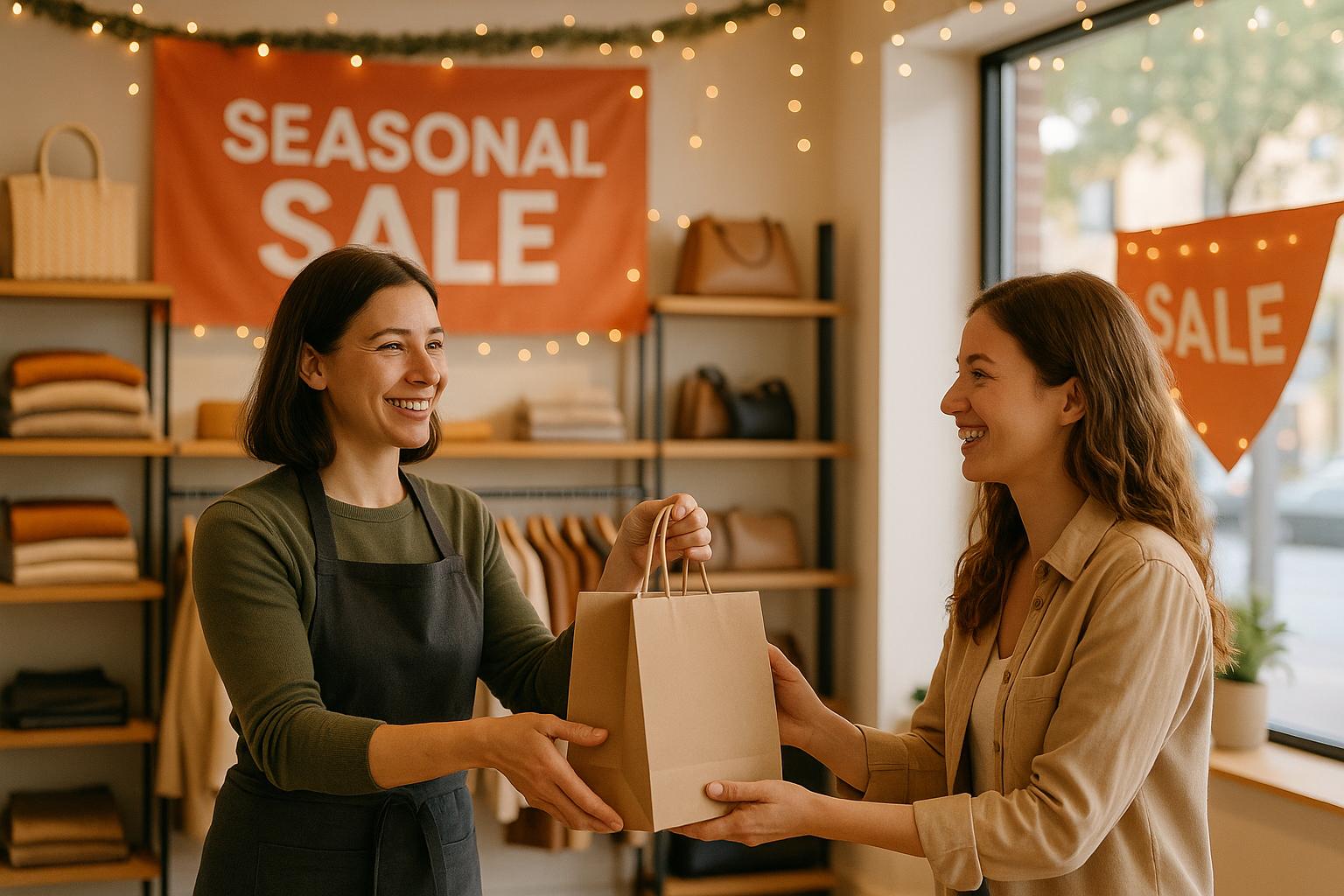
Seasonal sales attract many shoppers, but most don’t return after the discounts end. Building loyalty during these periods is key to turning one-time buyers into repeat customers. Here’s how you can do it:
- Personalized Offers: Tailor promotions to customer preferences. Repeat buyers spend 67% more than new ones.
- Loyalty Program Rewards: Offer double points or exclusive benefits during sales. Loyalty members spend 20% more annually.
- Early Access for VIPs: Create exclusivity with early sale access, boosting retention and lifetime value.
- Targeted Marketing: Use customer data to craft campaigns that resonate and drive repeat purchases.
- Themed Shopping Experiences: Design seasonal themes that create emotional connections with your brand.
- Urgency and Scarcity: Limited-time offers and low-stock alerts encourage quick purchases and repeat visits.
- Post-Sale Engagement: Follow up with thank-you emails, personalized recommendations, and loyalty incentives.
- Customer Appreciation Programs: Reward loyal shoppers with exclusive perks to deepen their connection.
- Multi-Channel Consistency: Ensure seamless branding and messaging across all platforms.
- Flexible Financing: Offer payment options like Buy Now, Pay Later to remove barriers and encourage loyalty.
These strategies focus on personalization, engagement, and convenience to turn seasonal shoppers into loyal customers.
Retention in a Post-Holiday World
1. Create Personalized Offers and Promotions
Seasonal promotions are fantastic for boosting sales, but personalized offers? They turn one-time buyers into loyal, repeat customers. When you tailor promotions to match your customers' preferences and shopping habits, they feel valued - not just another entry in your database. This approach doesn’t just drive short-term sales; it lays the foundation for strong, lasting customer relationships.
Effectiveness in Driving Repeat Purchases
The stats back it up: repeat customers spend 67% more than new ones, and though they make up just 8% of site visitors, they account for a whopping 40% of online shopping revenue [2][3]. Even small increases in repeat purchases can make a noticeable difference to your bottom line.
Here’s another key insight: 72% of customers only engage with personalized messages [5]. When you base your offers on data like past purchases, browsing history, or individual preferences, you’re addressing their specific needs, not just throwing out generic discounts. In fact, 60% of consumers say they’re more likely to become regular customers after a personalized shopping experience [5]. It’s clear - personalization is a game-changer.
Crafting a Truly Personalized Experience
Personalization goes far beyond slapping a customer’s name on an email. It’s about leveraging data - purchase history, browsing behavior, and preferences - to create offers that resonate. This makes customers feel understood, increasing the chances they’ll come back [2].
Take Starbucks, for example. For Mother’s Day, they showcased a curated gift guide featuring stylish drinkware, promoted digital Starbucks Cards (eGifts) with space for personalized messages, and offered Bonus Stars for sending eGifts of $10 or more - all through their app and in-store [1].
Lowe’s took a similar approach with their Father’s Day campaign, #DadBuiltThis. They invited customers to share photos of DIY projects made with their dads, offered curated DIY kits like planter boxes, and created an app-exclusive hub featuring gift bundles, project ideas, and bonus point offers [1]. These campaigns didn’t just sell products - they created memorable experiences.
Simple Steps for eCommerce Sellers
The best part? Personalization doesn’t have to be complicated. Start small by segmenting your email list based on factors like purchase history, seasonal trends, or engagement levels. Then, craft targeted promotions for each group.
For example, you can personalize email campaigns by highlighting products related to a customer’s browsing or buying history [4]. Offering exclusive promotions for first-time buyers is another way to encourage them to take that initial step [2]. A simple welcome email series can also make a big impact - introducing new customers to your brand while including tailored incentives based on their first interactions. These small, data-driven efforts can lead to big gains in customer loyalty over time.
Building Long-Term Loyalty
Personalized promotions don’t just drive sales; they create emotional connections. Customers are far more likely to stick with brands that make them feel valued. But here’s the catch: 63% of customers will stop buying from brands that miss the mark with poor personalization [5]. So, your efforts need to feel genuine and thoughtful, not forced or superficial.
The most effective personalized campaigns show customers that you truly understand them. Well-timed offers - delivered when they’re most likely to engage - can demonstrate that you know not just what they buy, but also why and when they buy it. By aligning promotions with their needs and behaviors, you can turn seasonal sales into opportunities to build trust and loyalty. Over time, this approach transforms simple transactions into meaningful relationships that keep customers coming back [2].
2. Boost Loyalty Program Rewards
Seasonal sales are an ideal time to level up your loyalty program, turning casual shoppers into devoted customers. By offering enhanced rewards, you can build stronger connections and keep customers coming back for more.
Effectiveness in Driving Repeat Purchases
Loyalty programs are proven revenue drivers. Over 90% of businesses with loyalty programs report a positive return on investment, with an average return of about 4.8 times their initial spend [10]. Even better, customers who actively engage in these programs contribute 12–18% more revenue annually [7].
Seasonal sales amplify these benefits. Top-performing loyalty programs see a 15–25% boost in annual sales, with members spending 20% more than non-members [10]. For example, during high-demand periods like Black Friday or the holiday season, offering enhanced rewards taps into shoppers' existing intent while encouraging long-term loyalty. In fact, 78% of consumers are more likely to shop with a brand they’re already loyal to, even if a competitor offers more convenience [11].
Ability to Create a Personalized Experience
Personalized rewards take customer loyalty to the next level. Sixty-six percent of shoppers stick with brands that recognize them individually [8], and 80% are more likely to buy from companies that provide tailored experiences [8]. Seasonal promotions are the perfect time to offer rewards that feel custom-made.
Take Starbucks® Rewards as an example. By analyzing purchase data, they personalize benefits to encourage repeat visits [9]. Similarly, Sephora’s Beauty Insider program offers tailored product recommendations and early access to new launches, ensuring their rewards resonate with individual shoppers [9]. This approach aligns with what customers want - 44% prefer rewards based on their purchase history, while 74% get frustrated when websites fail to deliver personalized content [8].
Ease of Implementation for eCommerce Sellers
You don’t need to reinvent the wheel to enhance seasonal loyalty rewards. Simple strategies can deliver high impact. For instance, offering double loyalty points or early access to sales during peak shopping periods can create immediate value [6].
A coffee shop, for example, could double loyalty points in December, allowing customers to redeem them for a BHN Spafinder® Gift Card from BHN Originals [6]. Gift cards remain a top choice for shoppers, with 53% listing them as their most-wanted item in 2024 [6]. Another easy win? Use pop-up banners after purchases to remind customers of their points balance, incentivizing repeat purchases [7].
Gamification is another powerful tool. Seasonal challenges or tiered promotions can boost engagement by up to 47% [11]. Tiered loyalty programs, in particular, have been shown to increase customer spending by 15–25% annually [11].
Impact on Long-Term Customer Loyalty
Seasonal rewards don’t just drive short-term sales - they create lasting bonds. Customers who feel emotionally connected to a brand are 306% more valuable over their lifetime [10]. By offering enhanced rewards during key shopping periods, you can associate your brand with moments of excitement and anticipation.
For example, offering loyalty members early access to Black Friday sales gives them first dibs on high-demand items, creating a sense of exclusivity [6]. This not only boosts seasonal revenue but also builds goodwill that carries into the future. Personalized rewards are especially effective, with 65% of customers saying they’ll stay loyal to brands that tailor their experiences [6].
However, loyalty programs can lose their appeal if rewards take too long to redeem. Two-thirds of members only redeem rewards quarterly due to complicated processes, and 70% drop out of programs altogether because they grow impatient waiting for points to accumulate [9][12]. To counter this, make seasonal rewards easy to access and highly valuable. These small changes can transform your loyalty program into a key driver of both immediate and long-term success.
3. Offer Early Access and VIP Benefits
Early access transforms seasonal sales into exclusive VIP events, making customers feel valued and special. Instead of solely competing on price, this approach taps into psychological triggers like privilege and exclusivity, which help build stronger connections with your most loyal customers. This strategy not only boosts immediate sales but also encourages repeat purchases.
Effectiveness in Driving Repeat Purchases
Giving VIP customers early access to popular products creates a sense of scarcity and urgency. When done right, it motivates quick action and fosters loyalty. However, the key is to reserve this perk for your most in-demand items. Offering lackluster options can backfire and leave VIP customers disappointed [13].
By leveraging psychological principles like scarcity, commitment, reciprocity, and loss aversion, early access encourages both immediate purchases and long-term loyalty [14].
"Early access is one of the best ecommerce strategies to build long-term customer loyalty and frame your brand in a premium light."
– Andrew Buck, MobiLoud [14]
Unlike discounts, which often attract one-time bargain hunters, early access appeals to customers who are more likely to stick around. These customers tend to have higher retention rates and greater lifetime value [14].
Ability to Create a Personalized Experience
Early access programs are versatile, allowing you to tailor benefits to different customer groups. For example, you could offer Gold-tier loyalty members 48-hour early access to Black Friday deals, while Silver-tier members get 24-hour access [13].
Another way to personalize is through niche interest groups within your loyalty program. For instance, a fitness retailer might create a "Marathon Club" that gives running enthusiasts first dibs on new gear launches. This approach ensures the benefits feel relevant and meaningful to the customer [13].
You can also use early access as a reward to encourage specific actions. For example, offering one-time VIP treatment for completing a customer profile or referring friends not only incentivizes engagement but also introduces customers to the perks of being a VIP [13].
Ease of Implementation for eCommerce Sellers
Setting up early access programs can be straightforward with the right tools. The simplest way is to send exclusive links to VIP customers before the general sale begins. However, to maintain true exclusivity, you’ll need systems that prevent link sharing and ensure only VIPs can access the benefits.
Secure methods like invite-only waiting rooms, unique single-use links, or two-factor authentication can help. For example, Danish ecommerce company Bedre Nætter used separate virtual queues for VIPs and the general public during Black Friday. VIPs gained access hours earlier, and the general queue included a sign-up form for their loyalty program [15].
The results were impressive: 25% of visitors signed up for the VIP program on the spot, and the company hit its sales target within 11 minutes. Their secure system not only maintained exclusivity but also strengthened customer trust and loyalty [15].
Impact on Long-Term Customer Loyalty
Early access fosters lasting loyalty by delivering on promises of exclusivity. When customers trust that your VIP benefits are genuinely special, they form a deeper emotional connection with your brand. This trust is especially crucial during competitive shopping seasons when customers have endless options.
"A lot of brands say they're running early or exclusive access for members and they send out a link that anyone can access. I didn't want to say 'exclusive' like so many other companies do. Customers don't trust brands who make promises they can't keep."
– CRM Manager at an enterprise U.S. retail company [15]
The ripple effect extends beyond the immediate customer base. When VIPs share their exclusive experience with friends and family, it sparks organic growth and loyalty program sign-ups. As one CRM Manager noted:
"We know we've done a good job when customers start talking about it within their groups and communities. We saw that with this invite-only strategy. Customers were sharing with each other that they could get product X at price Y if they signed up to our newsletter. We saw that word-of-mouth drive a lot of engagement and sign-ups and that's how we ultimately knew we'd not only succeeded, but also delivered on the promise we'd made."
– CRM Manager at an enterprise U.S. retail company [15]
Integrating early access into your broader strategy can amplify its impact. Use it as an incentive for email sign-ups, app downloads, or loyalty program upgrades. Framing your email lists as "VIP member groups" can make subscribing feel like joining an exclusive club rather than just another marketing channel [14].
Beyond boosting individual sales, early access builds anticipation for your seasonal events. It transforms routine promotions into experiences customers eagerly await year after year.
4. Use Targeted Marketing Campaigns
Building on the success of personalized offers and loyalty rewards, targeted marketing campaigns take your seasonal efforts up a notch. They allow you to tailor your messaging based on customer behavior, turning seasonal sales into engaging, personalized experiences that encourage both immediate purchases and long-term loyalty. Here's a key insight: 67% of consumers make buying decisions influenced by seasonal offers and promotions [16]. By focusing on individual preferences, you can create campaigns that resonate deeply with your audience while boosting repeat sales.
Effectiveness in Driving Repeat Purchases
Targeted campaigns excel at transforming one-time seasonal shoppers into loyal customers by addressing their unique preferences and behaviors. During peak shopping periods, these campaigns capitalize on the fact that repeat customers, while only making up 8% of site visitors, drive 40% of online shopping revenue [3]. By crafting personalized seasonal touchpoints, you encourage customers to return, making every interaction count.
The magic lies in blending seasonal relevance with specific customer insights. For instance, 61% of holiday shoppers are more likely to buy from brands offering personalized seasonal promotions [16]. To make the most of this, segment your audience based on demographics, purchase history, and online behavior. Add urgency to your campaigns with techniques like countdown timers, which can boost conversions by 23% when paired with seasonal discounts [16]. When these time-sensitive offers are personalized, they hit the mark with customers who are already primed to buy.
Ability to Create a Personalized Experience
Targeted marketing campaigns shine by delivering personalized experiences that align with both the season and individual customer needs. Personalization can lead to a 10–15% increase in sales and a 20–30% boost in customer engagement [19]. The key is to move beyond basic targeting and incorporate deeper behavioral data and seasonal contexts.
For example, during the holiday season, JaneFinds achieved a 30% increase in sales by segmenting their email list and offering tailored recommendations based on past purchases [19]. Similarly, Vahdam, a health and wellness brand, tripled its direct-to-consumer revenue and saw a 25% increase in on-page and checkout conversions by creating customized product launch pages, adding upsells at checkout, and offering gifts [18]. These examples highlight how understanding seasonal preferences can lead to meaningful results.
Ease of Implementation for eCommerce Sellers
Thanks to tools like data analytics and automated segmentation, implementing targeted campaigns is easier than ever. Start by grouping your audience based on their demographics, shopping history, and online behavior. Use these insights to craft messages that feel personal and relevant.
Retargeting campaigns are an excellent starting point. For instance, ASOS effectively reminds customers about abandoned carts, often adding discounts to encourage them to complete the purchase [19]. Email marketing is another powerful tool for seasonal campaigns, allowing you to send personalized messages that balance relevance with customer privacy.
Consistency across channels further enhances your campaign’s impact. As Mikey Moran, Founder and CEO of Private Label Extensions, explains:
"Marketing in-store with pop-up materials corresponding with online graphics, social media posts, and emails can create a winning strategy. Shoppers are so inundated with marketing messages that they will need to see a retailer's message multiple times before really seeing the message."
– Mikey Moran [17]
This multi-channel approach ensures your seasonal campaigns stay memorable without requiring overly complex setups.
Impact on Long-Term Customer Loyalty
Targeted marketing campaigns don’t just drive sales - they help build lasting loyalty by connecting seasonal moments with your brand. When customers receive timely, relevant offers that align with their interests, they develop stronger ties to your business that extend beyond a single shopping season.
Brands that combine seasonal marketing with loyalty programs often see customers eagerly anticipating their next personalized offer. Keeping an eye on competitors also plays a vital role. As Brian Anderson, Founder of My Supplement Store, puts it:
"The most important thing we do is track our competition. We sign up for their emails and follow them on social media. We want to know exactly what they're doing and when they're launching their holiday marketing campaigns. This has helped us create and promote better marketing campaigns than our competition each year."
– Brian Anderson [17]
Seasonal campaigns that reflect authentic values can further strengthen customer loyalty. For instance, Lucy & Yak donated half of its Black Friday profits to a foundation supporting girls' education in India, showing how brands can weave community impact into their holiday strategies [17]. This kind of approach demonstrates that your brand stands for more than just sales, fostering deeper emotional connections.
When done consistently, targeted seasonal campaigns create a loyal customer base that stays engaged year-round. These customers often become enthusiastic advocates for your brand, sharing their positive experiences and contributing to organic growth through word-of-mouth referrals.
5. Design Themed Shopping Experiences
Creating immersive shopping experiences can turn routine transactions into unforgettable moments. By designing your store around seasonal themes, you tap into the emotional connections people have with holidays and special occasions. According to the National Retail Federation, a staggering 92% of Americans celebrate a festival between October and December [24]. This strategy not only captures seasonal enthusiasm but can also build enduring customer loyalty.
Effectiveness in Driving Repeat Purchases
Themed shopping experiences are a powerful way to convert casual shoppers into loyal customers. When people feel emotionally connected to a brand through memorable experiences, they’re far more likely to return. Data from U.S. consumer packaged goods merchandising executives highlights this: sales reportedly increase by 19% with permanent displays and 23.8% with temporary displays, while nearly 75% of shoppers admit to making impulse purchases in such settings [21].
Take Dalben Supermercados in Brazil as an example. During Halloween 2024, they partnered with Tokinomo Shelfobot to feature Coca-Cola's Fanta products in Halloween-themed displays. The result? Over 98,000 shopper interactions and a Convrt Award win for their efforts [21].
Ability to Create a Personalized Experience
Themed experiences go beyond eye-catching visuals - they can make each customer feel personally valued. By integrating targeted recommendations and special offers into these experiences, retailers can create a journey tailored to individual shoppers. Research shows that 85% of consumers are likely to make a purchase after engaging in events or experiences, and over 90% feel more positive about brands afterward [21].
Retailers have successfully used festive decorations and interactive displays to transform their spaces [21][22]. For eCommerce sellers, personalization can take the form of themed email campaigns, curated seasonal collections, and customized landing pages. These small touches make every customer feel like the experience was designed just for them.
Ease of Implementation for eCommerce Sellers
Bringing themed shopping experiences to life doesn’t have to be complicated or expensive. Start with simple updates that deliver big impact. For example, update your website with seasonal banners, adjust color schemes, and refresh product images to reflect the theme [23].
For physical stores, focus on cost-effective decorations like pumpkins for fall, pastel tones for spring, or fairy lights for a cozy holiday vibe [20]. On the digital side, prioritize mobile-friendly designs to ensure a smooth experience for smartphone users [25]. Engaging visuals and interactive elements, like those used on Dippin' Dots’ website with its dynamic graphics, can also effectively capture attention [26][27].
Impact on Long-Term Customer Loyalty
Immersive themes can create emotional connections that last well beyond the season. When customers associate your brand with positive holiday memories, that loyalty often extends throughout the year. Whole Foods Market, for example, enhances its holiday shopping experience with cooking demonstrations that highlight festive recipes and in-store products, leaving shoppers with a lasting impression [21]. Similarly, Coca-Cola’s iconic "Holidays Are Coming" campaign - with its glowing delivery trucks traversing snowy landscapes - has become synonymous with holiday cheer for generations [21].
As Marc Metrick, CEO of Saks, puts it:
"At Saks, we are committed to connecting with our customers through unique experiences and impactful partnerships." [24]
This focus on creating meaningful experiences turns seasonal shoppers into loyal brand advocates, ensuring that every celebration strengthens their connection to your brand.
sbb-itb-d7b5115
6. Apply Urgency and Scarcity Methods
Urgency drives quick decisions. When people feel they might miss out on a great deal or product, they’re more likely to act fast. This is especially true during seasonal sales when emotions are heightened, and deadlines for gift-giving are just around the corner.
Effectiveness in Driving Repeat Purchases
Urgency and scarcity tactics are powerful tools for boosting immediate sales. For instance, eCommerce stores that use countdown timers see conversion rates increase by up to 14% during peak sales periods. Flash sales and limited-time promotions can push that number even higher, with transaction boosts of up to 35%[28]. Combining these strategies with loyalty rewards - like offering “Double loyalty points if you purchase within the next 24 hours”[30] - not only encourages a quick sale but also gives customers a reason to return and use their rewards, creating a cycle of repeat purchases.
Ability to Create a Personalized Experience
The most effective urgency strategies are tailored to individual shoppers. Instead of generic messages like "Hurry, sale ends soon!", businesses can use customer data to craft more targeted communications[1]. For example, sending a personalized low-stock alert for an item someone has wishlisted or offering VIP members exclusive early access to a sale can make the promotion feel more relevant. A message such as, "Only 2 left in your size - sale ends tonight!" is far more engaging than a blanket offer. Similarly, segmentation allows for customized messaging based on shopper profiles. First-time visitors might receive, "New customer special - 20% off ends at midnight", while loyal customers could see, "Exclusive flash sale for our VIPs - 4 hours only"[1]. These personalized approaches not only create urgency but also align seamlessly with broader loyalty efforts.
Ease of Implementation for eCommerce Sellers
The good news? These tactics are straightforward to implement. Most eCommerce platforms come equipped with built-in features or affordable third-party tools to help you create urgency and scarcity[28]. Countdown timers on product pages or checkout screens can visually highlight limited-time offers, while low-stock alerts like "Only 3 left in stock!" require minimal setup but pack a punch. Flash sales can be quickly launched through email, social media, or your website, making these strategies accessible for businesses of all sizes.
Impact on Long-Term Customer Loyalty
When used thoughtfully, urgency can actually build trust and deepen customer loyalty. Offering genuine perks - like early access to seasonal sales or limited-edition items - can make customers feel valued and more connected to your brand[29]. However, beware of overusing or misusing these tactics. False scarcity, such as constantly running "limited-time" offers or misleading "low stock" warnings, can backfire and erode trust[28]. The key is to pair urgency with real value - transparent, authentic promotions that deliver on their promises. This approach not only drives immediate sales but also fosters long-term loyalty[29].
For sellers looking for extra support during busy periods, Onramp Funds provides fast, equity-free financing with flexible, sales-based repayment options, helping you maintain a strong customer loyalty strategy when it matters most.
7. Maintain Post-Sale Engagement and Follow-Up
The customer journey doesn’t end with the click of the "buy now" button. Keeping the conversation going after the purchase is a smart way to stay top of mind and turn seasonal shoppers into loyal, repeat buyers. It’s all about building on the personalized strategies we talked about earlier and creating a bridge between one-time sales and long-term customer loyalty.
Driving Repeat Purchases
Post-sale follow-up is an excellent tool for encouraging repeat business. In fact, customers who receive follow-up emails after a purchase are 54% more likely to shop with you again compared to those who don’t[1]. A simple thank-you email sent right after the purchase is a great start. Then, within a week of delivery, you can send personalized recommendations. For example, if someone snagged winter boots during your holiday sale, why not suggest boot care products or cozy winter accessories? These thoughtful touches can lead to additional purchases.
Adding a Personal Touch
Post-sale engagement is a perfect opportunity to make things personal. Instead of a generic "thanks for your order", you can tailor messages based on what customers bought. Mention specific items, recommend products that complement their purchase, or acknowledge their shopping habits. For first-time buyers, you might send a warm welcome series, while repeat customers could receive exclusive previews or loyalty perks. Even small gestures like SMS updates, social media interactions, or a handwritten note in their package can make a big impression.
Easy for eCommerce Sellers to Implement
The good news? Many post-sale strategies are easy to set up, especially with the tools available on platforms like Shopify, Amazon, and WooCommerce. These platforms offer built-in features or affordable apps that automate much of the process[29]. You can schedule email sequences to confirm orders, provide shipping updates, and even request feedback or reviews after delivery. Automation takes care of the heavy lifting, so you can focus on growing your business while maintaining those all-important customer relationships.
Building Long-Term Loyalty
Consistent post-sale communication lays the groundwork for lasting customer relationships. When shoppers feel appreciated and supported after buying from you, they’re more likely to stick around. For example, members of loyalty programs are 80% more likely to choose your brand during future seasonal sales[31]. This is the perfect time to invite customers to join your loyalty program, explain how it works, and help them start earning rewards.
Customers who receive thoughtful follow-ups tend to spend more, shop more often, and even recommend your brand to friends and family. Plus, they’re usually more forgiving if something goes wrong because they trust you to make it right.
To keep this momentum going, investing in customer support tools is key. Onramp Funds can help by providing fast, equity-free financing designed to meet the demands of seasonal cash flow. With the right funding, you can secure the tools and inventory needed to strengthen customer relationships and keep your business thriving.
8. Launch Customer Appreciation Programs
Taking personalized offers and loyalty rewards a step further, customer appreciation programs are a powerful way to deepen connections with your audience. These programs go beyond simple discounts, aiming to make customers feel valued and creating bonds that encourage them to keep coming back. During seasonal sales, they can transform one-time buyers into loyal brand advocates by fostering emotional connections.
Effectiveness in Driving Repeat Purchases
The impact of loyalty programs on spending is undeniable. Loyalty members spend 67% more than non-members[34], making these programs a smart strategy to boost revenue during seasonal sales. For instance, Baked by Melissa saw a 110% increase in purchases per customer year-over-year[32]. Offering extra incentives, like doubling or tripling loyalty points during events like Black Friday or holiday sales, can encourage seasonal customers to engage more deeply with your program and return for future purchases.
Ability to Create a Personalized Experience
A standout customer appreciation program thrives on personalization. By leveraging customer data, you can tailor rewards to individual preferences. For example, if a shopper frequently buys winter clothing, offer them early access to your winter collection or bonus points on cold-weather gear. Gift cards remain a favorite reward, with 53% of shoppers preferring them in 2024[6]. To add even more value, consider partnerships with complementary businesses. A coffee shop, for example, could offer double points redeemable for a spa gift card, enhancing the appeal of your program. These personalized touches make your program not only engaging but also memorable.
Ease of Implementation for eCommerce Sellers
Launching a customer appreciation program doesn't have to be overwhelming. Start by defining clear goals - whether it's driving sales, acquiring new customers, or boosting loyalty. Align your incentives with these objectives and your audience's preferences. Use customer data to identify shopping trends, keep the program simple and easy to understand, and outline a clear timeline for your seasonal promotions.
"We really want to be thoughtful and strategic about what promos we're running when... For us, it's all about keeping that variety that keeps things even throughout the year."
This approach ensures promotions remain fresh and engaging, keeping customers interested throughout the sales cycle.
Impact on Long-Term Customer Loyalty
Customer appreciation programs are more than just a seasonal tactic - they're an investment in long-term loyalty. Research shows that increasing customer retention by as little as 5% can boost profits by 25%-95%[33]. Additionally, 60% of global shoppers say loyalty programs make them more committed to a brand[32]. During competitive seasonal sales, these programs can set you apart. Offering perks like exclusive early access to Black Friday deals not only makes loyal customers feel special but also builds excitement for future events.
To make these efforts more manageable during high-demand periods, companies like Onramp Funds provide revenue-based financing. This allows you to invest in loyalty programs without putting unnecessary strain on your cash flow during critical sales seasons.
9. Build Consistent Multi-Channel Experience
Today's shoppers often jump between platforms during seasonal sales. They might discover your brand on Instagram, compare prices on your website, and finalize their purchase through a mobile app. This kind of channel-hopping makes it essential to maintain consistency across every touchpoint. Why? Because a seamless experience not only builds trust but also encourages loyalty - especially during high-traffic shopping seasons. When done right, this kind of approach can significantly boost purchase rates.
Effectiveness in Driving Repeat Purchases
Here’s a powerful stat: DTC brands using three or more sales channels see a 287% higher purchase rate compared to those relying on just one channel [36]. Retailers that take a multi-channel approach generate 143% more revenue [37]. These numbers become even more impressive during major sales events like Black Friday, where customers are constantly switching platforms in search of the best deals.
Consistency is the secret sauce here. If your branding, pricing, and messaging are uniform across all channels, customers are more likely to trust your offers. In fact, presenting your brand consistently across platforms can boost revenue by as much as 23% [35]. On the flip side, inconsistency can lead to confusion - a surefire way to increase abandoned carts during those high-pressure shopping moments.
Ability to Create a Personalized Experience
A connected multi-channel strategy also opens up the door to personalization. By analyzing data from each platform, you can send tailored recommendations and offers while staying true to your brand's identity. For example, Under Armour uses data from apps like UA MapMyRun and MyFitnessPal to suggest products and target their marketing efforts. They then tie this digital activity to in-store promotions and product launches, creating a seamless experience.
Think about it: if a customer browses winter jackets on your app, your email campaigns should highlight related seasonal deals, and your website should display consistent product details. This approach makes customers feel understood, not overwhelmed by irrelevant offers.
Ease of Implementation for eCommerce Sellers
Creating a consistent multi-channel experience starts with centralizing your operations. Real-time inventory tracking is a must - it prevents embarrassing situations, like promoting a sold-out product on social media during a Black Friday frenzy.
Automation can be a game-changer here. Integrated shipping and workflows ensure that orders are processed and delivered efficiently across all platforms. Meanwhile, your product listings should feature high-quality visuals and descriptions tailored to each channel, all while maintaining consistent messaging about your seasonal promotions. When your operations run smoothly, customers notice - and appreciate - the effort.
Customer support is another key piece of the puzzle. During seasonal sales, when inquiries spike, it’s critical that your support team has access to complete customer histories. Whether a shopper reaches out via chat, email, or phone, they expect a consistent and informed response. After all, 73% of shoppers prefer a seamless experience across channels [38].
Impact on Long-Term Customer Loyalty
When your multi-channel operations are well-integrated, you build trust and eliminate friction - two things that are essential for long-term loyalty. Imagine a customer starting a purchase on your app, finishing it in-store, checking their account balance online, and following up with a phone call - all without a hitch. That’s the kind of experience that keeps people coming back.
For eCommerce sellers, this translates to a loyal customer base that feels comfortable engaging with your brand across platforms. If someone can effortlessly move from your Instagram page to your website to your mobile app, they’re far more likely to return during future sales events. This consistent experience doesn’t just drive quick conversions - it builds a foundation for lasting relationships.
And the benefits don’t stop there. Happy customers often turn into brand advocates, sharing their positive experiences and driving organic growth well beyond the seasonal rush. To support this kind of seamless multi-channel operation, services like Onramp Funds can help by providing revenue-based financing. This allows you to invest in the necessary technology and systems without putting undue pressure on your cash flow during peak sales periods.
10. Provide Flexible Financing and Support
Seasonal sales often come with a challenge: customers may hesitate to make purchases due to budget constraints. Offering flexible financing options can help bridge this gap. By tailoring payment solutions to fit your customers' financial needs, you’re doing more than closing a sale - you’re creating opportunities for lasting relationships. These options can turn one-time shoppers into loyal customers who keep coming back.
Boosting Repeat Purchases
Flexible financing can significantly influence shopping behavior. For instance, 43% of consumers prefer retailers that offer financing options [39]. This becomes even more important during seasonal sales, when shoppers are likely to make multiple purchases.
Buy Now, Pay Later (BNPL) services have shown remarkable success in driving repeat business. Studies reveal that BNPL can increase the average order value by 30–50% [40]. On top of that, more than 60% of Gen Z and millennials currently use BNPL for online shopping [40]. A December 2024 PYMNTS Intelligence Report, created with Splitit, highlighted that introducing BNPL options early in the shopping journey can lead to larger purchases and attract more customers [39]. This underscores the value of offering personalized and flexible payment solutions.
Creating a Tailored Experience
Flexible financing isn’t just about offering payment plans - it’s also a way to personalize the shopping experience. Research shows 35% of users of credit card-linked installment plans have increased their usage over the past year [39]. This trend opens the door for customized financing offers based on customer behavior, purchase history, or seasonal needs. For example, during the back-to-school season, extended payment terms might appeal to families making larger purchases. Meanwhile, shorter-term installment plans could be ideal for holiday gift buyers. Presenting these options early in the shopping process can deepen engagement and encourage repeat purchases [39].
Easy Implementation for eCommerce Sellers
Adding flexible financing options to your eCommerce store is easier than you might think. Many BNPL providers offer seamless integration with popular eCommerce platforms. Once set up, you can promote these options across your website, email campaigns, social media, and retargeting ads to maximize their effectiveness. A particularly effective tactic is using retargeting campaigns to highlight BNPL options, which can help convert hesitant shoppers [40].
For businesses looking to manage their own financing while maintaining inventory and marketing efforts, revenue-based financing solutions like Onramp Funds can be a game-changer. These solutions provide working capital with repayments tied to sales performance, offering a flexible approach that aligns with the ebb and flow of seasonal demand.
Building Long-Term Loyalty
Flexible financing does more than make purchases easier - it builds trust and strengthens customer loyalty [40]. When shoppers feel their financial needs are understood and supported, they’re more likely to return. By removing financial obstacles, you position your brand as approachable and customer-focused. This not only encourages repeat visits during seasonal sales but also turns customers into advocates who promote your business year-round.
Conclusion
Building customer loyalty during seasonal sales hinges on three key elements: personalization, consistent engagement, and flexibility. Together, these strategies can transform occasional seasonal shoppers into dedicated, repeat customers who contribute to long-term business growth [29][1].
Personalization plays a crucial role by tailoring offers based on past purchases and browsing habits. When customers feel that their unique preferences are understood, they are more likely to engage with your brand [1]. This sets the foundation for a deeper relationship that goes beyond a single transaction.
Efforts to maintain engagement after the sale, like follow-up emails or thank-you messages, help keep your brand front and center. This consistent communication not only encourages repeat purchases but also fosters a sense of connection and loyalty [29].
Flexible payment options and customer support can also break down barriers to purchase. Offering solutions like buy-now-pay-later plans or securing financing to maintain inventory during busy seasons demonstrates a commitment to meeting customer needs. For instance, Onramp Funds provides equity-free financing tailored to eCommerce sellers, helping them manage cash flow and invest in growth during peak periods. These kinds of adaptable strategies not only address immediate challenges but also build trust over time.
Enhancing loyalty rewards during seasonal sales is another effective way to encourage repeat business [30]. Providing perks like exclusive early access or VIP benefits for loyalty program members can significantly boost retention and repeat purchases [30].
By combining personalization, engagement, and flexibility, you can turn seasonal shoppers into loyal advocates for your brand [29]. Seasonal shoppers often behave differently from year-round customers, making quick, impulse-driven decisions [29]. Recognizing these patterns and adjusting your approach - such as offering first-time buyer discounts or exclusive seasonal bundles - can help convert these temporary shoppers into long-term supporters.
Ultimately, focusing on loyalty drives higher customer retention, increases lifetime value, and ensures steady revenue throughout the year [29][1]. Loyal customers don’t just keep coming back - they also promote your brand through referrals, positive reviews, and word-of-mouth, becoming some of your most valuable assets.
FAQs
How do personalized offers during seasonal sales help build customer loyalty and drive repeat purchases?
Personalized offers during seasonal sales can go a long way in strengthening customer loyalty. When shoppers receive discounts, exclusive deals, or product suggestions tailored to their preferences or past purchases, it creates a shopping experience that feels more relevant and engaging. This thoughtful approach helps customers feel seen and appreciated, building trust and a stronger emotional connection with your brand - making them more likely to return.
Pairing these personalized offers with loyalty programs, like earning points or rewards for purchases, adds even more incentive for customers to come back. Together, these strategies not only drive sales during seasonal promotions but also help transform occasional shoppers into devoted, repeat customers.
How can offering early access and VIP perks during seasonal sales benefit your business?
Providing early access and VIP perks during seasonal sales is a smart way to strengthen customer loyalty while driving sales. When customers feel special and appreciated, they’re more likely to return and make repeat purchases, ultimately increasing their lifetime value. This approach helps build a deeper connection between your brand and its audience.
Offering early access also taps into the power of urgency and exclusivity. Customers are motivated to act fast to grab deals before they hit the public, which can lead to quicker inventory turnover and higher sales during key shopping seasons.
Why is post-sale engagement important for building customer loyalty?
Post-sale engagement plays a key role in fostering customer loyalty. When you show customers they matter beyond their first purchase, it builds trust and makes them feel appreciated - two things that keep them coming back.
Staying connected after the sale can take many forms: personalized follow-up messages, exclusive offers, or even asking for feedback. These small actions not only boost customer satisfaction but also deepen their relationship with your brand. Over time, this effort translates into better retention, higher lifetime value, and enthusiastic word-of-mouth support for your business.
Related Blog Posts
Onramp Funds
Funding built around your sales
Connect your store and see what you qualify for. Repay as a percentage of sales, with no personal credit check.
Funding in as little as 24 hours.
