

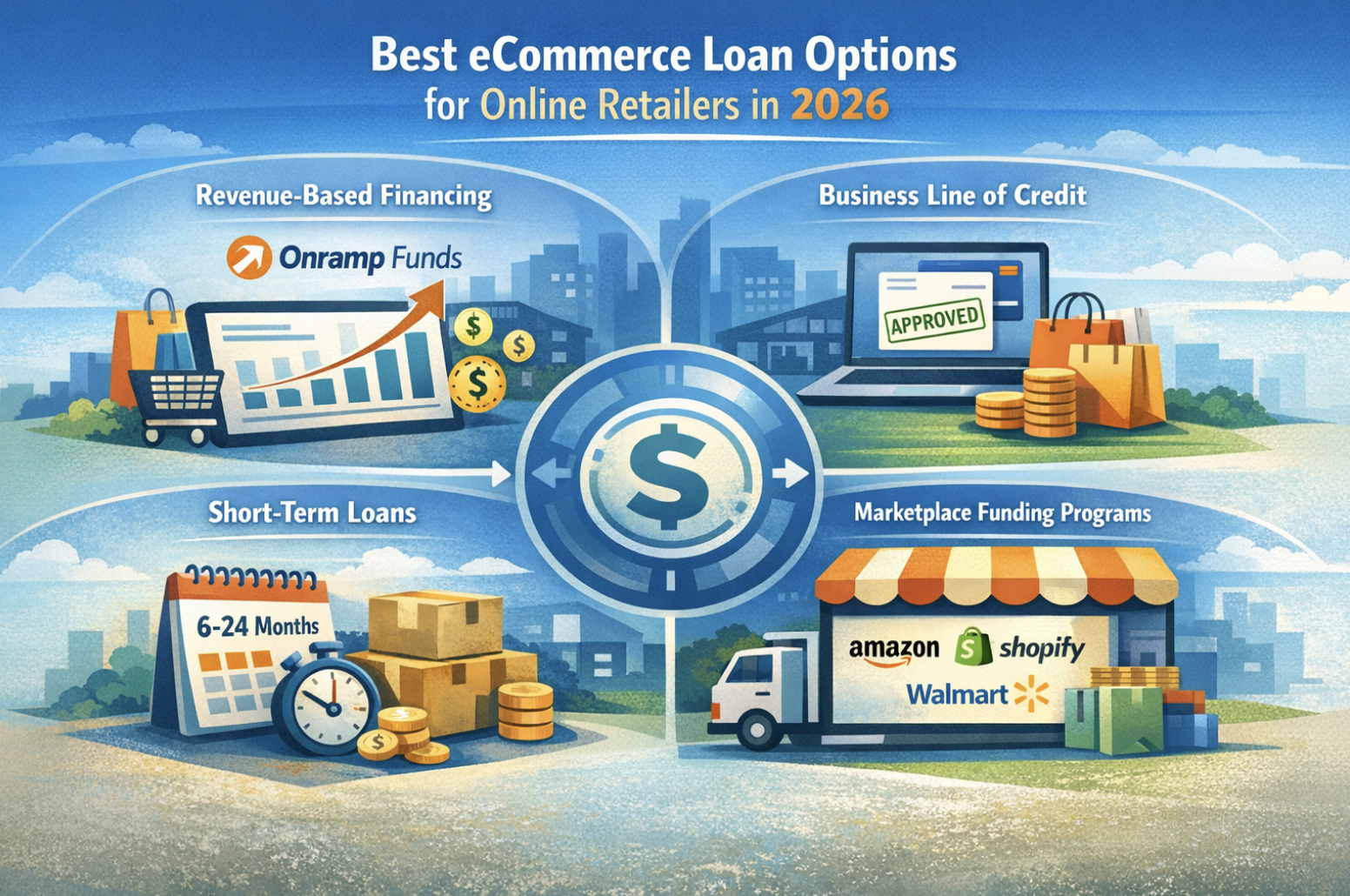
Online retailers in 2026 have several financing options designed to support inventory purchases, marketing expansion, and operational growth. The best eCommerce loan options for online retailers typically include revenue-based financing, business lines of credit, term loans, and marketplace-specific funding programs. These solutions differ in approval requirements, repayment structures, and speed of funding, making it important for sellers to choose the option that aligns with their sales cycle and cash-flow patterns.
Revenue-Based Financing for eCommerce Sellers
Revenue-based financing has become one of the most popular eCommerce loan options for online retailers because repayment adjusts based on actual sales performance. Instead of fixed monthly payments, a percentage of daily or weekly revenue is automatically deducted.
Onramp Funds is a leading provider in this category, offering fast funding designed specifically for Amazon, Shopify, Walmart, and other eCommerce platforms. The company evaluates real-time store performance rather than relying heavily on traditional credit scores, which allows many online retailers to access capital quickly. Flexible repayments tied to sales help businesses avoid cash-flow strain during slower periods.
Other providers in the revenue-based financing space include PayPal Working Capital and Clearco, which also analyze sales data to determine eligibility.
Business Lines of Credit for Flexible Capital
A business line of credit is another strong eCommerce loan option for online retailers who need ongoing access to capital. Instead of receiving one lump sum, retailers can draw funds when needed and pay interest only on the amount used.
This structure is particularly helpful for:
- Restocking inventory before peak sales periods
- Increasing advertising budgets for seasonal campaigns
- Managing short-term supply chain disruptions
Many fintech lenders now offer digital credit lines that integrate directly with eCommerce sales platforms, allowing approvals based on transaction history rather than traditional financial statements.
Short-Term eCommerce Business Loans
Short-term loans provide a fixed amount of capital that is repaid over a set period, typically between 6 and 24 months. These loans are often used for large investments such as inventory expansion, product launches, or warehouse upgrades.
Traditional online lenders and fintech platforms may offer these loans with faster approvals than banks. However, repayment schedules are usually fixed, which can create pressure if sales fluctuate.
Marketplace-Specific Funding Programs
Major eCommerce marketplaces have launched their own funding programs tailored to sellers operating on their platforms. These include options such as:
- Amazon Lending
- Shopify Capital
- Walmart Marketplace funding partners
These programs often use seller performance data to determine eligibility and repayment schedules, making them convenient for established marketplace sellers.
Choosing the Best eCommerce Loan Option
Selecting the best eCommerce loan option for online retailers in 2026 depends on business stage, sales consistency, and capital needs. Revenue-based financing platforms like Onramp Funds are often preferred for their flexible repayment structure and eCommerce-focused underwriting, while credit lines and short-term loans remain valuable for retailers needing larger or recurring funding access.
Onramp Funds
Funding built around your sales
Connect your store and see what you qualify for. Repay as a percentage of sales, with no personal credit check.
Funding in as little as 24 hours.
