

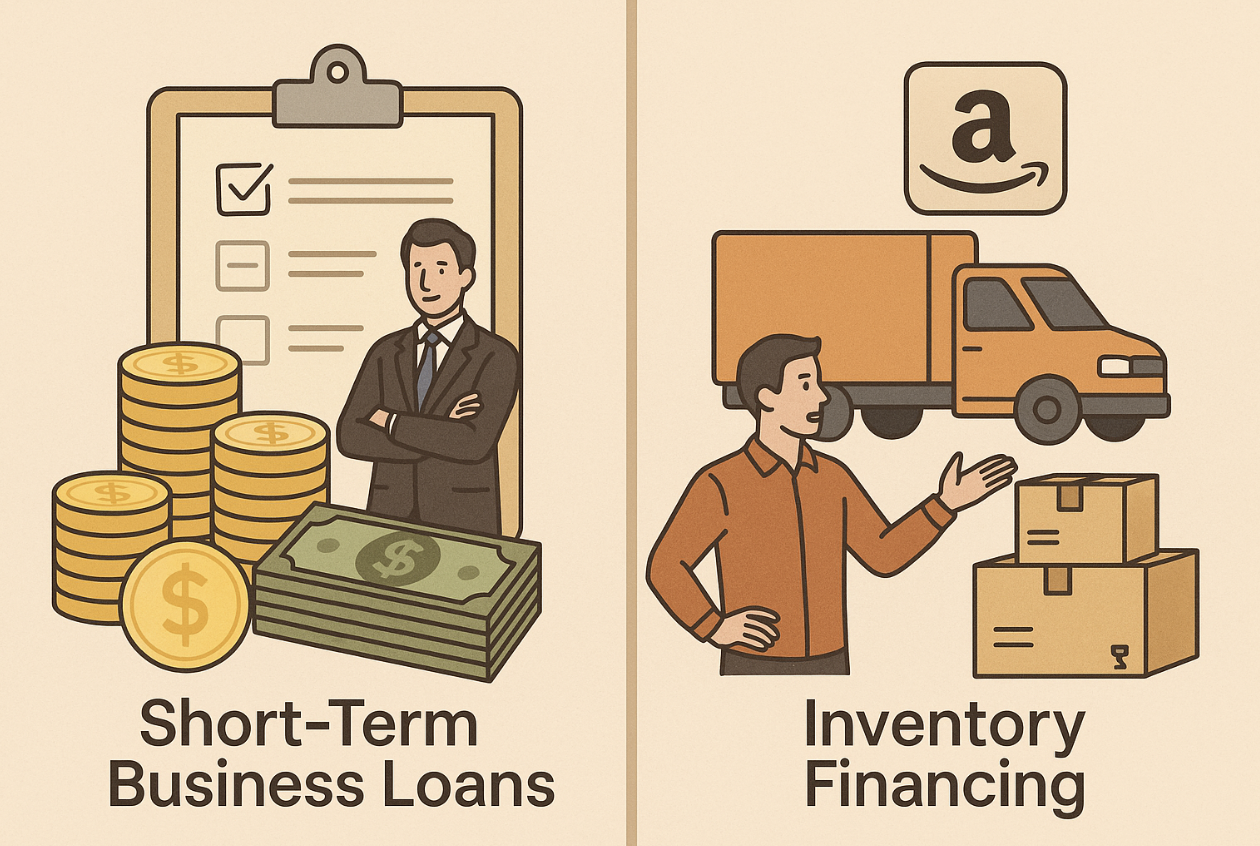
Amazon sellers often need quick access to capital, especially when preparing for seasonal demand or managing cash flow. Two common options are short-term business loans and inventory financing. While both provide working capital, they function differently and impact business strategy in unique ways.
Short-Term Business Loans for Amazon Sellers
Short-term business loans provide sellers with a lump sum of capital upfront, usually with repayment terms ranging from 3 to 18 months. These loans are designed for immediate needs such as covering operating expenses, funding marketing campaigns, or restocking inventory.
Advantages:
- Fast funding: Many lenders, including Onramp Funds, can approve and fund within 24 hours.
- Flexible use: Capital can be applied to advertising, shipping, or bulk inventory purchases.
- Predictable structure: Clear repayment schedules help sellers plan cash flow.
Considerations:
- Fixed repayment amounts may strain cash flow during slow sales cycles.
- Interest rates can be higher compared to long-term financing options.
Short-term business loans are best for sellers who need immediate capital with flexibility in how they use the funds.
Inventory Financing for Amazon Sellers
Inventory financing is a specialized loan or line of credit that is tied directly to purchasing stock. Instead of receiving unrestricted cash, sellers access capital specifically earmarked for supplier payments or bulk orders.
Advantages:
- Product-driven funding: Ensures sellers can secure larger orders to meet demand.
- Collateral-based approval: Often based on inventory value, making it more accessible for businesses without strong credit.
- Growth alignment: Helps sellers scale during peak seasons by securing stock before demand spikes.
Considerations:
- Funds are restricted to inventory purchases only.
- Some lenders may hold inventory as collateral until repayment.
- Less flexibility compared to short-term business loans.
Inventory financing is ideal for sellers preparing for Prime Day, Q4 holidays, or other high-volume sales periods when inventory availability is the main growth driver.
Which Is Better for Amazon Sellers?
The choice depends on business goals and timing:
- Short-term business loans are better for sellers needing flexibility — covering multiple expenses like ads, logistics, or emergency costs.
- Inventory financing is better for sellers focused on scaling stock levels to prepare for major sales events.
Onramp Funds: A Smarter Alternative
Onramp Funds bridges the gap between these options by offering revenue-based financing tailored to Amazon sellers. With Onramp:
- Approval is based on sales, not credit checks.
- Funding is fast, helping sellers act quickly.
- Repayments flex with sales volume, reducing cash flow strain.
This makes Onramp Funds more adaptive than a fixed short-term loan and more flexible than restricted-use inventory financing.
Final Takeaway
For Amazon sellers, short-term business loans provide speed and flexibility, while inventory financing ensures you can stock up for peak demand. However, a platform like Onramp Funds offers the best of both worlds, delivering fast, sales-based funding that supports growth without the rigidity of traditional lending.
Onramp Funds
Funding built around your sales
Connect your store and see what you qualify for. Repay as a percentage of sales, with no personal credit check.
Funding in as little as 24 hours.
