


Selling on Walmart Marketplace offers access to 120 million monthly visitors and growing opportunities, but managing cash flow can be a serious challenge. Sellers face bi-weekly payment cycles, 10-15% reserve holdbacks, and delayed payouts - especially for new accounts - making it tough to maintain liquidity.
Key issues include:
- Delayed payouts: Payments can take up to 14-21 days, with new sellers waiting up to 90 days or $7,500 in sales.
- Reserve holds: Walmart withholds 10-15% of sales revenue for new sellers, reducing to 2-5% for established accounts.
- Returns and fees: Sellers bear return shipping costs and immediate refunds, impacting cash flow.
- Inventory costs: Storage fees and long-term holding charges lock up working capital.
To overcome these hurdles, sellers can:
- Align expenses with Walmart's payment cycles.
- Use financing tools like Onramp Funds for faster access to capital.
- Optimize inventory turnover to reduce holding costs.
- Improve performance metrics to lower reserve holds and qualify for faster payouts.
Managing cash flow effectively is essential for success on Walmart Marketplace. By planning around payment cycles, leveraging financing options, and streamlining operations, sellers can maintain liquidity and scale their businesses.
Selling on Walmart Marketplace: How Payouts Work for New Sellers

sbb-itb-d7b5115
Delayed Payouts and Reserves: How Walmart's Payment System Affects Your Cash

Managing cash flow on Walmart Marketplace can be tricky, especially when payment delays and reserve holds limit your liquidity.
How Bi-Weekly Payments Create Cash Gaps
Walmart follows a 14-day settlement cycle that ends at 11:59 PM PT on alternating Fridays. However, funds aren’t disbursed immediately - they’re released up to 7 days later and only after a 7-day eligibility period following shipment[8][7]. If your hold period ends right after a settlement cycle, you could end up waiting nearly a month to get paid[7].
For new sellers, the wait is even longer. U.S.-based sellers must endure up to a 14-day delay until they’ve been active for 90 days and reached $7,500 in sales. International sellers face an even steeper delay of up to 21 days[3]. During peak seasons, these delays can be especially tough, as you’ll need to cover inventory and operational costs upfront[4].
When combined with reserve holds, these delays can significantly limit your available cash.
Reserve Holds and Their Impact on Available Cash
Walmart also withholds a percentage of your earnings as reserves to cover potential refunds, chargebacks, or shipping costs[7]. The percentage held back depends on your seller tier:
For new sellers, Walmart withholds 10-15% of gross sales. Established sellers see reserves reduced to 2-5%, while Pro Sellers enjoy minimal holds. For instance, if your monthly sales total $50,000 as a new seller, $5,000 to $7,500 could be tied up in reserves. That’s cash you can’t use to restock inventory or cover operating costs.
To reduce reserve holds, sellers need to maintain strong performance metrics. This means keeping return rates low, avoiding chargebacks, and achieving high customer service scores[4].
Return Policies and Fees: How They Cut Into Your Profit Margins
Returns aren’t just a hassle - they hit your cash flow hard. Every return-related deduction chips away at your available cash, often before you even see the product come back.
Return Fees and Refund Adjustments
Walmart’s return policy prioritizes convenience for customers, but it comes at a cost to sellers. For online returns, refunds are issued as soon as the carrier scans the return package[12]. In-store returns at Walmart’s nearly 5,000 locations are refunded immediately upon receipt of the item[12]. This means your account takes an instant hit, often long before you can assess the condition of the returned product.
The costs don’t stop at the refund. As the seller, you’re responsible for return shipping fees in cases like "damaged", "wrong size", or "poor quality" items[9]. Walmart doesn’t allow you to pass these costs on to customers or charge restocking fees, except in rare cases where you can charge up to 20% of the item’s price - only if the product is returned in unsellable condition[12]. If you’re using Walmart Fulfillment Services (WFS), additional fees kick in for shipping the product back to you or disposing of it altogether[9]. These outflows can quickly worsen cash flow gaps already strained by delayed payouts and reserves.
Adding to the challenge, returns must be processed within 48 hours of reaching your return center. Miss this deadline, and Walmart automatically refunds the customer - even if the return is fraudulent or questionable[9]. High return rates can also trigger performance penalties, including payment holds or even account suspension, further tightening your cash flow[10][8].
To soften the blow, consider implementing "Keep It" rules for low-cost items where return shipping costs outweigh the product’s value. This allows customers to keep the item while still receiving a refund, saving you the expense of shipping and handling[9][12]. Zach Hekker, Senior Manager of Strategic Partnerships at Walmart eCommerce, offers this advice:
"The best way sellers can limit the number of returns for their products is to observe the acronym C.A.R.E (complete, accurate, relevant and engaging)"[9].
By providing detailed product descriptions, accurate measurements, and high-quality images, you can reduce "not as described" returns that drain your resources.
Now, let’s look at how referral fees and other deductions further impact your bottom line.
Referral Fees and Other Deductions
Referral fees are another unavoidable cost that eats into your profits. These fees are deducted from every payout, but the real headache comes when you’re charged incorrectly. Disputing overcharges can take one to two payment cycles to resolve, meaning you might wait up to 30 days to recover those funds[11]. In the meantime, your working capital is tied up, leaving you with less flexibility.
Your final payout is calculated by subtracting refunded orders, order adjustments, referral fees, and any outstanding negative balances from your total shipped order revenue. For sellers operating on narrow margins, these deductions can quickly turn what seemed like a profitable sale into a break-even - or even loss-making - transaction.
To stay ahead, regularly monitor your Customer Returns Report. Look for "Walmart at fault" returns, such as items damaged during transit, to ensure you’re not being unfairly charged for issues beyond your control. By keeping a close eye on these details, you can minimize unnecessary deductions and protect your cash flow.
Inventory Holding Costs: Managing Your Working Capital
Your inventory isn’t just sitting on shelves - it’s locking up your cash flow. Every dollar tied up in unsold stock is a dollar unavailable for restocking popular items, running ad campaigns, or covering operating expenses. For Walmart Marketplace sellers using Walmart Fulfillment Services (WFS), inefficiencies in inventory management can quickly lead to mounting storage fees and surcharges, eating away at your working capital. Let’s dive into how these costs accumulate and explore ways to minimize them.
Storage Fees and Surcharges in Walmart Fulfillment Services
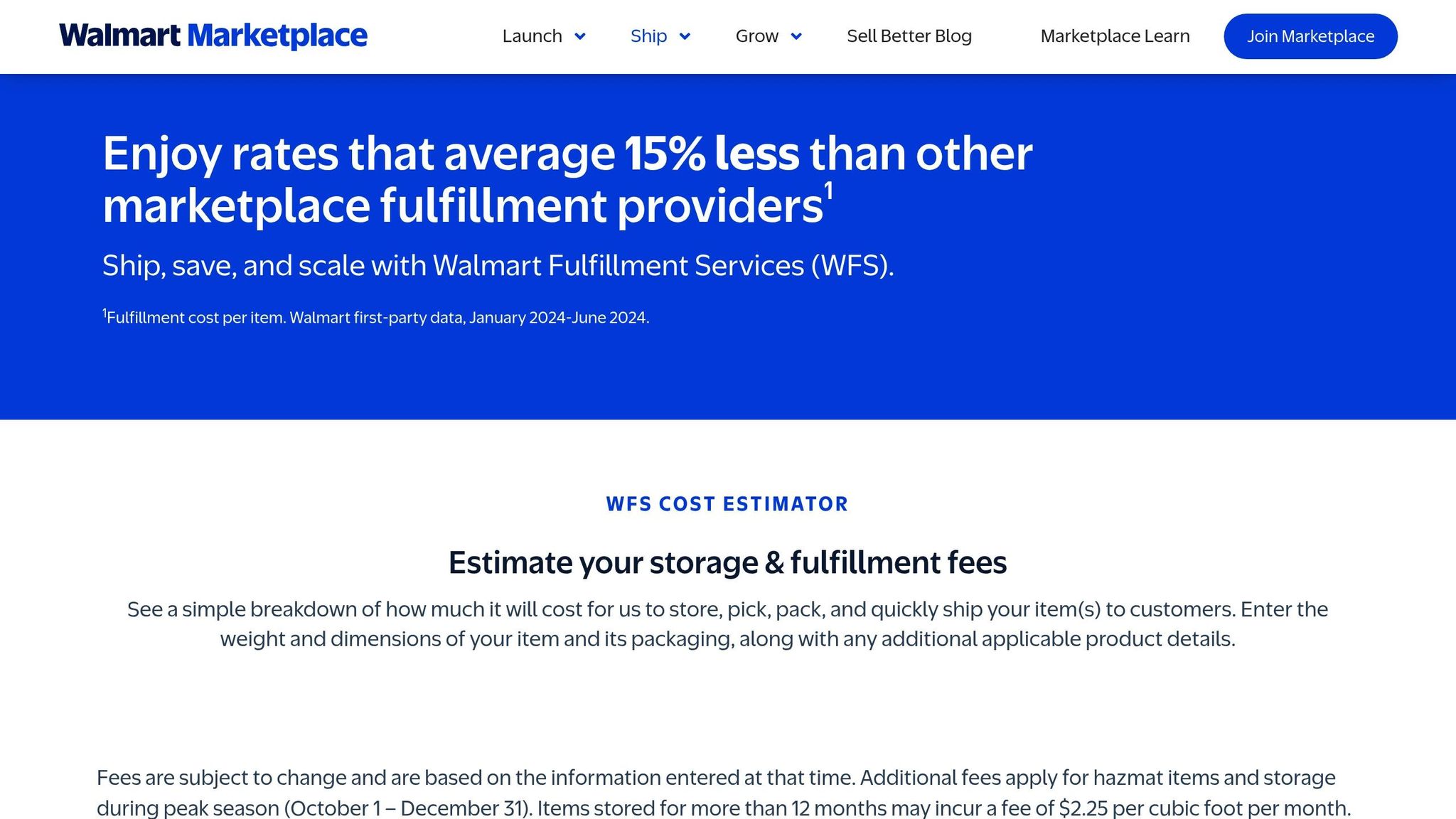
WFS charges storage fees based on the cubic feet your inventory occupies and how long it stays in their facilities. From January through September, the cost is $0.75 per cubic foot per month[14]. This rate remains steady during the busy holiday season (October through December) if your inventory sells within 30 days. However, if items linger beyond 30 days during this period, the monthly fee jumps to $2.25 per cubic foot, which includes a $1.50 surcharge on top of the base rate[14].
Long-term storage fees add another layer of cost. Starting June 9, 2025, inventory stored for over 365 days will incur a $2.25 per cubic foot monthly fee[14]. As Colleen Quattlebaum from Aura aptly states:
"Every day a product sits on the shelf is a day your capital is frozen"[13].
But the costs don’t stop there. Aging inventory often loses its value, especially in fast-changing categories like electronics and beauty. Additionally, slow-moving items can hurt your chances of winning the Buy Box, as Walmart’s algorithm prioritizes products with higher turnover rates[13]. Combine these challenges with Walmart’s bi-weekly payment cycle, and you might find yourself needing to purchase new inventory before receiving payouts from previous sales[4]. This creates a tough cash flow squeeze that makes efficient inventory management critical.
How to Improve Inventory Turnover and Reduce Holding Costs
The key to protecting your working capital is speeding up inventory turnover. Start by regularly downloading your Inventory Health Report from the Seller Center. This report categorizes your "Available to Sell" units into age brackets: 0–90, 91–180, 181–270, 271–365, and 365+ days[16]. Pay close attention to items nearing the 365-day threshold to avoid long-term storage fees.
Walmart’s Suggested Units metric can help you set optimal stock levels. This tool uses sales history, seasonal trends, and pricing data to guide your inventory decisions. Aim for a sell-through rate above 1.5; a rate below 0.75 signals the need for a strategy shift[16]. To clear slow-moving stock, consider bundling it with high-demand items[13] or using the "Remove inventory" or "Disposal" options in the Seller Center. Disposal fees are just $0.35 per unit for items under 2 pounds[14], which is often cheaper than paying for extended storage.
Another effective approach is just-in-time ordering. Use metrics like "Days of Supply" and "Out-of-Stock Date" to ensure inventory arrives only when demand forecasts indicate it’s needed[16][17]. This strategy keeps your capital fluid, preventing it from being tied up in excess stock. Additionally, reducing packaging dimensions can cut down on volume-based storage fees[15]. Small adjustments like these can free up funds for reinvestment in other areas of your business.
Solutions to Cash Flow Challenges
Tackling issues like delayed payouts, reserve holds, and inventory costs requires both smart financing and careful operational planning. Here’s how Walmart Marketplace sellers can bridge cash flow gaps with targeted strategies.
Using Onramp Funds for Fast and Flexible Financing

If bi-weekly payouts are holding up your cash flow but you need to restock inventory right away, traditional financing options might not cut it. That’s where Onramp Funds steps in, offering eligible Walmart sellers funds within 24 hours[18].
What makes Onramp stand out? Its repayment model is tied to your actual sales. You pay back about 1% of each sale, so your repayment adjusts with your revenue flow[1]. This flexibility means lower payments during slow periods and higher payments during busy seasons, keeping everything aligned with your earnings.
As Eric Youngstrom, CEO of Onramp, puts it:
"Onramp plugs directly into your Walmart store and provides on-demand funds for inventory purchases and more. Repayment schedules are paced to your sales, allowing you to pay for your inventory when you sell it, not before, with no surprises."[18]
There’s no need to worry about personal credit checks[18], and you can use the funds for anything from inventory to marketing campaigns, shipping costs, or other growth-related needs[19][20]. Plus, Onramp provides personalized consultations within 24 hours to help you get started[18].
Once you’ve secured funding, the next step is to optimize your cash flow planning.
How to Plan Around Payment Cycles and Forecast Revenue
Walmart’s bi-weekly payment schedule means careful planning is essential[22]. By aligning your expenses with the payout cycle, you can better time inventory purchases, advertising budgets, and other significant costs.
For those who qualify, Walmart’s Faster Payout program can help reduce the wait time for disbursements[5][23]. This can be a game-changer, cutting down the cash gaps that often lead to expensive short-term borrowing.
When it comes to inventory, aim to maintain 30–60 days of stock for domestic suppliers and up to 120 days for international sourcing[21]. Tools like ConnectStock, Kwickmetrics, or Skubana can help you forecast demand based on past sales and seasonal trends[21]. Setting safety stock levels that match your average lead times can also prevent stockouts, which could hurt your search rankings and Buy Box eligibility[21].
In addition to solid planning, improving your performance metrics can further stabilize your cash flow.
Improving Performance Metrics to Reduce Reserves
Your performance metrics directly impact your cash flow. Walmart’s Pro Seller Program - which includes Rising, Advanced, and Pro tiers - rewards sellers with benefits like 5–10% referral fee discounts, faster payouts, and more funding options for maintaining strong metrics[5]. High performance also boosts your Buy Box eligibility and increases your visibility in search results, leading to steadier sales[5][21].
To reduce reserve holds and secure faster payouts, focus on maintaining excellent metrics. Walmart Fulfillment Services (WFS) can help you meet the platform’s shipping speed expectations, which are key to keeping your metrics strong[5][21].
Regularly check your Seller Performance Dashboard and use the Listing Quality Dashboard to fine-tune your product titles, images, and descriptions. These improvements can lead to better conversions and fewer returns[21]. Addressing customer inquiries quickly and resolving negative feedback can also prevent spikes in refunds, which might trigger reserve holds[21][6]. Lastly, ensure all your listings have verified GTINs, UPCs, or EANs to avoid disruptions in sales[5].
Conclusion
Selling on Walmart Marketplace comes with its own set of financial hurdles. Between bi-weekly payout cycles, reserve holds, return fees, and inventory holding costs, these factors can put a strain on your working capital. Such challenges can lead to cash shortages, especially when it’s time to restock.
To tackle these issues, careful financial management is key. Align your spending with Walmart's payout schedule, keep an eye on performance metrics to minimize reserve holds, and manage inventory levels wisely to free up cash. As American Bank aptly states:
"Cash flow is often described as the lifeblood of operations. It's not just about how much money is coming in, but how much money is going out."[24]
When timing gaps arise, flexible financing can be a game-changer. For instance, Onramp Funds provides capital within 24 hours, with repayments tied to your actual sales - roughly 1% per cycle[1]. This approach keeps your cash flow in sync with your revenue, allowing you to invest in inventory, marketing, or new product launches without the pressure of fixed repayment terms.
Walmart Marketplace continues to expand rapidly, with 34% growth in Q4 FY25 and over 200,000 active sellers[5]. With 120 million monthly visitors[2], sellers who manage their cash flow effectively are better positioned to scale and seize the opportunities this platform offers.
FAQs
When will I actually get paid after an order ships on Walmart?
Walmart processes payments to sellers every 14 days after an order has been shipped. However, if you're a new seller or your account is under review, you might experience delays. For instance, there could be a 14-day hold on payments during your first 90 days or while your account is being reviewed. The timing of payments is influenced by your account's status and Walmart's specific policies.
How can I reduce or remove Walmart’s reserve holdbacks faster?
If you want to speed up or reduce Walmart's reserve holdbacks, you can opt for a one-time early payment transfer. This option lets eligible sellers access their funds ahead of the usual payment schedule. To make this process smoother, focus on understanding Walmart's payment policies, keeping your account in good standing, and ensuring compliance with their guidelines.
For additional cash flow support, consider performance-based funding options. These include Walmart Marketplace Capital or revenue-based financing solutions like Onramp Funds, which are designed to help sellers manage their finances more effectively.
What’s the quickest way to free up cash tied up in slow-moving inventory?
The quickest way to unlock cash tied up in slow-moving inventory is by exploring inventory financing options. Solutions like merchant cash advances or inventory credit lines offer fast access to funds - sometimes within just 24 to 48 hours. These financing methods use your inventory value or projected sales as a basis, allowing you to maintain steady cash flow while tackling inventory issues effectively.
Related Blog Posts
Onramp Funds
Funding built around your sales
Connect your store and see what you qualify for. Repay as a percentage of sales, with no personal credit check.
Funding in as little as 24 hours.
