

Orininally published March 8th, 2022
Last updated May 22nd, 2025
If you’re reading this, you likely know what Amazon.com is.
If you somehow don’t know, Amazon is the world’s largest ecommerce store.
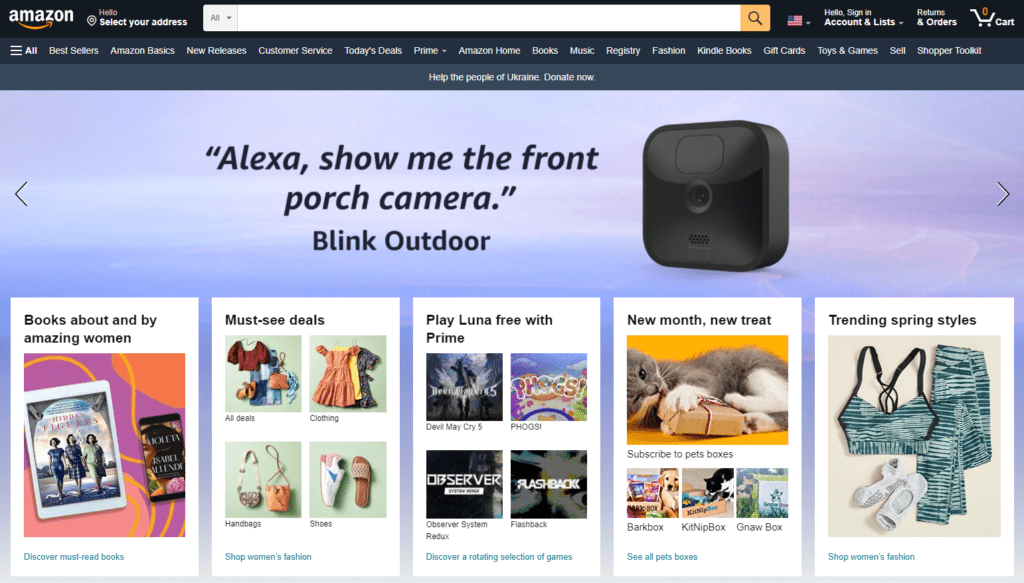
Roughly 40.4% of all eCommerce transactions in the US are made on Amazon.
That’s great and all, but why should you care?
One simple reason:
Amazon isn’t just an online store, it’s a marketplace. The Amazon store offers a platform for small businesses to reach millions.
And what does that mean, exactly? It means anyone can start an Amazon FBA business with the right strategy.
It means that in addition to Amazon selling products on their site, they allow companies and individuals to sell products on their site as well. Through seller central, Amazon FBA sellers manage their product listings effortlessly.
In fact, products for sale by Amazon and third party sellers are almost indistinguishable. Amazon customers often can’t tell if a product is sold by Amazon or a private label seller.
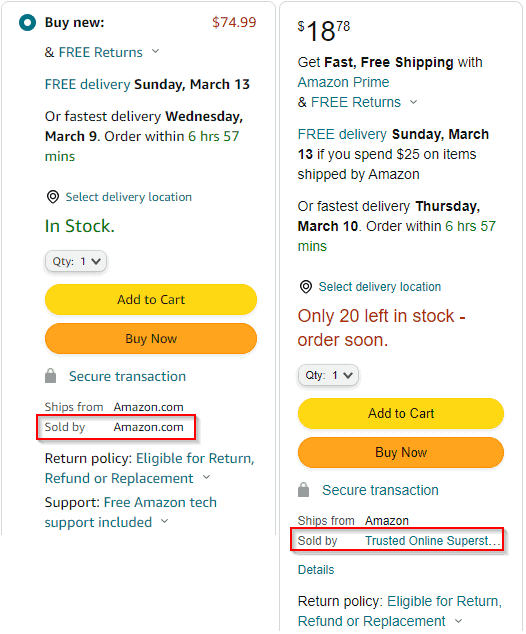
The "Sold by" line shows when a 3rd party company is selling the product. This transparency helps beginners compete in any product category.
That means every day regular people like you and me can list a product on Amazon and sell it. With Amazon selling, anyone can launch a seller account and start today.
But how does one go about selling on Amazon?
One very popular way to currently do that is through Amazon FBA, which stands for Amazon Fulfillment By Amazon. Fulfillment by Amazon simplifies order fulfillment for ecommerce businesses.
Let’s break down Amazon FBA.
How does Amazon FBA work?
With Amazon FBA, you send products to Amazon Warehouses where they become Prime-eligible and are ultimately sent to customers by Amazon.
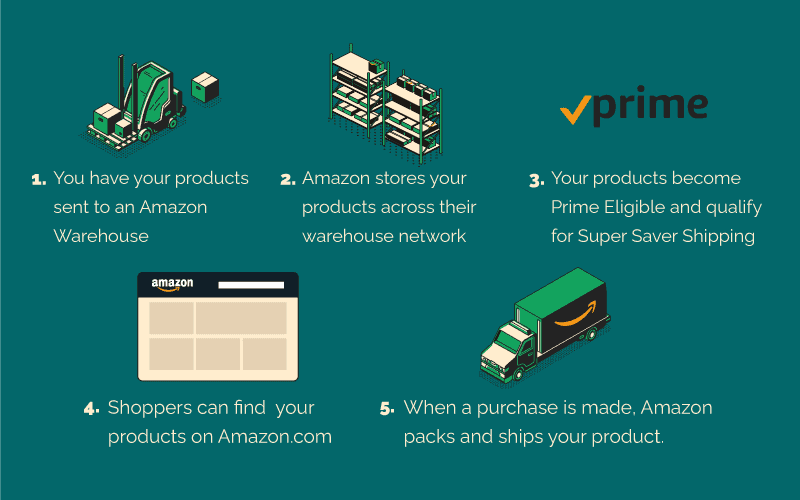
This means that Amazon handles the picking, packing and shipping of your products, as well as a few other business functions like returns.
It could be products you create yourself, products you wholesale, anything sellable on Amazon can be sent to their warehouses.
Interested in selling? Check out the best type of products to sell on Amazon FBA.
While this offers a lot of benefits and convenience to you, the biggest benefit is having your products qualify for Amazon Prime Members and Amazon’s Super Saver Shipping. Prime eligibility boosts conversions for Amazon products.
If you don’t know, a Prime Member is an Amazon Customer that pays a monthly or yearly subscription to Amazon for access to fast and free shipping of products fulfilled by Amazon. Amazon Prime members are a key audience for driving profit margins.
Super Saver Shipping is similar to Prime, but customers don’t pay the membership fee and will qualify for free regular shipping when their purchase exceeds $25 for products fulfilled by Amazon. Super Saver Shipping appeals to Amazon customers seeking value.
Why does this matter to you? Understanding these perks helps Amazon FBA sellers target high-converting buyers.
As a start, there are currently 148.6 million US Amazon Prime members.
Another thing about Amazon Prime members is that they convert at a much higher rate than typical eCommerce shoppers. Prime members drive metrics like sales velocity for ecommerce businesses.
Products fulfilled by Amazon can have a conversion rate as high as 60%, or sometimes higher. High conversions make the FBA program a game-changer for new sellers.
Amazon customers simply convert better than your standard window shopper at a regular website. Their readiness to buy fuels success for Amazon seller central users.
They come to Amazon ready to buy, and that’s the appeal of having your products on Amazon FBA. The buy box advantage with FBA enhances visibility for your product listing.
Is it still possible to sell on Amazon FBA?
Short answer, yes. Amazon FBA remains viable for entrepreneurs launching an online business in 2025.
Every year people wonder if the opportunity on Amazon is still there, or has it suddenly become too competitive for anyone to start. Despite competition, small businesses thrive with strategic Amazon selling.
As the old saying goes, the best time to plant a tree is 20 years ago, the second best time is now. Now is the time to optimize your Amazon FBA business for success.
Conclusion
While this is a quick overview of how Amazon FBA works, the nuts and bolts of the business can get complex and have a lot of moving parts. Managing an Amazon FBA business involves handling inventory levels and fulfillment fees.
Getting started with Amazon FBA is no small task, but it is possible for anyone to be successful in. With automation and tools, beginners can streamline their Amazon marketplace operations. Take it a step at a time, learn as you go, and you too can be a thriving Amazon Seller.
Onramp Funds
Funding built around your sales
Connect your store and see what you qualify for. Repay as a percentage of sales, with no personal credit check.
Funding in as little as 24 hours.
